
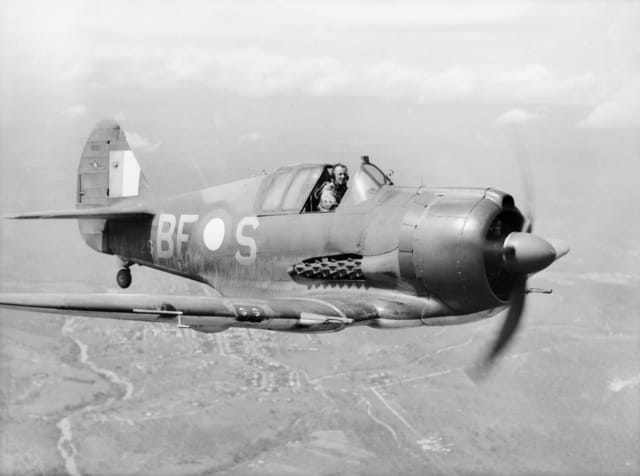
On March 13, 2026, a sound not heard since September 1945 echoed across Toowoomba Wellcamp Airport in Queensland. A Pratt & Whitney Twin Wasp radial engine — 14 cylinders, 1,200 horsepower — roared to life, and a stubby, pugnacious little fighter rolled down the runway and lifted into the Australian sky.
The CAC Boomerang A46-54, christened Wizard of Aussie, was flying again. Eighty-one years after its last sortie, and forty years after a determined man named Greg Batts began picking up the pieces.
This is the story of the only fighter aircraft ever designed and built in Australia — and the extraordinary restoration that brought one back from the dead.

Born From Desperation
In early 1942, the situation was dire. Japan had swept through Southeast Asia with terrifying speed. Singapore had fallen. Darwin had been bombed. Australia — vast, sparsely defended, and suddenly exposed — needed fighters. The problem was that Britain and America had none to spare.
The Commonwealth Aircraft Corporation in Melbourne was already building Wirraways — a licence-built training and general-purpose aircraft based on the North American NA-16. But the Wirraway was hopelessly outclassed by Japanese Zeros. CAC’s chief designer, Fred David — a refugee from Nazi-occupied Austria — was tasked with an almost impossible job: design a frontline fighter from scratch, using whatever components were available, and do it fast.
David took the Wirraway’s wing centre section and engine mount, grafted on an entirely new fuselage and tail, and wrapped it around the most powerful engine available in Australia — the Pratt & Whitney R-1830 Twin Wasp, the same 14-cylinder radial that powered the DC-3. The result was compact, tough, and surprisingly agile. From blank paper to first flight took just four months.
Combat Over the Top End
The Boomerang entered service in late 1943, too late to face the worst of the Japanese threat but in time to serve with distinction over New Guinea and the Australian Northern Territory. It was never fast enough to dogfight a Zero on equal terms — its top speed of around 490 km/h was modest even by 1943 standards. But it excelled in the ground-attack and tactical reconnaissance roles that Australian forces desperately needed in the brutal island campaigns.
Pilots loved its ruggedness and its tight turning circle. A total of 250 Boomerangs were built across four variants before production ended in 1945. When the war ended, the survivors were unceremoniously scrapped. Within a few years, almost every Boomerang had been reduced to scrap metal.
From blank paper to first flight in just four months — the Boomerang was born from Australia’s most desperate hour.

Forty Years of Resurrection
Greg Batts acquired the remains of A46-54 in 1984. What he had was barely an aircraft — corroded fragments, a data plate, and a dream. Over the next four decades, working from his base at Archerfield near Brisbane under the banner of Combat Aircraft Constructions, Batts and his team painstakingly rebuilt the Boomerang with extraordinary historical fidelity.
The outer wing panels were manufactured entirely from scratch. The wing centre section was adapted from components originally built for the North American Harvard trainer — a cousin of the Wirraway that shared structural DNA with the Boomerang. The wooden construction of the fuselage made the restoration even more challenging; the Boomerang is one of the few World War II fighters with a wooden-framed fuselage, making it uniquely fragile and uniquely difficult to rebuild.
With test pilot Scott Taberner at the controls, VH-MHB lifted off from Toowoomba Wellcamp on that March morning and performed flawlessly. It is now the first reconstructed wood-framed Boomerang to fly since 1945. Several hours of flight testing have since been completed, and the aircraft’s performance has reportedly exceeded expectations.
A Living Piece of History
The Wizard of Aussie is expected to be based at Caboolture, Queensland, where it will participate in airshows and aviation events around Australia. For warbird enthusiasts, it represents something deeply special: a type so rare that seeing one fly is the aviation equivalent of spotting a living dinosaur.
Of the 250 Boomerangs built, only a handful of survivors exist in museums. To see one thunder overhead, engine bellowing, wings catching the Queensland sun — that is not just aviation. That is a nation’s history, brought back to life on a warm autumn morning, 81 years after the last one landed for what everyone assumed was the final time.
Sources: Vintage Aviation News, Australian War Memorial, Warbirds Online
Related Questions
What was the CAC Boomerang?
The CAC Boomerang was the only fighter aircraft ever designed and built in Australia. Developed by the Commonwealth Aircraft Corporation in 1942 amid fears of Japanese invasion, it was a compact, rugged single-seat fighter. A total of 250 were built across four variants before production ended in 1945.
Why did Australia build its own fighter in WWII?
In early 1942, with Singapore fallen and Darwin bombed, Australia urgently needed fighters but Britain and America had none to spare. The Commonwealth Aircraft Corporation tasked designer Fred David, an Austrian refugee from Nazi occupation, with creating a frontline fighter fast, using whatever components were available.
How was the Boomerang designed so quickly?
Fred David adapted the existing CAC Wirraway, a licence-built trainer based on the North American NA-16, reusing its wing centre section and engine mount while grafting on a new fuselage, tail and the Pratt & Whitney R-1830 Twin Wasp engine. It went from blank paper to first flight in just four months.
How did the Boomerang perform in combat?
Entering service in late 1943, the Boomerang was too slow at around 490 km/h to dogfight Japanese Zeros on equal terms, but it excelled at ground attack and tactical reconnaissance over New Guinea and northern Australia. Pilots praised its ruggedness and tight turning circle. Australia also produced notable airmen, such as WWI ace Robert Little.
Is there a flying CAC Boomerang today?
Yes. On March 13, 2026, the restored Boomerang A46-54 "Wizard of Aussie" flew again at Toowoomba Wellcamp Airport in Queensland, 81 years after its last sortie. The decades-long restoration was driven by Greg Batts, echoing other remarkable recoveries like the Shiden-Kai pulled from the sea.
0 Comments