
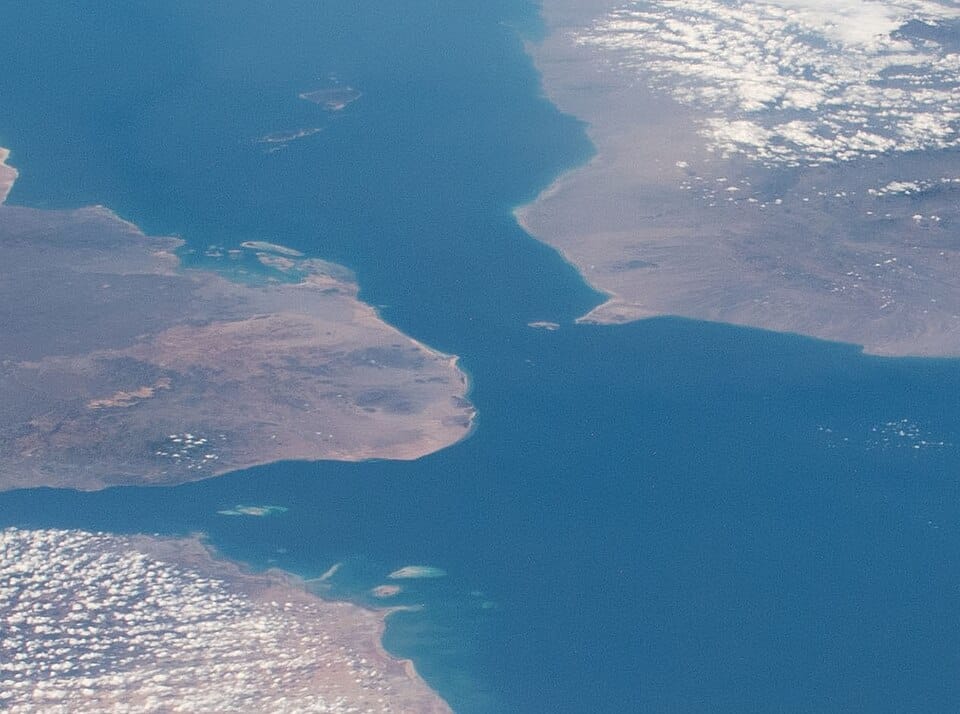
The Bab el-Mandeb Strait is 20 miles wide. That's it. Twenty miles of water separating Yemen from Djibouti, Africa from the Arabian Peninsula, and roughly 12% of global trade from total chaos. The Houthis just threatened to shut it down.
Mohammed Mansour, the Houthis' deputy information minister, told media that closing the strait "is a viable option, and the consequences will be borne by the American and Israeli aggressors." The message was aimed squarely at Gulf states: join the U.S. strikes against Iran, and the Red Sea becomes a no-go zone.
This isn't bluster from a militia operating out of pickup trucks. The Houthis proved over the past two years that they can hit ships with precision-guided missiles and drones — weapons supplied, trained on, and coordinated with Iran. They've already driven major shipping lines away from the Red Sea once. They're threatening to do it again, this time with higher stakes.

The Chokepoint That Holds the World Together
Every container ship sailing between Asia and Europe passes through Bab el-Mandeb on its way to the Suez Canal. So does a significant share of the world's oil and liquefied natural gas. If the Houthis close the strait — even partially, through sustained attacks that raise insurance premiums and force rerouting — the economic ripple effects would be immediate and global.
Analysts estimate that if both the Strait of Hormuz and Bab el-Mandeb were disrupted simultaneously, roughly 30% of global container shipping would be blocked. That scenario is no longer hypothetical. Iran controls influence over both chokepoints — Hormuz through its own navy, Bab el-Mandeb through the Houthis.
Traffic through the strait has already dropped sharply. Major carriers rerouted around the Cape of Good Hope during the 2024–2025 Houthi campaign, adding weeks to voyages and billions to freight costs. The threat of a repeat is keeping shipping executives awake at night.
Europe's Red Sea Task Force Stands Ready
The European Union's naval task force in the Red Sea is on high alert. The force, deployed to protect commercial shipping after the Houthis' initial campaign against vessels in 2024, has maintained a continuous presence in the area. With the Iran war escalating under Operation Epic Fury, the task force is preparing for a potential second round of attacks.
The military challenge is enormous. The Houthis don't need to physically block the strait — they just need to make it dangerous enough that shipping companies won't risk the transit. A single anti-ship missile hitting a tanker in those narrow waters would send insurance rates through the roof overnight.
Why This Matters Beyond the Headlines
What makes this moment different from 2024 is the context. The Houthis fired ballistic missiles toward Israel. Iran is under direct U.S. military strike. Gulf states are being pressured to pick sides. And the Houthis have made clear that any Gulf participation in the war will trigger a new shipping campaign.
Saudi Arabia's port of Yanbu, on the Red Sea coast, has become a critical escape hatch for oil exports that would normally flow through the Persian Gulf. If the Houthis target that route too, even Saudi oil gets caught in the crossfire. CNN reported that the Houthis could "slam shut" this alternative corridor.
Twenty miles of open water. A militia with Iranian missiles. And the global economy hanging in the balance. The Bab el-Mandeb has always been one of the world's most important straits. Right now, it might be the most dangerous.
Sources: The War Zone, Al Jazeera, CNN, France 24, NBC News
Related Questions
What is the Bab el-Mandeb Strait?
The Bab el-Mandeb is a narrow strait, only about 20 miles wide, separating Yemen from Djibouti and linking the Red Sea to the Gulf of Aden. Roughly 12 percent of global trade passes through it, making it one of the world's most critical maritime chokepoints. Any disruption there ripples across global shipping and energy markets.
Why are the Houthis threatening to close the Bab el-Mandeb Strait?
The Houthis threatened to close the strait as leverage against Gulf states, warning them not to join U.S. strikes on Iran. A deputy information minister said shutting the waterway was a viable option and that American and Israeli forces would bear the consequences. It is a direct attempt to widen the cost of the conflict.
Can the Houthis actually shut down Red Sea shipping?
They have proved capable of it. Over the previous two years the Houthis repeatedly struck vessels with Iranian-supplied precision missiles and drones, forcing major shipping lines to abandon Red Sea routes. That track record makes their renewed threat credible rather than empty bluster, even though they operate as a militia rather than a conventional navy.
How much global trade passes through the Bab el-Mandeb?
About 12 percent of global trade moves through the Bab el-Mandeb Strait, alongside a large share of energy shipments heading to and from the Suez Canal. Because the passage is just 20 miles wide, even a credible missile or drone threat can divert traffic around Africa, adding weeks and cost to voyages and feeding pressures like the fuel crisis hitting every pilot.
How is Iran connected to the Houthi threat?
Iran has armed, trained and coordinated with the Houthis, supplying the precision-guided missiles and drones that make their threats to shipping credible. The strait threat is part of the wider Iran conflict, in which Tehran's own drone technology has spread widely, as seen when Iranian-designed drones ended up bombing Iran.
0 Comments