
| Quick Facts | |
| Country | Sweden |
| Investment | 8.7 billion Swedish kronor ($916 million) |
| Key System | Saab Gute II anti-drone platform |
| Other Suppliers | BAE Systems, Finnish firm Sisu (infantry mobility vehicles) |
| Deliveries | 2027–2028 |
| Defence Spending | 2.8% of GDP in 2026, rising to 3.5% by 2030 |
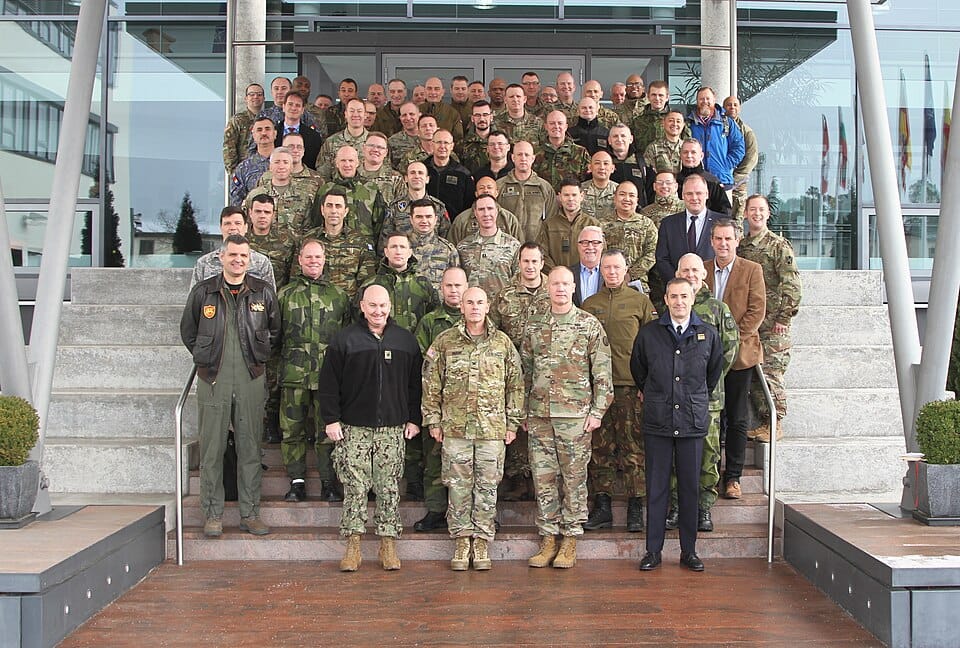
| Announced | April 2, 2026, by Defence Minister Pål Jonson |

Sweden just spent nearly a billion dollars on one thing: killing drones. In an era where a $500 off-the-shelf quadcopter can shut down an international airport, Stockholm is betting that counter-drone technology is the most urgent defence investment a nation can make.
Defence Minister Pål Jonson announced the 8.7-billion-kronor package on April 2, calling air defence capabilities "more important than ever." The centrepiece is Saab's Gute II — a radar-and-cannon system designed to detect, track, and destroy low-flying small- and medium-sized drones. It can be mounted on vehicles or fixed positions, giving commanders flexibility to protect forward bases, critical infrastructure, and troop concentrations.
The order also includes ammunition, infantry mobility vehicles from Finnish firm Sisu, and additional air defence components from BAE Systems. Deliveries begin in 2027.
The Drone Threat Is No Longer Theoretical
Sweden isn't reacting to a hypothetical. It's reacting to Kuwait. Since late February, Kuwait International Airport has been shut down by repeated drone strikes — five weeks and counting, with no reopening date in sight. One of the busiest airports in the Gulf, grounded by weapons that cost a fraction of the air defence systems meant to stop them.
Related: Five Weeks and Counting: Kuwait Airport Still Shut by Drones
Ukraine proved it over three years of war. Houthi forces in Yemen demonstrated it against Red Sea shipping. Now the same asymmetric weapon has paralysed a civilian airport. The message is impossible to ignore: if you can't defend against drones, you can't defend anything.
Europe has been slow to invest in counter-drone capabilities compared to its spending on tanks, fighter jets, and naval vessels. Sweden's order is one of the largest dedicated anti-drone purchases by any European nation — a signal that priorities are shifting fast.
Fortress Scandinavia
The purchase fits into a broader transformation of Swedish defence. Since joining NATO in 2024, Stockholm has been on a spending spree. Defence spending hit 2.8% of GDP in 2026 and is legislated to reach 3.5% by 2030 — one of the highest ratios in the alliance. Russia's invasion of Ukraine shattered decades of Swedish strategic caution, and the war in Iran has only accelerated the urgency.
Sweden's defence industry — anchored by Saab, the same company that builds the Gripen fighter — gives it an unusual advantage: it can buy domestic. The Gute II keeps Swedish kronor in Swedish factories, building Swedish jobs while addressing a real operational gap. That's a politically irresistible combination.
A billion dollars won't stop every drone. But Sweden just made the most explicit bet any European country has placed on the proposition that the next war won't be won by jets alone — it'll be won by whoever can swat the cheap, slow, lethal machines that jets were never designed to fight.
Sources: Reuters, Seeking Alpha, US News, Arctic Today
Related Questions
What did Sweden buy for counter-drone defence?
Sweden ordered an 8.7-billion-kronor (about 916 million dollar) defence package centred on the Saab Gute II anti-drone platform, announced on April 2, 2026, by Defence Minister Pål Jonson. The deal also includes equipment from BAE Systems and Finnish firm Sisu, with deliveries running from 2027 to 2028.
What is the Saab Gute II?
The Saab Gute II is an anti-drone platform ordered by Sweden as the centrepiece of its 916 million dollar defence package. It is made by Saab, the same Swedish company that builds the Gripen fighter, underscoring how a traditional combat-aircraft manufacturer has moved into counter-drone technology as the threat has grown.
Why is counter-drone technology a priority?
Cheap drones have become a major threat: a 500 dollar off-the-shelf quadcopter can shut down an international airport or menace military forces. Sweden is betting that countering them is among the most urgent defence investments a nation can make. The danger is clear from Ukraine's deep-strike drone campaign.
How much is Sweden spending on defence?
Sweden's defence spending reaches 2.8% of GDP in 2026 and is set to rise to 3.5% by 2030. The 916 million dollar counter-drone and mobility package, announced in April 2026, is part of this broader build-up, reflecting heightened security concerns across Northern Europe and the Baltic region.
Does Saab make more than the Gripen?
Yes. While Saab is best known for the Gripen fighter, it is a cornerstone of Sweden's wider defence industry, producing systems from radar and missiles to the Gute II anti-drone platform. Swedish ingenuity has a long aviation pedigree, as when a Viggen escorted a crippled SR-71.
0 Comments