
| Quick Facts | |
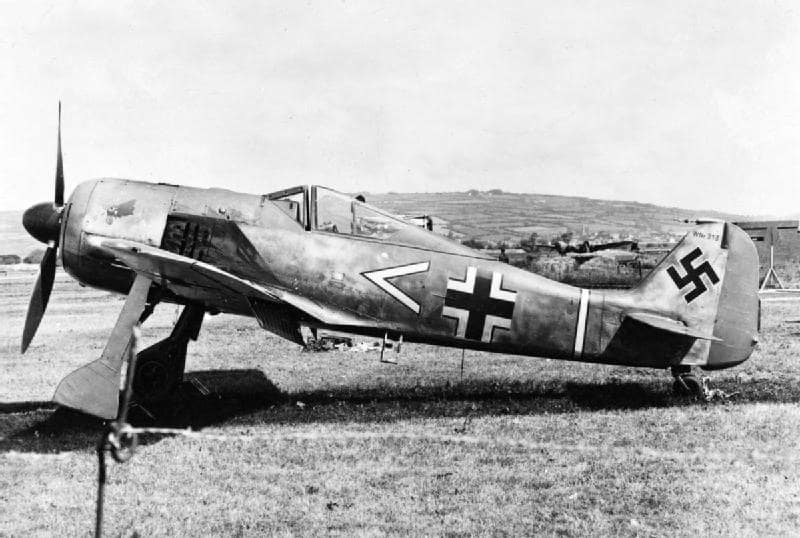
| Aircraft | Focke-Wulf Fw 190A-8/N (Flugwerk reproduction, serial 1134) |
| Owner | MSÖ Air & Space Museum, Türkiye (founder Ali İsmet Öztürk) |
| Engine | Shvetsov ASh-82 radial — overhauled and running |
| Markings | Turkish Air Force "Kare-Fors" insignia (1940s era) |
| Status | Wing mounting underway; first test flight targeted April 2026 |
| Historical Context | Turkey operated Fw 190s supplied by Nazi Germany during WWII |
| Significance | Potentially the only airworthy Fw 190 in Turkish military markings |
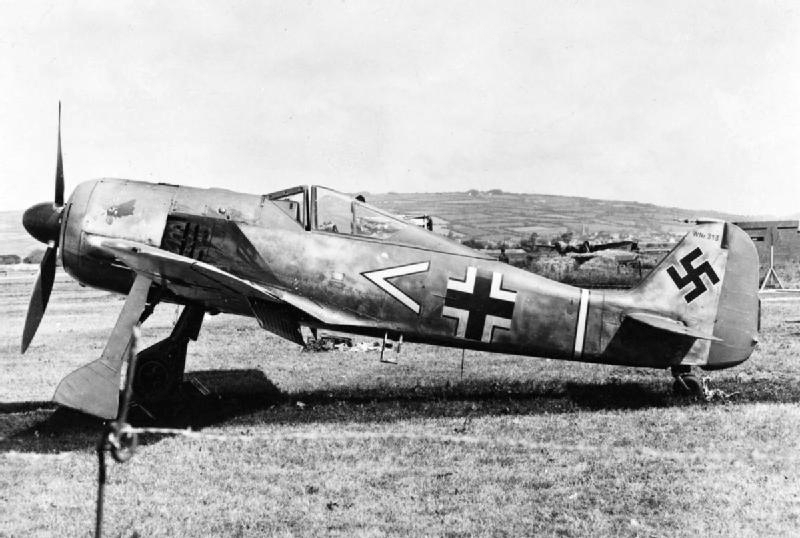
Somewhere in Türkiye, a radial engine that hasn't powered a combat aircraft in 80 years is turning again. The Shvetsov ASh-82 coughs, catches, and settles into a deep, thundering idle. Attached to it is a Focke-Wulf Fw 190 — one of the most lethal fighter aircraft of the Second World War — and it is weeks away from flying for the first time in Turkish Air Force markings.
The restoration is the work of the MSÖ Air & Space Museum, founded by Turkish aviation enthusiast Ali İsmet Öztürk. In January 2025, Öztürk purchased a Flugwerk-built Fw 190A-8/N reproduction from a collector in California. The aircraft — serial number 1134 — was shipped to Türkiye, where a team of restorers has spent the past year bringing it to airworthy condition.
By late 2025, the engine overhaul was complete and the fuselage had been repainted in a dark finish bearing the Kare-Fors — the square-and-cross insignia used by the Turkish Air Force during the 1940s. Wing assembly is now underway, with the airframe expected to be mated to the wings by March. If the timeline holds, the first test flight could happen as early as this month.
Turkey's Forgotten Wartime Fleet
Turkey's connection to the Fw 190 is one of the war's lesser-known stories. Although officially neutral for most of World War II, Ankara accepted military equipment from both sides — playing the Allies and the Axis against each other with a pragmatism that defined Turkish wartime diplomacy. Germany supplied a small number of Fw 190s as part of its effort to keep Turkey friendly, and they served alongside Spitfires, Hurricanes, and American P-40s in what may have been the most geopolitically eclectic air force of the era.
Those aircraft are long gone — scrapped in the postwar years as Turkey modernised its military with American jets. No original Turkish-marked Fw 190 survives. Which is precisely what makes this restoration significant: when it flies, it will likely be the only airworthy Fw 190 anywhere in the world wearing the markings of a country that actually operated the type.
The Butcher Bird Lives
The Fw 190 earned the nickname "Butcher Bird" when it appeared over the Western Front in 1941 and immediately outclassed the RAF's Spitfire Mk V. It was faster, climbed better, rolled quicker, and carried heavier armament. Allied pilots who encountered it for the first time reported an aircraft that seemed a generation ahead of anything they were flying. It took the British more than a year to produce an answer — the Spitfire Mk IX — and even then the 190 remained dangerous to the war's end.
Kurt Tank's design was a masterpiece of practicality: a wide-track undercarriage that made it easy to operate from rough fields, an air-cooled radial engine that was more robust than the Bf 109's liquid-cooled Daimler-Benz, and a cockpit that was considered the most pilot-friendly of any German fighter. More than 20,000 were built in fighter, fighter-bomber, and ground-attack variants.
Today, fewer than a dozen Fw 190s are airworthy worldwide. Each one that takes to the sky is an event. But a 190 in Turkish military markings, flying over Turkish soil, closing a historical loop that's been open since the 1940s — that's something that's never happened before. If the test flight goes well, the sound of that ASh-82 radial will carry 80 years of history with every revolution.
Sources: Vintage Aviation News, MSN, Daily Sabah
Related Questions
What is the Focke-Wulf Fw 190?
The Focke-Wulf Fw 190 was a German single-seat fighter and one of the most feared aircraft of World War II. Fast, heavily armed and rugged, it served the Luftwaffe across every front. Today very few survive, and almost none are airworthy, which makes any flying example extraordinarily rare.
Is there a flying Focke-Wulf 190?
A Focke-Wulf Fw 190 is being restored to flight in Türkiye by the MSÖ Air Space Museum. Built as a Flugwerk reproduction and fitted with a running Shvetsov ASh-82 radial engine, it is targeting a first test flight around April 2026 and would potentially be the only airworthy Fw 190 in Turkish military markings.
Did Turkey operate Fw 190s?
Yes. Turkey operated Focke-Wulf Fw 190 fighters supplied by Nazi Germany during World War II, while the country remained largely neutral. That historical link is why the Turkish restoration will wear period Turkish Air Force "Kare-Fors" insignia rather than German markings.
What engine powers the restored Fw 190?
The Turkish Fw 190 restoration is powered by a Shvetsov ASh-82, a Soviet-designed radial engine that has been overhauled and is running again after roughly 80 years. The team is mounting the wings ahead of a planned first flight.
Who is restoring the Focke-Wulf 190 in Türkiye?
The restoration is being carried out by the MSÖ Air Space Museum in Türkiye, founded by Ali İsmet Öztürk. The museum is known for returning rare vintage aircraft to flying condition, much like other ambitious warbird restoration projects bringing old airframes back to life.
Are old World War II aircraft still being rebuilt to fly?
Yes. Around the world, dedicated teams restore and reproduce wartime aircraft, from this Turkish Fw 190 to clamshell freighters and other rare types. The legacy of German wartime engineering even extended into the jet age, including designs created abroad by former Nazi-era aircraft designers.
0 Comments