
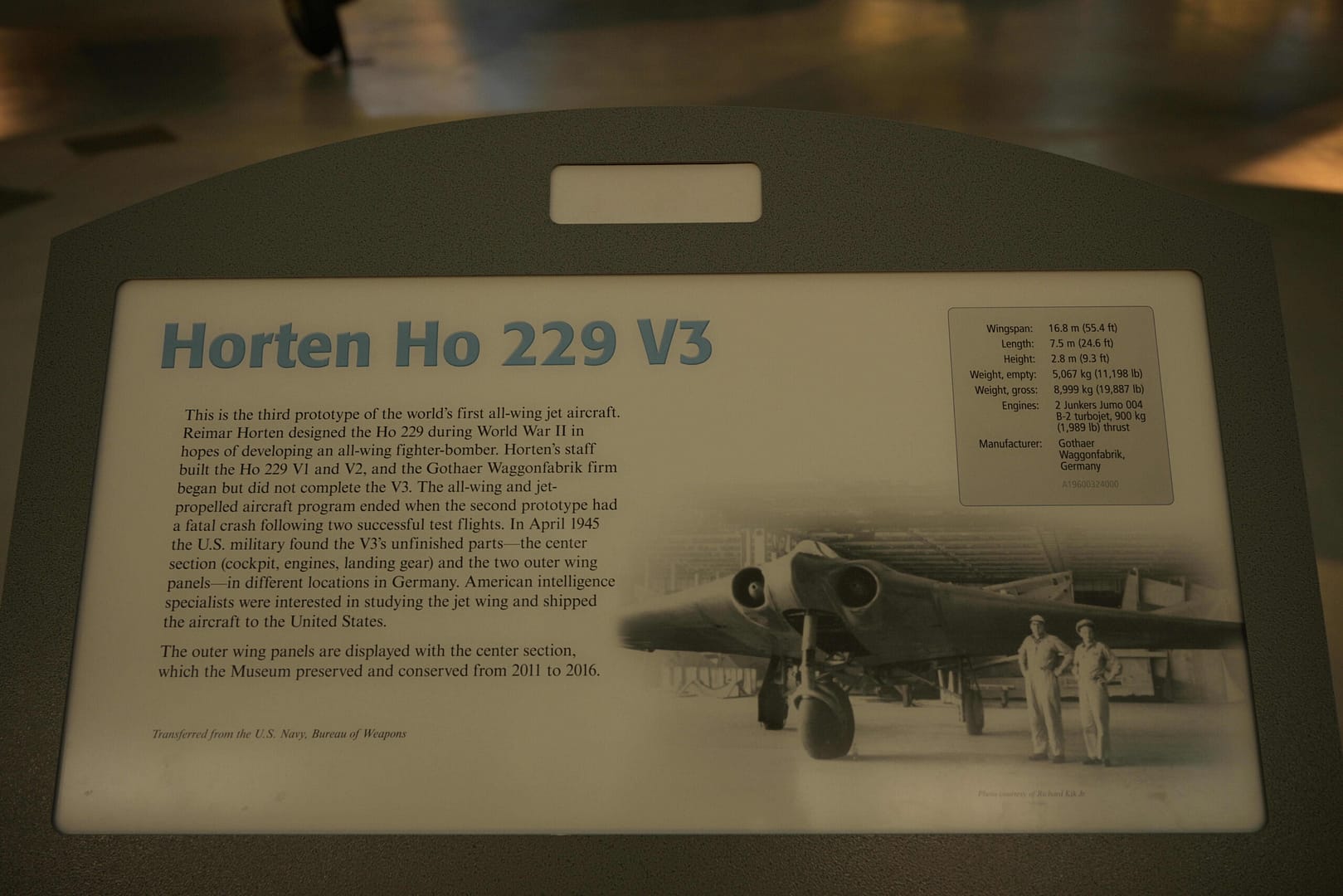
In 1943, two brothers with no formal aeronautical training convinced Hermann Goering to give them 500,000 Reichsmarks to build a jet-powered flying wing. The result was arguably the most futuristic aircraft of World War II — and a design so ahead of its time that Northrop Grumman spent millions studying it six decades later.
Quick Facts
- Aircraft: Horten Ho 229 (also Ho IX / Go 229)
- Type: Jet-powered flying wing fighter-bomber
- First flight: 1 March 1944 (glider); 2 February 1945 (jet)
- Engines: 2 × Junkers Jumo 004B turbojets
- Designed by: Reimar and Walter Horten
- Surviving example: Ho 229 V3 at Smithsonian Udvar-Hazy Center
The Brothers Who Taught Themselves to Fly
Walter Horten (1913-1998) and Reimar Horten (1915-1994) grew up in the Weimar Republic’s semi-clandestine gliding clubs. The Treaty of Versailles banned German military aircraft, so military flying was disguised as civilian glider sport. Their first glider flew in 1933, when Walter was 19 and Reimar just 17.
Walter served as a Bf 109 fighter pilot with JG 26 on the Western Front before becoming the unit’s technical officer. Reimar trained on the Bf 109 but transferred to glider school. Neither had university engineering degrees. Everything they knew about aerodynamics, they taught themselves.
Goering’s 3×1000 Challenge
The Ho 229 was born from Goering’s “3×1000” requirement: an aircraft that could carry 1,000 kg of bombs across 1,000 km at 1,000 km/h. The Hortens proposed a flying wing with twin Junkers Jumo 004B turbojet engines buried in the fuselage on either side of the cockpit — the same engines that powered the Me 262. The airframe used steel and laminated plywood construction.
It was the first pure flying wing powered by jet engines.
Three Prototypes, One Fatal Crash
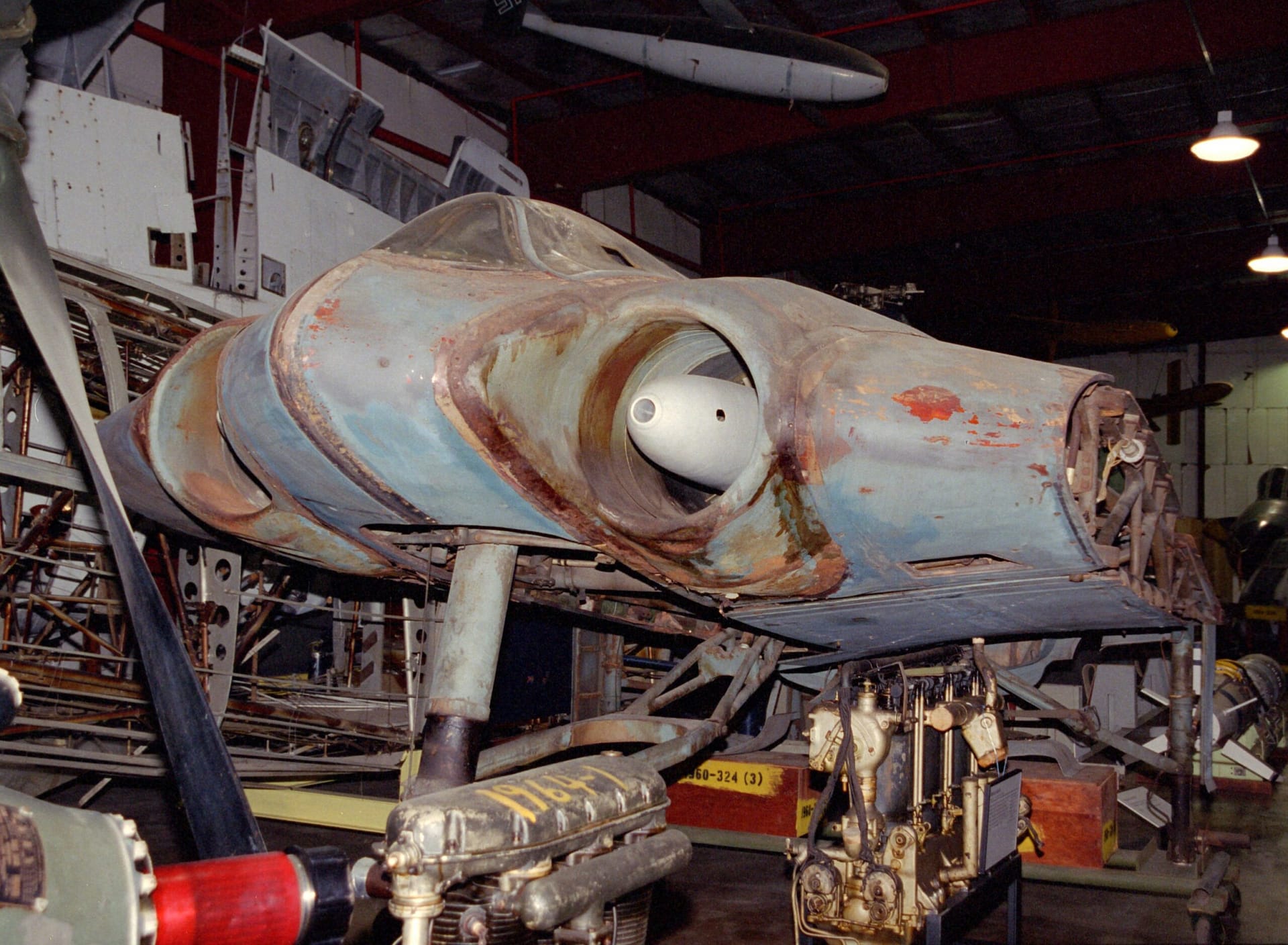
The V1 glider flew on March 1, 1944. The jet-powered V2 made its maiden flight in early 1945, with test pilot Erwin Ziller at the controls. By all accounts, the flight was a success — the flying wing handled beautifully.
Then came the third test flight. Ziller lost an engine, the aircraft spiraled out of control, and he was killed in the crash. There was speculation that engine fumes may have incapacitated him before the loss of control. The powered flight program died with him.
The V3 — a third prototype — was under construction when U.S. forces captured the Gotha factory. It never flew.
Was It Really Stealthy?
The biggest controversy around the Ho 229 is whether it was a stealth aircraft. In 2009, Northrop Grumman — the company that built the B-2 Spirit stealth bomber — sponsored a National Geographic documentary and constructed a full-scale replica using the original’s construction methods: plywood skins layered with carbon-impregnated glue.
The results were intriguing but not overwhelming. The flying wing would have been detected at about 80% of the range at which a conventional Bf 109 would be spotted. Not invisible — but a meaningful 20% reduction in detection range that could have been significant at combat speeds. Whether the Hortens intended this or whether the radar-absorbing properties were a happy accident of wooden construction remains debated.
The Northrop Connection
Jack Northrop had been building flying wings in America since the late 1920s, working independently but in parallel with the Hortens. After the war, it was suggested that Northrop hire the German brothers. Northrop dismissed them as “just glider designers.”
Decades later, Northrop Grumman would spend millions studying their work. The B-2 Spirit — a flying-wing stealth bomber — owes its conceptual DNA to both lineages. The irony was not lost on aviation historians.
Today, the unfinished V3 sits in the Steven F. Udvar-Hazy Center in Virginia — a ghost of what might have been, built by two self-taught brothers who were designing the future while their country burned around them.
Sources: Smithsonian National Air and Space Museum, National Geographic, War History Online, The Aviation Geek Club, Smithsonian Magazine
Related Posts

 English
0 Comments