
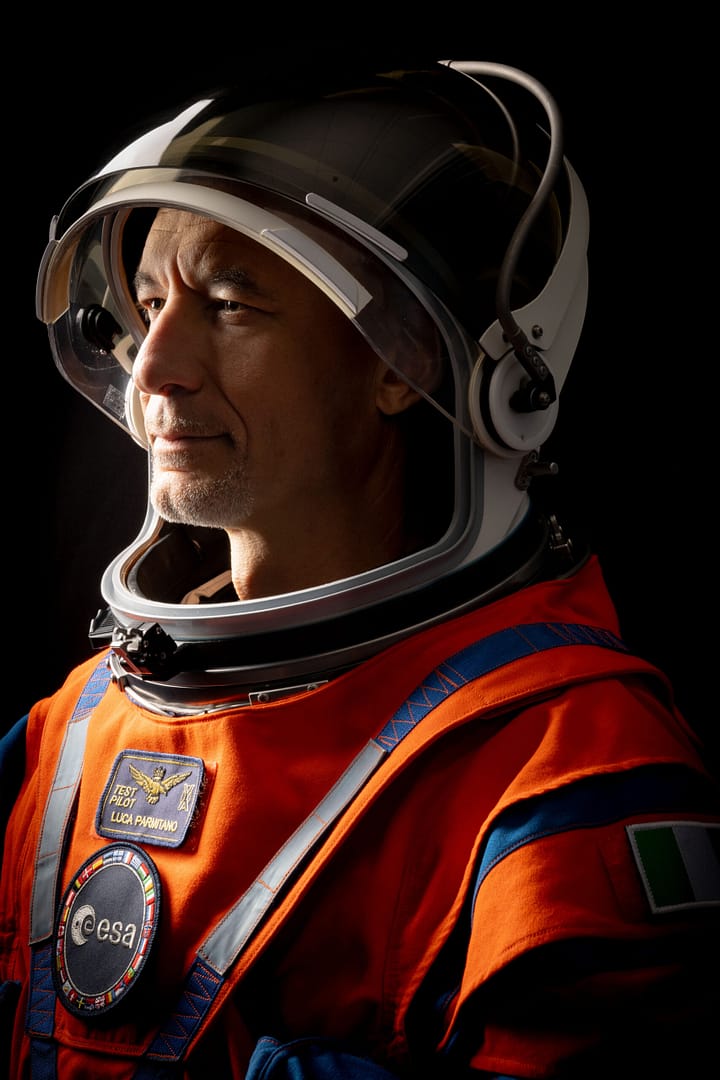
Luca Parmitano has lived two lives that most people only dream about. In the first, he was a fighter pilot — flying AMX Ghibli attack jets for the Italian Air Force, deployed to Afghanistan, trained to fly low and fast into hostile territory. In the second, he became one of ESA’s most accomplished astronauts, spending 367 days in space across two missions and commanding the International Space Station. Now, he’s about to start a third: pilot of Artemis III, the mission that will return humans to the lunar surface for the first time since 1972 — and make him the first European to orbit the Moon.
Parmitano’s path from Catania, Sicily to the Moon is one of the most remarkable careers in modern aerospace — a story that connects the cockpit of a ground attack jet to the command deck of a spacecraft bound for another world.
✈ Quick Facts
- Born: September 27, 1976, Paternò, Sicily, Italy
- Military career: Italian Air Force — AMX Ghibli pilot, 800+ flight hours in 40+ aircraft types
- Selected by ESA: 2009 (ESA astronaut class)
- First spaceflight: Volare mission (ISS Expedition 36/37), 2013 — 166 days
- Second spaceflight: Beyond mission (ISS Expedition 60/61), 2019 — 201 days, ISS Commander
- Total time in space: 367 days
- EVAs: 6 spacewalks, 33+ hours
- Artemis III role: Pilot — first European assigned to NASA’s lunar program
- Artemis III crew: Randy Bresnik (commander), Luca Parmitano (pilot), Andre Douglas, Frank Rubio
Fighter Pilot First
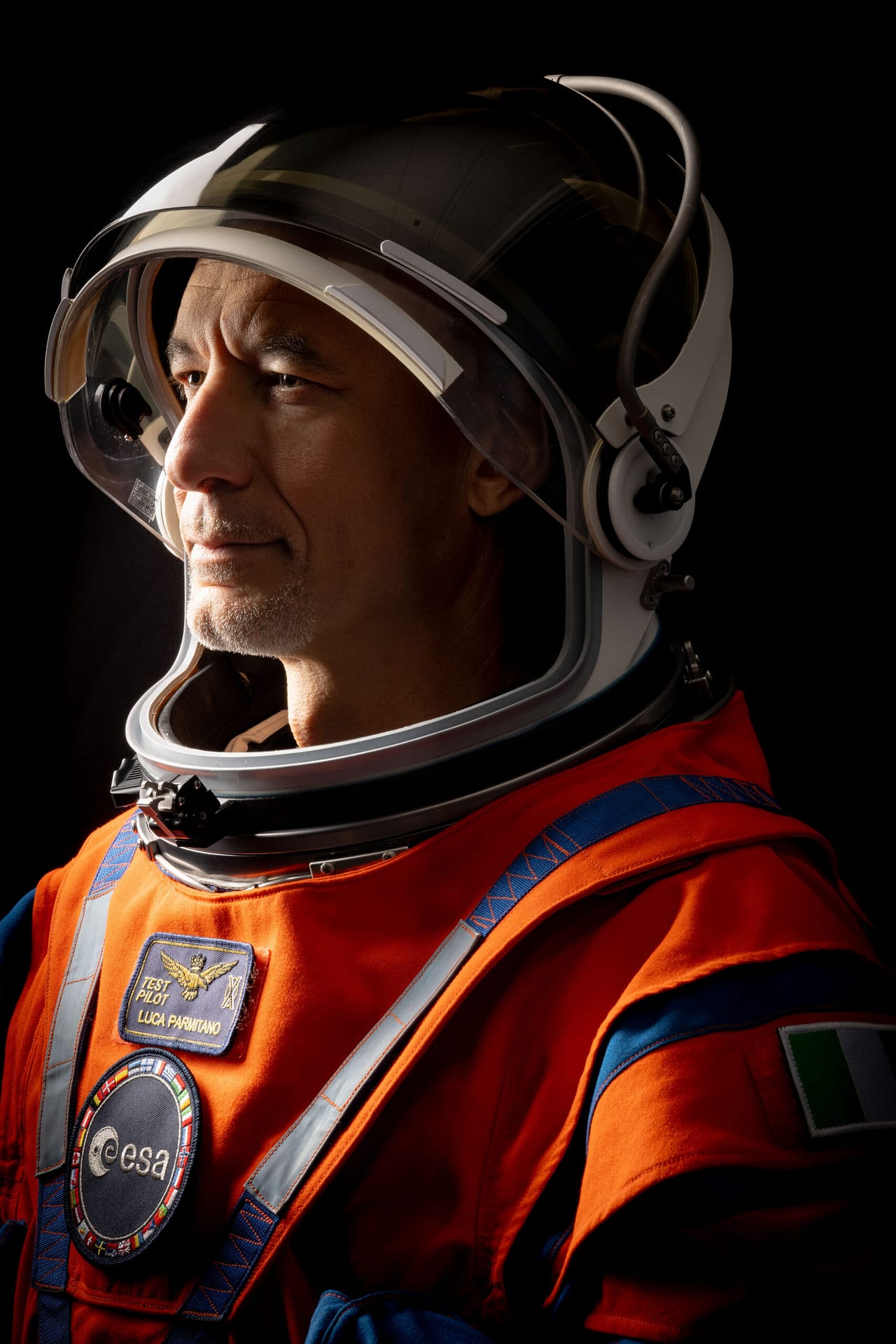
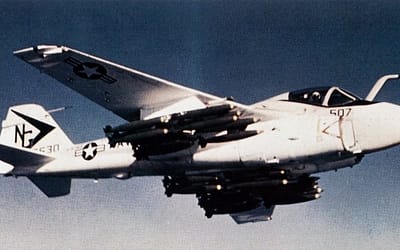
Before space, there was speed. Parmitano graduated from the Italian Air Force Academy in Pozzuoli in 1999 and earned his military pilot wings the following year. He was assigned to fly the AMX Ghibli — Italy’s subsonic ground attack and reconnaissance jet, a workhorse of Italian air power through the 2000s. He deployed to Afghanistan, flew combat support missions, and accumulated over 800 hours in more than 40 different aircraft types, including the Eurofighter Typhoon.
Parmitano was also a test pilot, graduating from the French test pilot school EPNER in Istres — one of only a handful of non-French pilots accepted into the program. The test pilot qualification would prove critical: the analytical skills required to evaluate aircraft performance translate directly to the demands of spacecraft systems management.
“Being a fighter pilot taught me to make decisions under pressure with incomplete information. Being a test pilot taught me to remain analytical when everything is going wrong. Both of those skills saved my life in space.”
Luca Parmitano — Interview, The Aviationist
The Spacewalk That Nearly Killed Him
Parmitano’s name became known worldwide on July 16, 2013, during his second spacewalk on the Volare mission. Approximately 44 minutes into the EVA, water began leaking into his helmet from the suit’s cooling system. As the water accumulated — eventually filling his eyes, nose, and ears — Parmitano couldn’t see, hear, or breathe properly. He was effectively drowning in space.
In conditions that would have caused most people to panic, Parmitano stayed calm. Using memory and his safety tether to navigate back to the airlock, he made it inside before the situation became fatal. The incident led to a complete redesign of EVA suit safety systems and is studied by NASA as one of the most dangerous emergencies in spacewalk history. Parmitano’s composure under extreme duress was credited as the primary reason he survived.
ISS Commander and Beyond
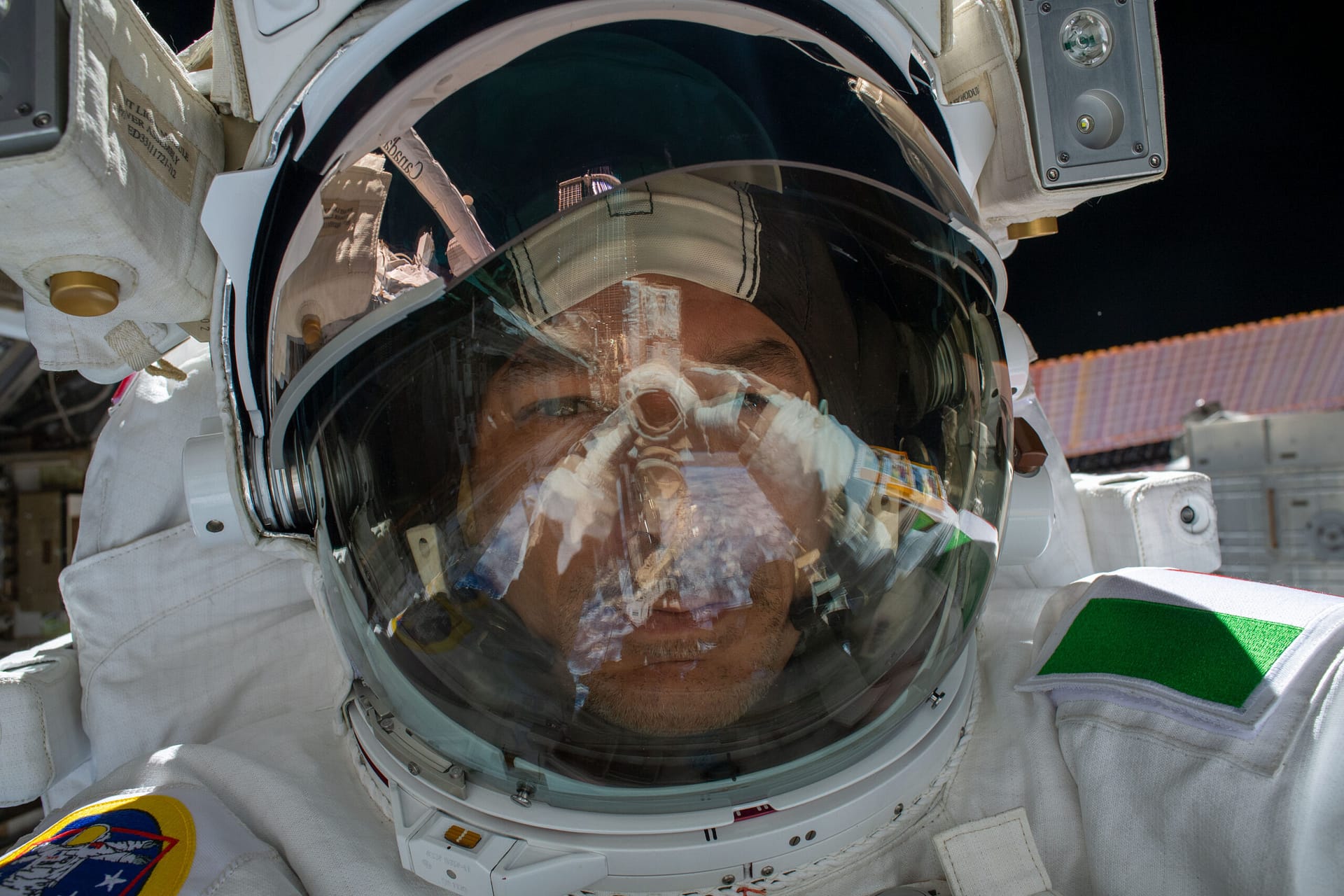
Parmitano returned to space in 2019 for the Beyond mission, this time as commander of the International Space Station — only the third ESA astronaut to hold that role. During this 201-day mission, he conducted four spacewalks to repair the Alpha Magnetic Spectrometer (AMS-02), a complex particle physics experiment mounted on the station’s exterior. These EVAs were among the most technically demanding ever performed.
Artemis III: To the Moon

In early 2026, NASA announced the Artemis III crew: commander Randy Bresnik, pilot Luca Parmitano, and mission specialists Andre Douglas and Frank Rubio. Parmitano’s selection as pilot makes him the first European astronaut assigned to a lunar mission — a historic moment for ESA and for international space cooperation.
As pilot, Parmitano will be responsible for operating the Orion spacecraft during transit to and from the Moon. While two crew members descend to the lunar surface aboard SpaceX’s Starship HLS lander, Parmitano and one other will remain in lunar orbit aboard Orion — the most isolated humans in the solar system.
“From flying AMX jets over the mountains of Afghanistan to orbiting the Moon — this is the trajectory of a career built on calculated risk-taking, extraordinary composure, and the kind of all-round capability that the space program demands.”
ESA Director General — On Parmitano’s Artemis selection
Fighter Pilot to Moonwalker
Parmitano’s career encapsulates a truth that runs through aerospace history: the skills that make a great fighter pilot — spatial awareness, decision-making under pressure, the ability to manage complex systems while executing a mission — are the same skills that make a great astronaut. From Chuck Yeager to John Glenn to Parmitano himself, the path from the cockpit to the capsule remains the most proven route to space.
When Artemis III launches, Luca Parmitano will carry the legacy of Italy’s military aviation community, ESA’s astronaut corps, and every fighter pilot who ever looked up from the cockpit and wondered what lay beyond the atmosphere. The answer, for him, will be the Moon.
Sources: ESA, NASA, Italian Air Force, The Aviationist, “Volare: My Story from Fighter Pilot to Astronaut” (Luca Parmitano), Corriere della Sera

 English
0 Comments