

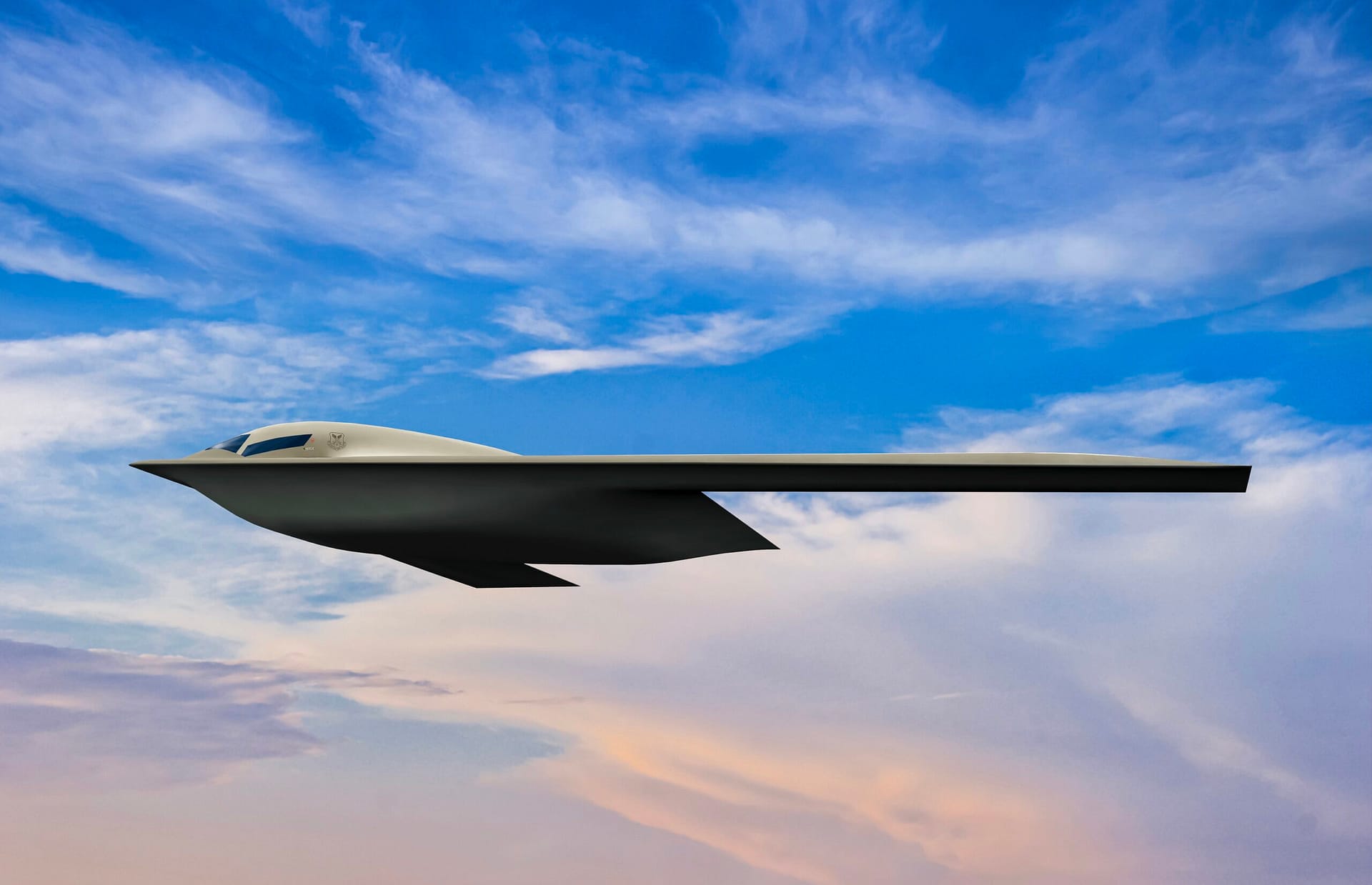
For the first time in the history of modern flight testing, an operational combat pilot has taken the controls of a bomber still deep in its developmental test phase. On a recent sortie at Edwards Air Force Base, California, a pilot from the Air Force Operational Test and Evaluation Center’s Detachment 5 flew the B-21 Raider stealth bomber alongside a developmental test pilot from the 420th Flight Test Squadron.
The milestone, announced by the 412th Test Wing on June 11, 2026, signals a decisive shift for America’s next-generation nuclear-capable bomber. The B-21 is no longer just proving it can fly safely. It is now proving it can fight.
The combined developmental and operational test (DT/OT) approach represents the earliest such integration in any major U.S. aircraft acquisition program, shattering timelines that historically kept operational evaluators waiting years before touching a new airframe.
Quick Facts
- Aircraft: Northrop Grumman B-21 Raider
- Milestone: First operational test pilot flight during developmental testing
- Location: Edwards Air Force Base, California
- Test unit: AFOTEC Detachment 5 / 420th Flight Test Squadron
- Test aircraft in fleet: Two B-21s at Edwards
- First flight: November 2023
- Planned deployment: Ellsworth AFB, South Dakota, 2027
- Role: Next-generation nuclear-capable stealth bomber
Breaking the Test Barrier
Traditionally, developmental testing and operational testing are kept in rigid sequence. Engineers first confirm the aircraft meets its technical specifications. Only much later, sometimes years later, do operational pilots evaluate whether the platform can actually perform in combat conditions.
The B-21 program is doing both simultaneously.

The sortie was enabled by the arrival of a second B-21 test aircraft at Edwards in September 2025, which expanded the Raider Combined Test Force’s capacity beyond initial flight performance checks into mission systems and weapons integration testing.
From “Can It Fly” to “Can It Fight”
Operational test evaluates fundamentally different questions than developmental test. It asks whether crews can employ the aircraft under realistic mission conditions, whether maintainers can sustain it in the field, whether mission systems support actual combat tasks, and whether the bomber can survive and deliver weapons against real-world threats.
Lt. Col. Matthew Gray, 420th Flight Test Squadron commander and Raider Combined Test Force director, emphasized the significance: by bringing operational testers onto the team at this early stage, the Air Force can evaluate the bomber’s true combat utility, not just its flying characteristics.
Urgency Without Recklessness
Gen. Dale White, the Department of War’s direct reporting portfolio manager for critical major weapon systems, visited the Raider CTF team at Edwards on June 8 and outlined the strategic stakes. His portfolio includes the B-21, the F-47 next-generation fighter, the Sentinel ICBM, and Collaborative Combat Aircraft — the pillars of America’s future deterrence architecture.
White stressed that urgency does not mean recklessness. Instead of demanding the team go faster, he asked a different question: “How can I clear the way?” His priority is ensuring the program gets adequate resources while protecting the testing team from bureaucratic overload.
“Integrating operational and developmental test in the B-21 program exemplifies the acquisition culture we are instilling throughout the force,” White said. “It is a smarter and faster mindset that leverages modern production and test tools with the proper sense of urgency.”
The Road to Ellsworth
Both Air Force and Northrop Grumman officials have said the B-21 is “close” to entering service. The stealth bomber is expected to arrive at Ellsworth AFB, South Dakota, in 2027, where it will begin replacing the aging B-1 Lancer and B-2 Spirit bombers as the backbone of America’s long-range strike capability.
The program already has over 200 bombers on the table for production, and production is accelerating at Northrop Grumman’s facility at Plant 42 in Palmdale, California. A similar combined DT/OT approach was first tested on the F-15EX Eagle II, but the B-21’s integration has happened even earlier in the program timeline.
For a stealth bomber designed to penetrate the most advanced air defenses on the planet, the message is unmistakable: the B-21 Raider is no longer an experimental aircraft. It is a weapon system preparing for war.
Sources: U.S. Air Force (412th Test Wing press release), The Aviationist, Air Data News, Defence Blog, Aerospace Testing International, Eurasian Times


 English
0 Comments