
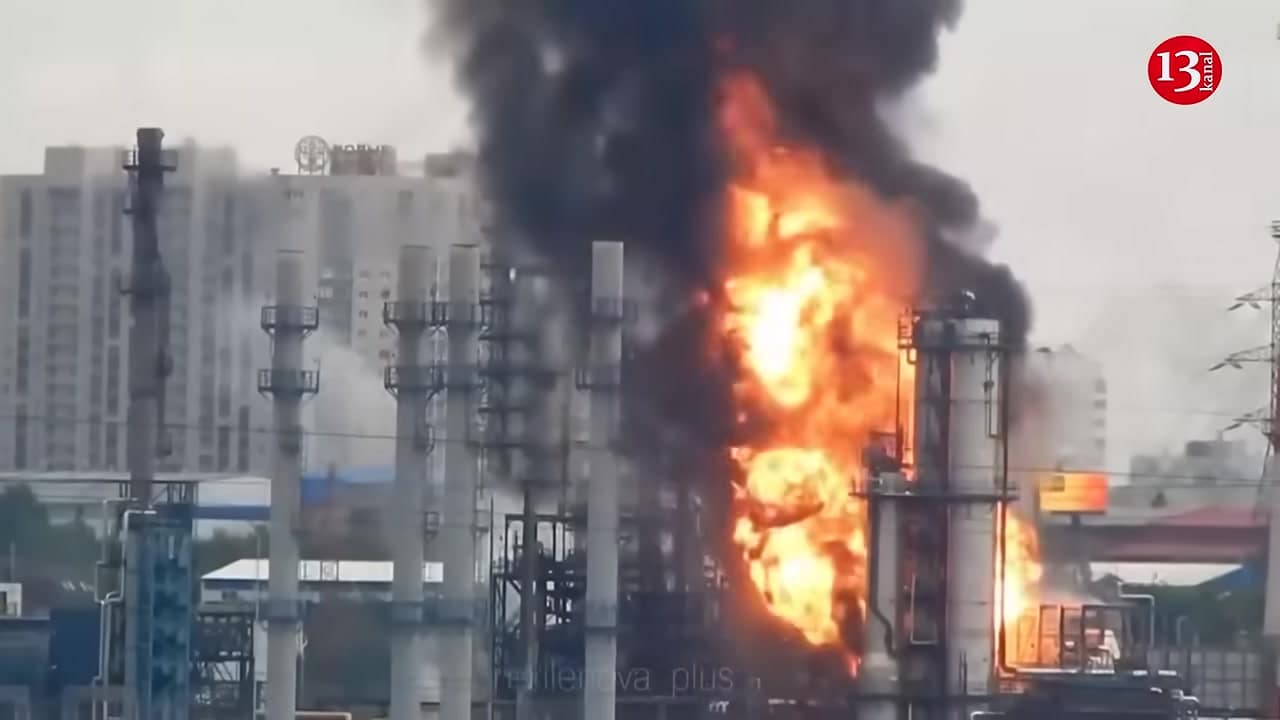
At four in the morning on June 18, the sky above Moscow began to hum. Over the next three hours, 137 Ukrainian drones descended on the Russian capital and its surroundings in what officials are calling one of the largest single aerial attacks of the war. The primary target was familiar: the Moscow Oil Refinery — known by its Russian acronym MNPZ — struck for the second time in barely a week.
The refinery, which sits along the Moscow River and supplies roughly 40 percent of the capital’s gasoline, was already operating at reduced capacity from the previous strike. Now, with fires burning across multiple processing units, it faces an operational shutdown that will ripple far beyond Moscow’s gas stations. Russia’s total refining capacity has fallen below four million barrels per day — the lowest level in 21 years — and fuel shortages have spread to more than 25 regions across the country.
For Ukraine, this is not random destruction. It is the systematic dismantling of the economic infrastructure that funds Russia’s war machine, delivered one drone swarm at a time.
Quick Facts
- Scale: 137 drones launched in a single three-hour attack (4:00–7:00 AM, June 18)
- Target: Moscow Oil Refinery (MNPZ) — hit for the 2nd time in one week
- Refinery output: Supplies ~40% of Moscow’s gasoline
- National impact: Russian refining below 4 million bbl/day — 21-year low
- Capacity offline: Approximately one-third of total Russian refining capacity damaged or idle
- Fuel shortages: 25+ Russian regions affected, including jet fuel restrictions at airports
A Refinery Under Siege
The Moscow Oil Refinery is not just any facility. Owned by Gazprom Neft, it is one of the oldest and most strategically critical refineries in Russia, processing crude oil into the gasoline, diesel, and jet fuel that keep the capital and its surrounding regions running. When Ukrainian drones struck it on June 15, the damage was significant but contained. Three days later, the second wave hit harder.
Russian officials claimed that the majority of the 137 drones were intercepted, but the strikes that made it through found their marks. Multiple fires broke out across the refinery complex, and processing units that had only just been partially restored from the previous attack were knocked offline again. President Volodymyr Zelensky confirmed the strike, writing that Ukraine’s “long-range sanctions once again reached the Moscow region.”
The broader pattern is unmistakable. Since August 2025, Ukraine has conducted a sustained campaign against Russian refining infrastructure, systematically degrading the facilities that turn crude oil into usable fuel. The Moscow refinery is the most high-profile target, but it is far from the only one. Oil depots in Rostov Oblast were burning simultaneously during the June 18 attack, and refineries across southern Russia have been hit repeatedly over the past ten months.
The Fuel Crisis Deepens
The cumulative damage is staggering. Analysts estimate that approximately 2.14 million barrels per day of Russian refining capacity is currently idle — nearly a third of the country’s total. In early June, refining volumes fell below four million barrels per day, the lowest since 2005. For a nation that relies on energy exports as the primary funding mechanism for its military operations, the trajectory is alarming.
The fuel shortages are no longer confined to border regions or occupied territories. Gasoline rationing or supply restrictions have appeared in more than 25 regions, including St. Petersburg, Yekaterinburg, and Krasnodar. Airports in six cities have imposed jet fuel restrictions, affecting domestic air travel. Russian farmers in the south and central Black Earth regions have reported diesel supply disruptions during the critical planting season. In mid-June, the Russian government took the extraordinary step of allowing refineries to produce below-standard gasoline to ease the shortage — a concession that underscores how deeply the crisis has bitten.
Analysts have drawn comparisons to the Allied oil offensive of 1944, arguing that Ukraine’s sustained refinery campaign is achieving with cheap long-range drones the kind of strategic effect that once required fleets of heavy bombers.
Western military analysts
Strategy, Not Spectacle
What makes Ukraine’s approach distinctive is its patience. Rather than seeking dramatic single strikes, the campaign returns to the same targets repeatedly, preventing repair and ensuring that cumulative degradation becomes permanent capacity loss. The Moscow refinery has now been struck multiple times across different waves, each attack building on the damage from the last.
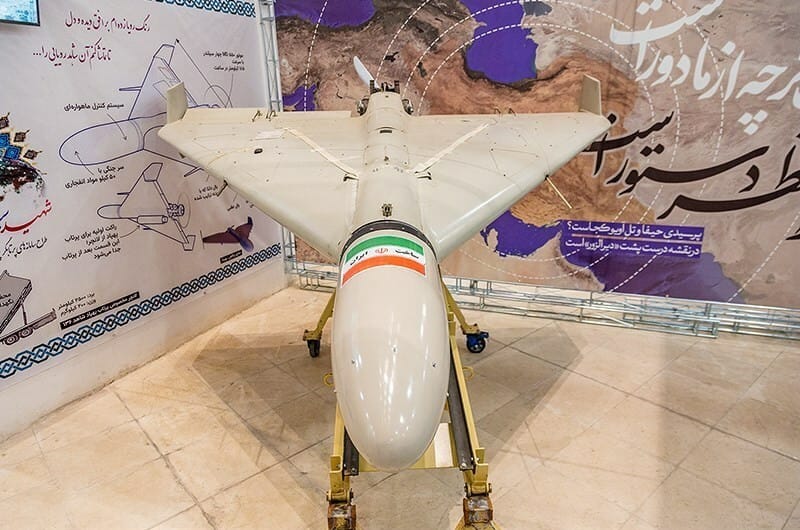
The economics are lopsided in Ukraine’s favour. A domestically produced long-range drone costs a fraction of the Patriot or S-400 interceptor missiles that Russia must expend to shoot it down. Even when most drones in a swarm are intercepted, the few that penetrate can inflict damage worth hundreds of millions of dollars. At 137 drones in a single night, the math overwhelms any air defence system.
For Moscow, the refinery fires are a visible reminder of a war that was supposed to stay far from the capital. For Ukraine, they are proof that strategic depth can be erased with persistence, precision, and enough drones to fill a three-hour window in the predawn sky.
Sources: Kyiv Post, Bloomberg, Kyiv Independent, Newsweek, Euromaidan Press, Meduza, US News

 English
0 Comments