
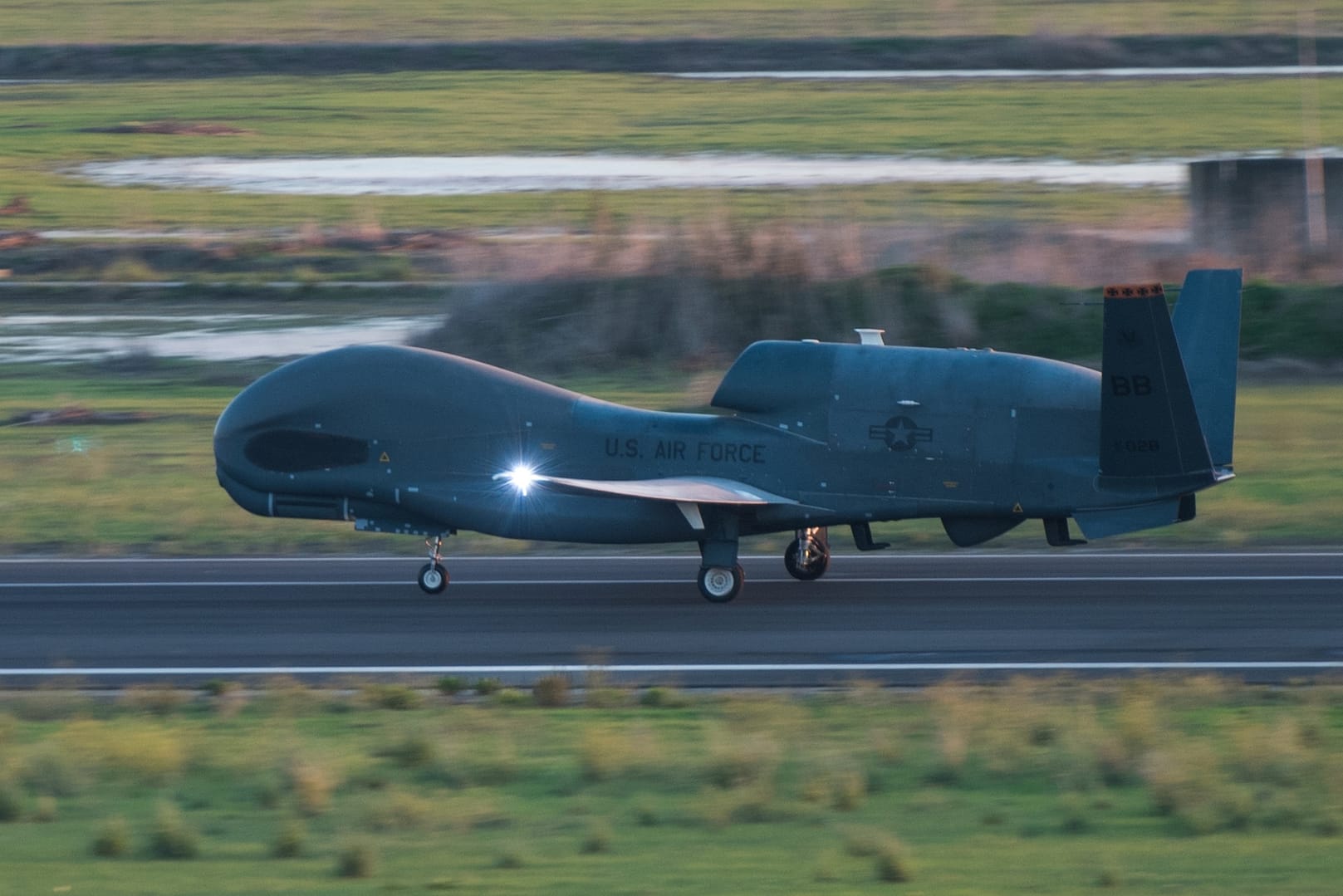
Some of the most consequential military moves are also the quietest. This week the U.S. Air Force announced that it had permanently relocated its giant RQ-4B Global Hawk surveillance drones from Guam to Japan — a low-key bed-down that says a great deal about where Washington thinks the next contest will play out.
Three of the high-flying spy aircraft, operated by the 4th Reconnaissance Squadron, made the hop from Andersen Air Force Base to Yokota Air Base in late May. As of now, they are staying.
Quick Facts
- What: the USAF permanently moved its RQ-4B Global Hawk spy drones from Andersen AFB, Guam to Yokota AB, Japan
- Unit: the 4th Reconnaissance Squadron — three RQ-4B Block 40 aircraft
- When: the jets moved May 25–27, 2026; the relocation was announced June 15
- Why: better weather (typhoons hit Guam harder) and persistent surveillance closer to the action
- The drone: flies above 60,000 ft for 24-plus hours, with radar and moving-target sensors, controlled by satellite from North Dakota
From Guam to the Front Row
The Global Hawks were no strangers to Yokota; the squadron used to deploy there every summer to escape Guam’s brutal typhoon season. What changed in 2026 is that the seasonal visit became permanent. The official reason is weather resilience and “persistent in-theater ISR” — intelligence, surveillance and reconnaissance — for U.S. and allied forces.
The unofficial reason is geography. Yokota sits much closer to the First Island Chain — the arc of Japan, Taiwan and the Philippines where Chinese air and naval activity is increasingly concentrated. Moving the drones west puts the cameras nearer the things the U.S. most wants to watch.
The 60,000-Foot Eye
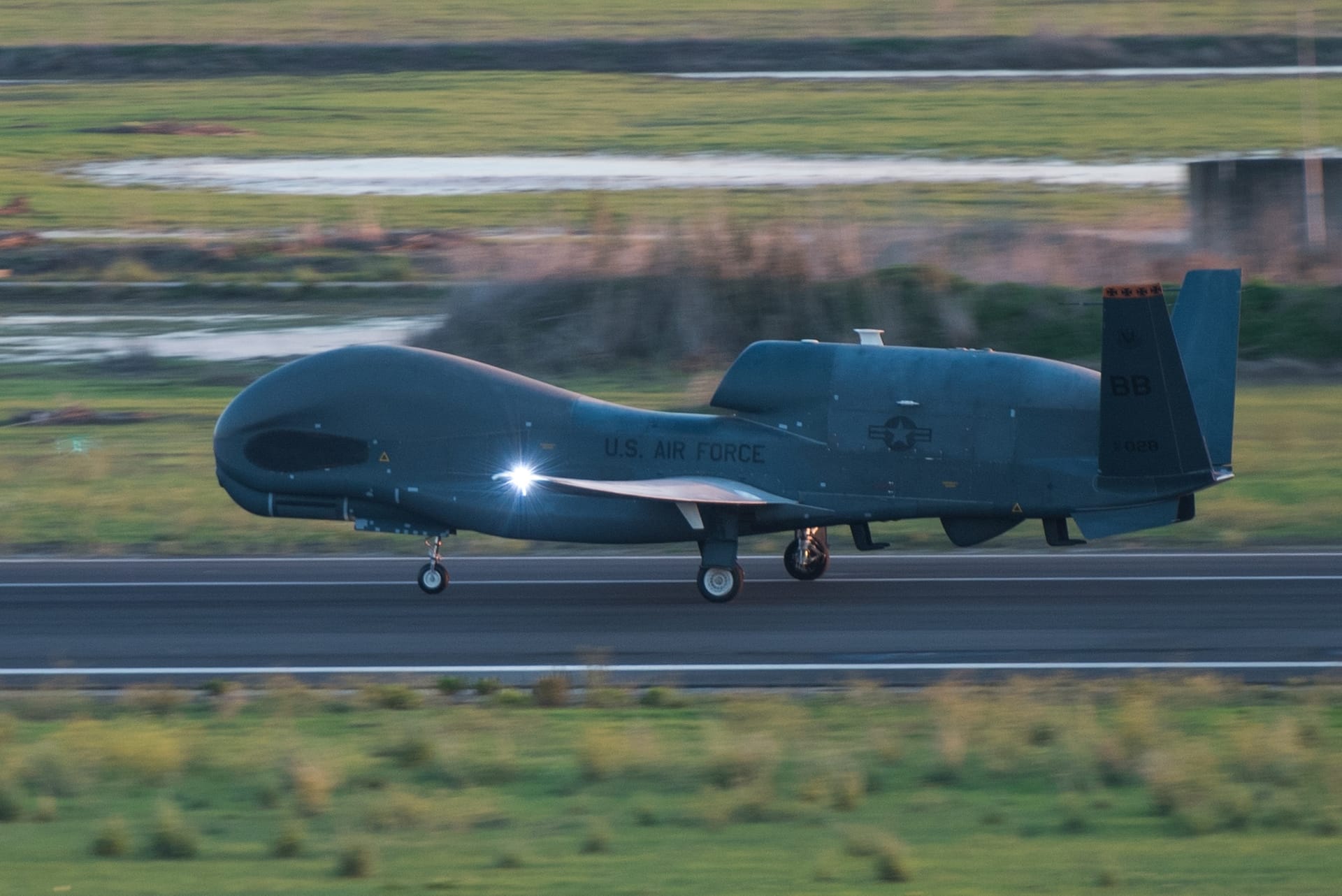
The RQ-4B is a high-altitude, long-endurance machine in the truest sense. It cruises above 60,000 feet for more than 24 hours at a stretch, carrying synthetic-aperture radar and ground-moving-target sensors that can map vast areas day or night, in any weather. It is flown by satellite link, with mission control sitting all the way back at Grand Forks Air Force Base in North Dakota while crews at the forward base handle launch and recovery.
A Closer Watch
The timing is notable. The same week the drones’ new home was announced, U.S. Pacific Command quietly reverted to its older name after years as Indo-Pacific Command — a reshuffle of labels that, like the Global Hawk move itself, hints at a Pacific posture in flux. The aircraft may have shifted only a couple of thousand miles, but in the geometry of the western Pacific, those miles matter.
Sources: U.S. Air Force; 374th Airlift Wing; Pacific Air Forces; The Aviationist.
Related Posts

 English
0 Comments