
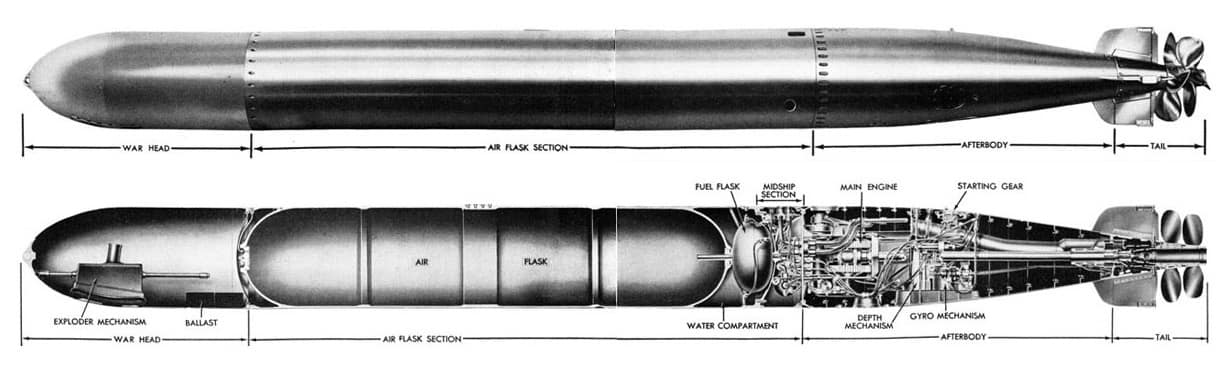
Launching a torpedo is the easy part. The hard part is what happens next: keeping a one-tonne self-propelled bomb running dead straight and at exactly the right depth, through the chaos of the sea, toward a ship that is moving and may be more than a mile away. There is no one steering it. So how did a World War II torpedo stay on target?
The answer is a small masterpiece of mechanical engineering — and, by the end of the war, the first glimmers of a weapon that could think for itself.
Quick Facts
- The problem: fire a self-propelled bomb at a moving ship a mile away and keep it running straight, level and on heading underwater
- Heading: a spinning gyroscope sensed any deviation and worked the rudders to hold the set course
- Depth: a hydrostatic valve and a pendulum balanced water pressure against a spring to hold a set running depth
- The leap: late-war torpedoes added zig-zag pattern-running and even acoustic homing
- Homers: Germany’s Zaunkönig homed on propeller noise; the air-dropped US Mark 24 “FIDO” hunted submarines by sound
The Gyroscope: Holding the Heading
The heart of the system was a gyroscope — a small, fast-spinning wheel. A spinning gyro resists any change to the direction of its axis, so it provides a rock-steady reference for “straight ahead.” The moment the torpedo began to drift off its set course, the gyro sensed the error and drove the vertical rudders to nudge it back. The result was a weapon that ran arrow-straight, or along a precise pre-set angle chosen at launch.
The Pendulum: Holding the Depth
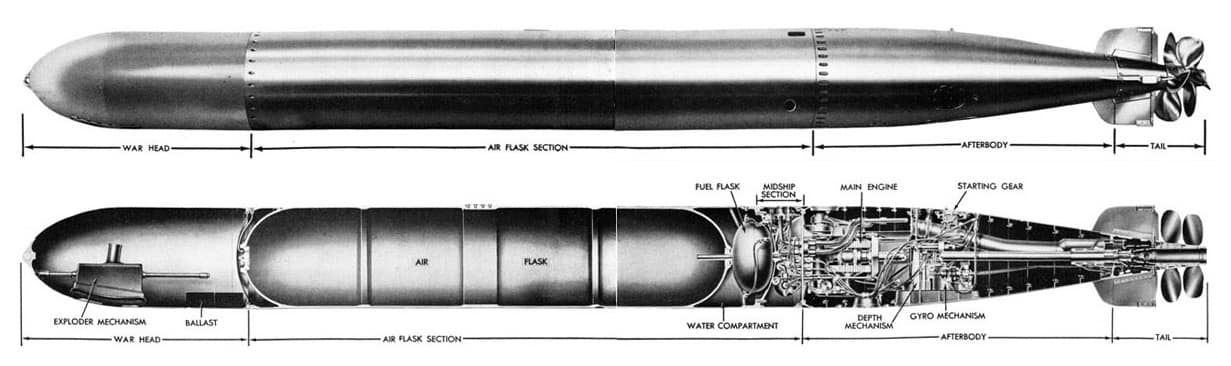
Direction was only half the battle; depth was the other. Run too shallow and the torpedo porpoises to the surface, giving itself away; run too deep and it passes harmlessly under the target’s keel. To solve this, engineers used a hydrostatic valve that balanced the surrounding water pressure against a spring, combined with a pendulum to damp out the up-and-down oscillations. Together they worked the horizontal fins to hold the torpedo at a set depth, smoothing out what would otherwise be a wild porpoising ride.
Beyond Straight Lines
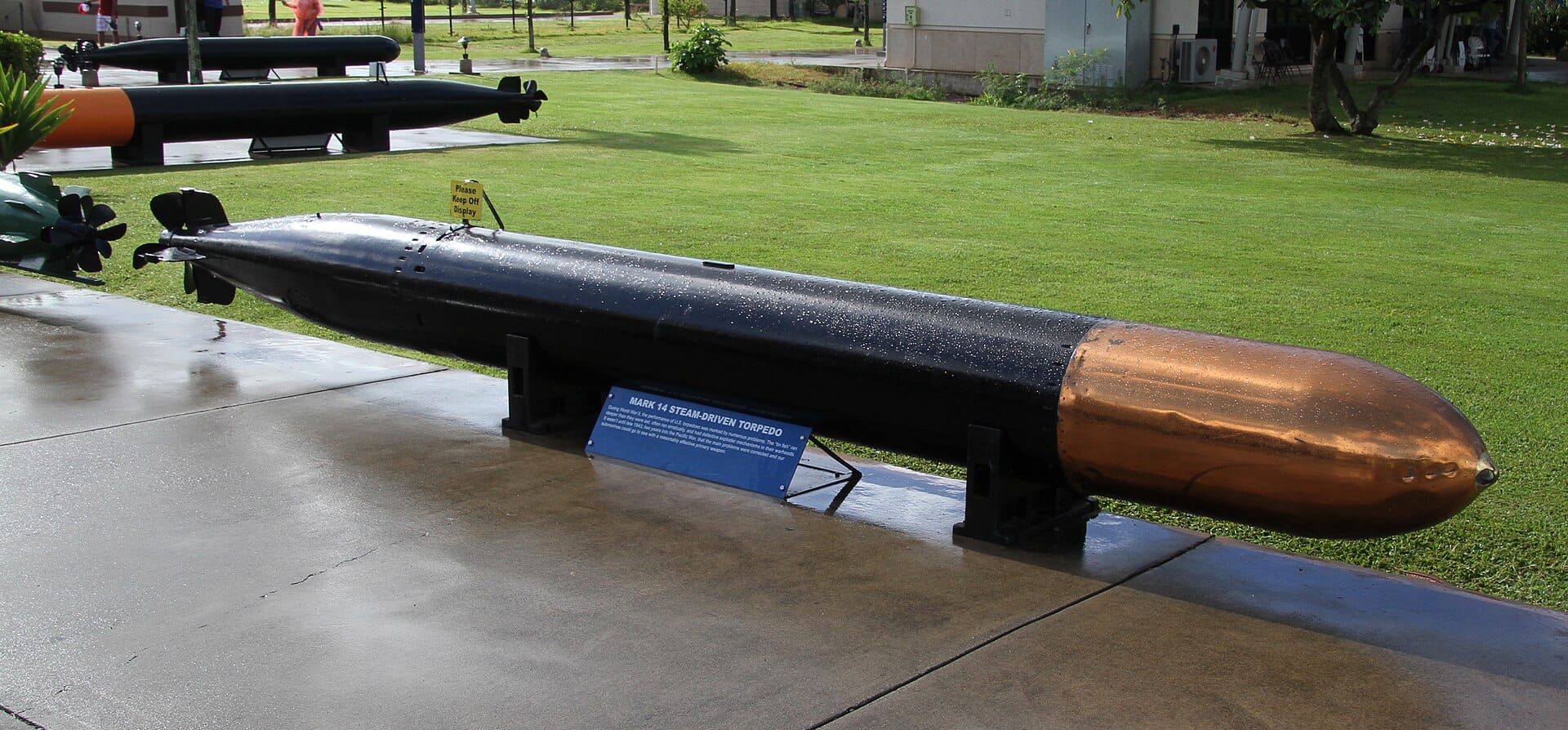
As the war went on, torpedoes grew cleverer. German “pattern-running” torpedoes could be set to weave or loop through a convoy, vastly improving the odds of striking something. But the real revolution was acoustic homing. The German G7es Zaunkönig carried hydrophones tuned to the roughly 24-kilohertz whine of a warship’s propellers, letting it chase the escort that was hunting the U-boat. The Allies answered with the Mark 24 — codenamed “FIDO” — an air-dropped torpedo that would circle quietly at depth until it heard a submarine, then home in on the sound.

In the space of a few years, the torpedo went from a blind, gyro-guided projectile that simply held a heading to a weapon that could listen for its prey and steer itself in for the kill. The quiet machinery in that steel tube was the start of the guided weapons that rule the oceans today.
Sources: WW2DB; uboat.net; U.S. Navy Ordnance Pamphlet 635; Wikipedia.
 English
0 Comments