
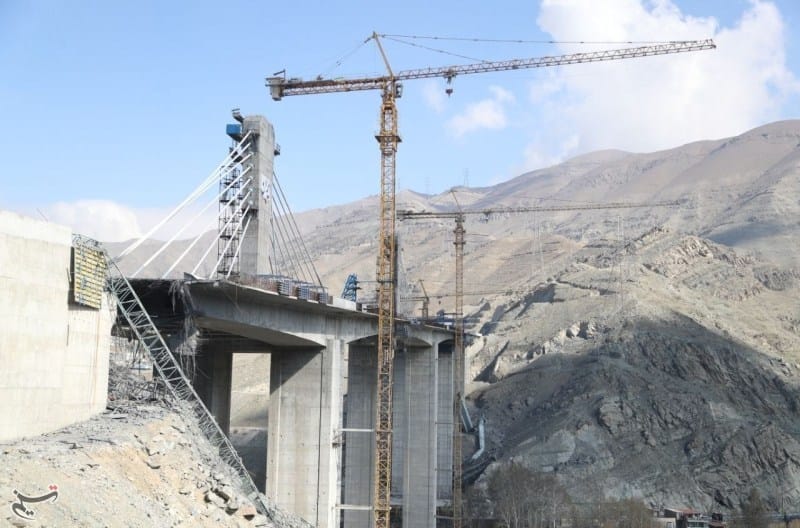
Two missiles slammed into the Karaj B1 bridge on April 2 and turned Iran's tallest road structure into rubble. Five days later, on April 7, strikes hit a highway bridge west of Qom and the Yahyaabad railway bridge near Kashan, killing at least two more people and severing a key rail artery through central Iran. The same day, explosions rattled Chabahar port on Iran's southeastern coast.
What began six weeks ago as a precision campaign against Iran's missile sites and military leadership has expanded into something far broader and far more controversial. Operation Epic Fury is now systematically dismantling Iran's transport and energy infrastructure, and Iran's Revolutionary Guards are striking back at Gulf oil facilities with a promise that the worst is yet to come.
The escalation has triggered the sharpest legal and strategic debate of the conflict so far. Over 100 international law professors have called the strikes potential war crimes. The Pentagon insists they are lawful. And the IRGC warns that the consequences of this infrastructure war will be felt for years by everyone.
Key Targets Karaj B1 bridge (April 2), Qom province bridge (April 7), Yahyaabad railway bridge near Kashan (April 7), Chabahar port installations, Kharg Island oil export hub
Casualties (Reported) B1 bridge: 8 killed, 95+ wounded · Kashan railway: 2 killed, 3 wounded · Qom bridge: 5 killed
IRGC Response Retaliatory strikes on Gulf energy and petrochemical sites; threat of “much more devastating” second phase targeting oil and gas infrastructure
Legal Debate 100+ international law professors signed open letter calling strikes potential violations of UN Charter; Pentagon cites dual-use targeting doctrine and law of reprisal
Operation Epic Fury (US) / Roaring Lion (Israel) — ongoing since February 28, 2026
The April 7 Strikes: Qom, Kashan, Chabahar
Tuesday's attacks hit three distinct types of infrastructure in three different regions of Iran. Near Qom, one of Iran's holiest cities 125 kilometres south of Tehran, a strike severed a bridge on what Iranian officials described as a key communication and supply route. Five people were killed, according to Qom's deputy governor, Morteza Heydari.
In Isfahan province, the Yahyaabad railway bridge near the city of Kashan was struck, killing two civilians and wounding three more. Kashan sits on the main Tehran–Isfahan rail corridor, a vital artery for both civilian passengers and freight.
Further south, explosions were reported near Chabahar's Shahid Kalantari port and the adjacent Imam Ali military base. Chabahar is Iran's only deep-water port on the Gulf of Oman, strategically positioned outside the Strait of Hormuz chokepoint. Indian-funded commercial facilities at the Shahid Beheshti terminal reportedly escaped damage, but military installations around the port did not.
The strikes came hours after Israel's military announced it had completed a "wide-scale wave of strikes targeting dozens of infrastructure sites" across Iran. Simultaneously, US B-52s continued dropping JDAMs on targets across the country from their forward base at RAF Fairford in England.
From the B1 Bridge to a Pattern
The infrastructure campaign's most dramatic moment came on April 2, when two 2,000-pound class munitions, likely GBU-31 JDAMs, hit the B1 bridge connecting Tehran and Karaj. At 176 metres tall and 1,050 metres long, it was Iran's most complex engineering project and the tallest bridge in the Middle East. Eight people died and over 95 were wounded. Iranian media reported that the second strike came after first responders had already arrived, a "double tap" that drew particular international condemnation.

The New York Times reported that the B1 bridge was part of a planned military supply route for sustaining Iran's ballistic missile and attack drone force. Iran denied this, calling it a purely civilian structure. President Trump posted video of the explosion on Truth Social with the warning: "Much more to follow."
Since then, the target list has expanded relentlessly. Bridges near Tabriz and Zanjan in the northwest. The Mahshahr petrochemical complex in Khuzestan. Railway infrastructure near Karaj. And on April 7, the Qom and Kashan strikes pushed the campaign deeper into Iran's civilian transport network.
Iran Hits Back and Promises Worse
Iran's Islamic Revolutionary Guard Corps has not absorbed these blows quietly. On April 5, the IRGC claimed responsibility for drone strikes on the Sitrah petrochemical complex in Bahrain and the Shuaiba facility in Kuwait, describing the attacks as the "first phase" of retaliation for the destruction of Iranian infrastructure. Both facilities suffered major fires.
The Guard's statement contained an explicit escalation threat: if attacks on civilian infrastructure continue, the second phase of operations will be "much more devastating and widespread," potentially doubling losses for American economic interests in the Gulf. The IRGC Navy chief, Alireza Tangsiri, issued evacuation warnings for oil workers across Saudi Arabia, the UAE, and Qatar.

According to IRNA, senior Revolutionary Guards commanders have warned that any nation whose energy infrastructure depends on Gulf shipping lanes should prepare for years of disruption. The message is blunt: if you destroy our bridges and railways, we will make the consequences global.
The Legal Firestorm
The escalating infrastructure campaign has ignited a fierce legal debate with credible voices on both sides. More than 100 international law professors signed an open letter published on Just Security, arguing that the strikes violate both the UN Charter and international humanitarian law.

Rachel VanLandingham, a retired Air Force lieutenant colonel and professor at Southwestern Law School, has been among the most vocal critics on PBS NewsHour.

Former Human Rights Watch executive director Kenneth Roth singled out the "double tap" strike on the B1 bridge as particularly troubling.
The International Committee of the Red Cross weighed in too. ICRC President Mirjana Spoljaric Egger warned that the pattern of infrastructure destruction extends far beyond this conflict.

The Other Side of the Argument
Not everyone agrees. Major General Charles Dunlap (USAF, retired), a former deputy judge advocate general and now professor at Duke Law School, has laid out two distinct legal justifications for infrastructure strikes.

Dunlap's second argument is more provocative: the law of reprisal. He points to Iran's closure of the Strait of Hormuz, attacks on neutral shipping, and deliberate targeting of over 300 civilian objectives as severe violations that justify proportionate reprisals. The US, Iran, and Israel are not signatories to Protocol I of the Geneva Conventions.
The Pentagon's own position has been more restrained. Officials have described the campaign as "necessary and proportionate" collective self-defence under Article 51 of the UN Charter. Military lawyers within the targeting process have reportedly pushed for a case-by-case assessment of each infrastructure target — exactly what critics say is being bypassed.
The Human Cost on Both Sides of the Gulf
Whatever the legal arguments, the humanitarian reality on the ground is grim. Strikes on power systems trigger cascading failures: hospitals lose electricity, water treatment plants shut down, food supply chains break. Destroyed bridges cut off access to medical care. The effects compound over weeks and months.
Inside Iran, the Karaj B1 bridge was more than infrastructure. It was a source of national pride, an engineering feat meant to ease Tehran's crushing traffic congestion. Its destruction felt personal to millions of Iranians who had nothing to do with missile programs or the IRGC. But the consequences cut both directions. IRGC strikes on Gulf petrochemical facilities have sent oil prices surging and disrupted energy supplies to countries that are not parties to this war.
A War Without an Exit Ramp
Six weeks into Operation Epic Fury, the conflict has reached a dangerous inflection point. Iran rejected the latest US ceasefire proposal on April 6. Trump has set a Tuesday deadline for opening the Strait of Hormuz, threatening "complete demolition" of Iranian infrastructure if it is not met. The IRGC has responded that the Strait will "never revert to its pre-war state."
Both sides are now attacking what the other values most, and what civilians on both sides of the Gulf need most. Bridges. Railways. Power plants. Oil terminals. The weapons are precision-guided. The consequences are not.
Sources: The War Zone, NBC News, CGTN, Just Security, PBS NewsHour, Duke Law School Lawfire, Center for Human Rights in Iran, Al Jazeera, NPR, Argus Media, Tasnim News Agency, IRNA
Related Questions
What was Operation Epic Fury?
Operation Epic Fury was the US designation for a major air campaign against Iran in 2026, described as the most intense US air operation since 2003. What began as precision strikes on missile sites and military leadership expanded into a broader campaign hitting transport and energy infrastructure, before ending in a negotiated ceasefire.
What infrastructure did the strikes on Iran target?
The infrastructure phase struck bridges, railways, ports and energy sites across Iran, including the Karaj B1 bridge, a highway bridge in Qom province, the Yahyaabad railway bridge near Kashan, and installations at Chabahar port and the Kharg Island oil export hub. The aim was to disrupt Iran's transport and energy networks.
Why were the infrastructure strikes controversial?
The strikes drew sharp legal criticism because bridges, railways and ports are largely civilian infrastructure. More than 100 international law professors signed an open letter calling them potential violations of the UN Charter, while the Pentagon defended them by citing dual-use targeting doctrine and the law of reprisal.
How did Iran's IRGC respond to the strikes?
Iran's Revolutionary Guard Corps retaliated with strikes on Gulf energy and petrochemical facilities and warned of a far more damaging second phase aimed at oil and gas infrastructure. The tit-for-tat escalation raised fears of wider disruption to the region's energy exports.
What were the B-2 bunker buster strikes during the campaign?
During the campaign, B-2 Spirit stealth bombers dropped 30,000-pound Massive Ordnance Penetrators on a hardened underground IRGC command headquarters. These deep-penetration strikes targeted leadership and command sites that ordinary bombs could not reach, and were among the campaign's most significant single missions.
How did the Iran conflict end?
After weeks of escalating strikes, the conflict was halted by a two-week ceasefire between the United States, Israel and Iran, announced on April 7, 2026 and mediated by Pakistan. The ceasefire agreement required Iran to reopen the Strait of Hormuz and opened the door to peace talks.
Related Posts
0 Comments