

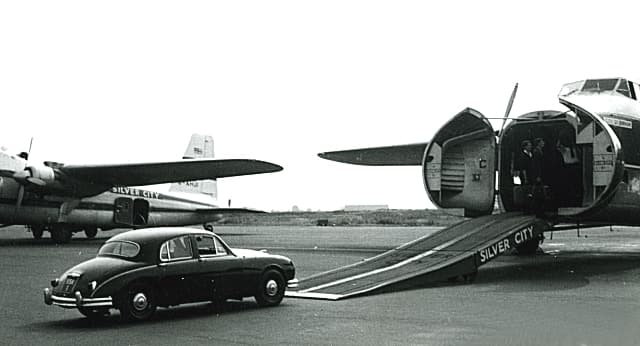
It is a grey, gusty morning on the Kent coast in 1955, and a man in a tweed jacket is doing something that looks faintly absurd: he is driving his Austin straight into the nose of an aeroplane. Ahead of him, two great rounded doors stand open like the jaws of a whale. A marshaller waves him up a short ramp, the suspension dips, and the family saloon rolls into the belly of a Bristol Type 170 Freighter. Twenty minutes later it will be in France.
For a couple of golden decades, this was simply how some people got across the English Channel. And the aircraft that made it possible, the slab-sided, bulbous-nosed Bristol Freighter, was about as far from glamorous as aviation gets. Which is exactly why its survivors matter, and why one of them is now the focus of an extraordinary rescue.
Quick Facts
| First flight | 2 December 1945 (Filton, England) |
| Maker | Bristol Aeroplane Company |
| Total built | 214 (production ended 1958) |
| Signature feature | Hinged clamshell nose doors for drive-in cargo |
| Famous role | Silver City Airways cross-Channel car ferry (from 1948) |
| Survivor in focus | NZ5911 — the only Bristol Freighter left in Europe |
A truck with wings
The Bristol Type 170 Freighter was never meant to be pretty. It was conceived during the Second World War, when the British Air Ministry wanted a rugged transport capable of hauling awkward loads into rough forward airstrips. The war ended before it could serve, and the prototype made its first flight from Filton on 2 December 1945.
Its genius lay in the nose. Bristol gave the Freighter wide clamshell doors and a flight deck perched high above the cargo floor, so the entire fuselage could be loaded straight from the ground. Vehicles, livestock, engines, even small aircraft could be driven or winched directly inside. Twin Bristol Hercules radial engines hauled the whole boxy contraption into the air. It was, in the affectionate words of many who flew it, a truck with wings.
Period newsreel: Silver City Airways and its cross-Channel car ferry.
A passenger-only variant called the Wayfarer was also built, and a stretched, higher-capacity version, the Superfreighter, followed. By the time production ended in 1958, just 214 had been made. Not a huge number, but they would scatter to the far corners of the world and work harder, in stranger places, than almost any airliner of their generation.
Flying cars across the Channel
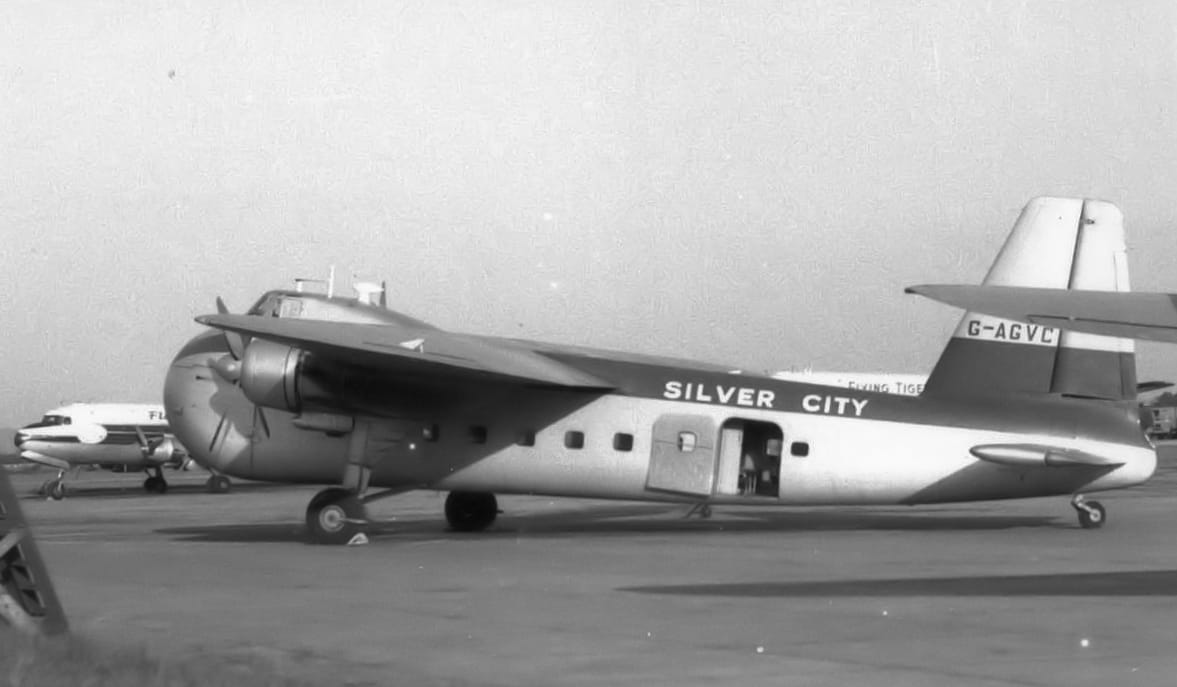
The Freighter's most charming chapter began in 1948, when Silver City Airways had a deceptively simple idea: if the aeroplane could swallow a car, why not sell the car owner a ticket too? On 7 July 1948 a Silver City Freighter flew the first cross-Channel air ferry, from Lympne in Kent to Le Touquet on the French coast.
The public loved it. Crossings took roughly twenty minutes against hours by sea, with no seasickness and no waiting for the tide. Business grew so fast that Silver City built a purpose-made ferry terminal, Ferryfield at Lydd, and ran the Freighters at a punishing pace.
Eventually the car ferry was undone by the very progress it represented. Bigger, faster roll-on roll-off sea ferries and, later, the dream of a Channel tunnel made the airborne crossing uneconomic, and the service wound down through the 1960s. But the Freighter itself was far from finished.
The workhorse that wouldn't quit
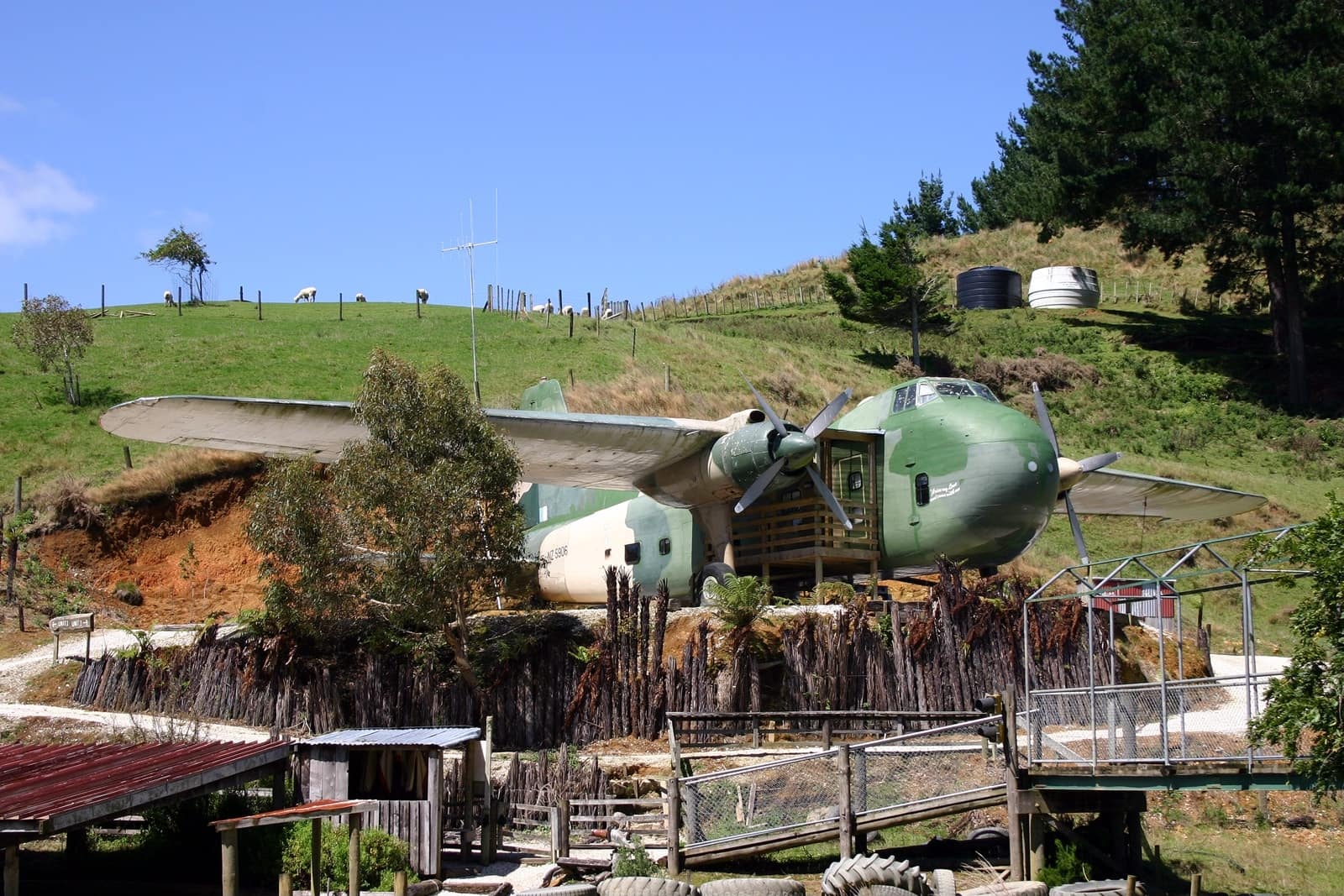
Where the Channel ferries faded, the Freighter found a second life doing the jobs nobody else wanted. In New Zealand, Straits Air Freight Express (SAFE Air) flew them across Cook Strait from 1951 right up to 1986, even fitting a removable passenger pod into the cargo hold. The Royal New Zealand Air Force flew them too, hauling troops and supplies around the Pacific and Southeast Asia.
It is one of those RNZAF aircraft that now sits at the heart of the story. NZ5911, a Mk 31M built at Filton, joined No. 41 Squadron in the mid-1950s and served until 1977, after which it was left to weather away on a New Zealand airfield. In January 2018, following a major international recovery effort, Aerospace Bristol volunteers brought it home to the very city where it was built.
Back from the brink
On 21 May 2026, Aerospace Bristol launched what it has called one of its boldest projects yet: a multi-year conservation programme to save NZ5911, the only Bristol Freighter left in Europe and one of barely a dozen surviving anywhere in the world. Rather than a sealed-off workshop, the work is happening in the open, so visitors and online audiences can watch the aircraft come back to life piece by piece.
The task is formidable. A team of volunteers, many of them former aerospace engineers and ex-employees of the original Bristol Aeroplane Company, are expected to pour thousands of hours into cleaning the airframe, treating corrosion, reassembling the aircraft and finally repainting it in its RNZAF colours.
A documentary look at the Bristol Freighter, its design and working life.
It is tempting to mourn that NZ5911 will never again roar down a runway. But to fixate on flight is to miss the point. This is an aircraft that flew cars across the sea, supplied island nations, and outlasted whole generations of sleeker machines, simply by being useful. Saving it intact, in the city that built it, is the truest tribute the Bristol Freighter could ask for: not a museum relic behind a rope, but a great clamshell-nosed survivor, doors open once more, ready to tell its story to anyone who walks up the ramp.
Sources: Aerospace Bristol; FlightGlobal; Air Cargo News; Wikipedia (Bristol Freighter; Silver City Airways).
Related Posts

 English
0 Comments