
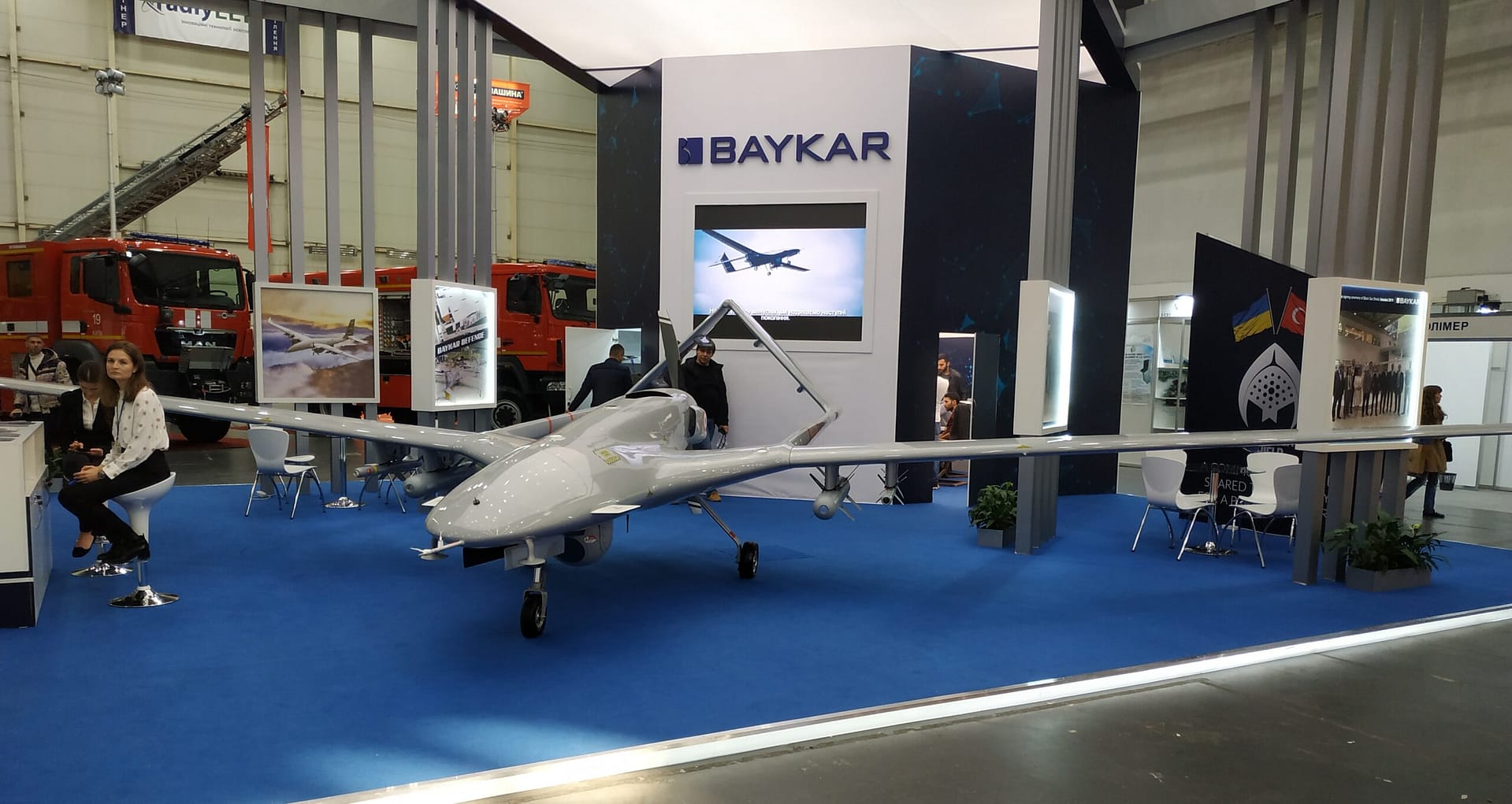
The footage is grey and silent. A drone’s electro-optical camera holds a small boat in its crosshairs somewhere in the middle of the Black Sea; a laser spot blooms on the hull; the picture shudders. To anyone who lived through the spring of 2022, the spartan symbology framing that image is unmistakable — the sensor feed of a Bayraktar TB-2.
On 24 June 2026 the Ukrainian Navy released that clip and claimed three Russian uncrewed surface vessels destroyed in a single sweep. Kyiv never named the aircraft. It did not have to: analysts identified the Turkish-built drone within minutes from the distinctive layout of its targeting interface. The TB-2 — the machine Ukrainians once turned into a wartime anthem — was hunting again.
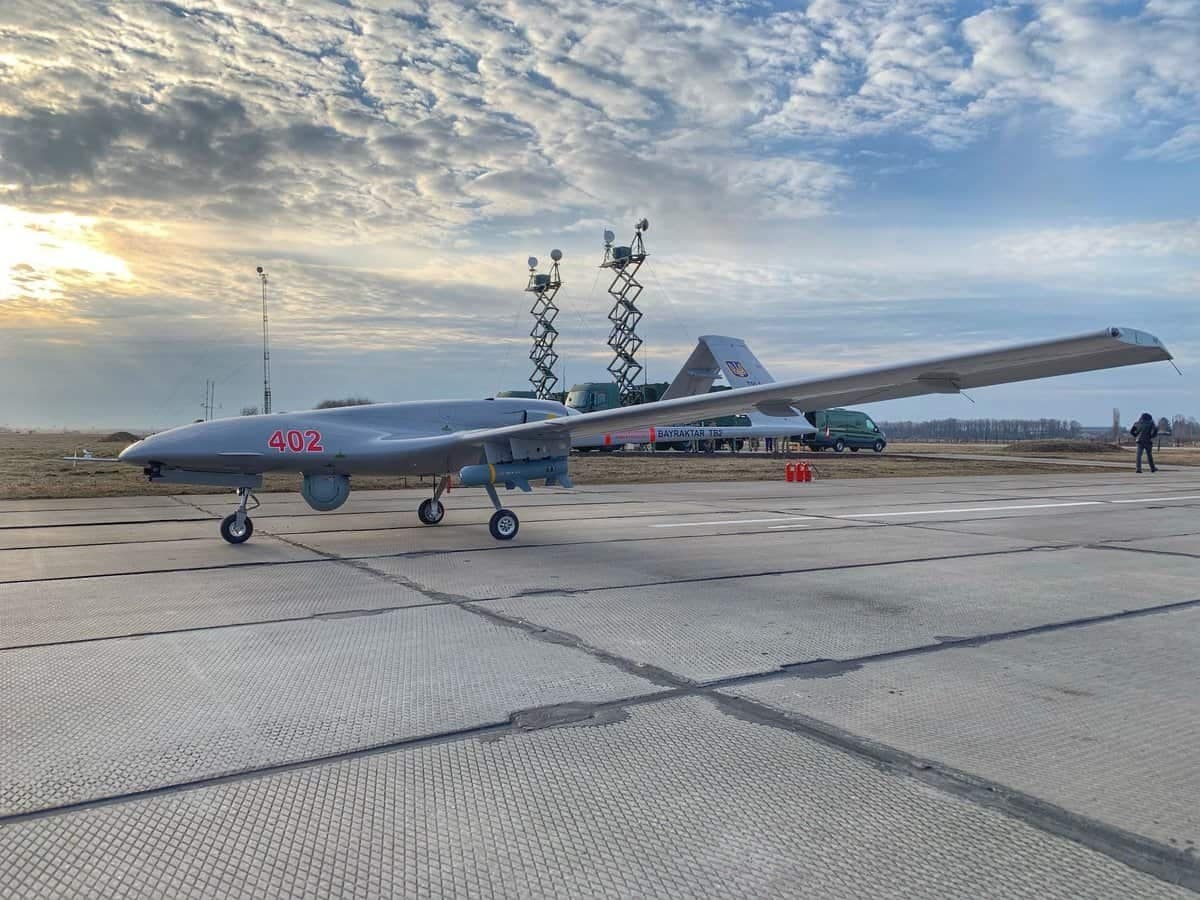
And that is the surprise. For the better part of two years the Bayraktar had been a ghost. Lauded as a wonder weapon in the war’s opening weeks, it then all but vanished from the front. Its quiet reappearance over the Black Sea is a small story carrying a large lesson about how this war keeps rewriting its own rules.
- What: Ukrainian Navy footage of a Bayraktar TB-2 strike on Russian boats in the Black Sea
- When: Released 24 June 2026
- Claim: Three Russian uncrewed surface vessels destroyed (Ukrainian Navy)
- Drone: Baykar Bayraktar TB-2 — Turkish medium-altitude, long-endurance strike drone
- Likely weapon: Roketsan MAM-series laser-guided micro-munition
- Backstory: The TB-2 had all but vanished from the war since mid-2022 after Russian electronic warfare and air defences neutralised it
A ghost returns to the Black Sea
The infrared sequence is brief and clinical. A small craft sits low in the water; the crosshairs settle; the laser designator paints the hull; the munition arrives. The Ukrainian Navy said three Russian uncrewed surface vessels were struck. Independent observers who pored over the feed reached the same conclusion about the shooter — a Bayraktar TB-2 — even though the military, as it did during a near-identical strike off the Kherson coast in September 2025, declined to confirm the type.
What makes the cameo intriguing is the target. If the boats really were Russian uncrewed surface vessels, it raises an awkward question for the other side: why would Black Sea Fleet commanders risk such craft in the contested centre of the sea at all? Either way, the message from Kyiv is the same — the old drone still has work to do.
Why the legend went quiet
The TB-2’s disappearance was not a mystery so much as an education. A medium-altitude, long-endurance drone is, by design, large and unhurried. That is wonderful when the enemy’s air defences are in disarray, as Russia’s were in February 2022. It is fatal once those defences recover.
Recover they did. Russia thickened its electronic warfare and layered short-range systems — the Pantsir-S1, Buk and Tor — until the Bayraktar became a liability in contested airspace. Open-source trackers logged at least 26 Ukrainian TB-2s lost in the opening phase of the war. By mid-2022 Kyiv had quietly withdrawn the survivors.
So the drone did not fail; the environment changed faster than the airframe could. What we are watching now is the TB-2 being used where the maths still works — against soft, slow targets, in pockets of the Black Sea where Russian air defence no longer reaches.
A different sea, a narrower job
The Black Sea of 2026 belongs, improbably, to the side without a navy. Ukraine’s Magura-series naval drones have driven the Black Sea Fleet back into port and even reached into the sky, downing Russian Mi-8 helicopters and, in one extraordinary engagement, a Su-30SM fighter with a repurposed air-to-air missile. In that landscape, a returning Bayraktar is not a war-winner. It is a scalpel — loitering high, picking off the small boats and shore parties that Russia still dares to move.
Its likely weapon tells the same story of economy: Roketsan’s MAM family of miniature laser-guided bombs, light enough to hang several under the wings and precise enough to put one through a speedboat. A modest tool, used with patience, in the one corner of the front where it can still survive.
None of this restores the Bayraktar to its 2022 pedestal. But it punctures the lazy obituary written for it. Weapons in this war are rarely “obsolete” so much as temporarily out of their element — and the TB-2, flown carefully over the right water, has just reminded everyone that a legend can still bite.
Sources: The Aviationist; Naval Forces of Ukraine; United24 Media; Oryx open-source tracker.
Related Questions
What is the Bayraktar TB-2?
The Bayraktar TB-2 is a Turkish-built, medium-altitude, long-endurance armed drone made by Baykar. It carries electro-optical sensors and small laser-guided munitions and became famous early in the 2022 Russia-Ukraine war for destroying armour, air defences and vehicles.
Why did the TB-2 disappear from the war in Ukraine?
After heavy early use, Russia layered its electronic warfare and air defences — systems such as the Pantsir-S1, Buk and Tor — which made the large, slow, low-flying TB-2 easy to detect and shoot down. Ukraine pulled it back from contested airspace, and open-source trackers recorded at least 26 lost in the opening phase.
What did the Ukrainian Navy footage from June 2026 show?
Infrared footage released on 24 June 2026 showed a drone striking small Russian boats in the Black Sea, with a laser spot visible on one hull. The Ukrainian Navy said three Russian uncrewed surface vessels were destroyed. Analysts identified the drone as a TB-2 from its sensor-feed interface; Kyiv did not officially confirm the type.
What weapon does the TB-2 use against boats?
The TB-2 typically employs Roketsan's MAM family of small, precision laser-guided glide munitions — light enough for the drone to carry several, and accurate enough to hit a small, moving boat.
Who controls the Black Sea now?
Ukraine holds the asymmetric advantage at sea. Its Magura-series naval drones have even shot down Russian Mi-8 helicopters and a Su-30SM fighter, pushing Russia's Black Sea Fleet onto the defensive — the environment in which a returning TB-2 can again pick off small craft.
0 Comments