
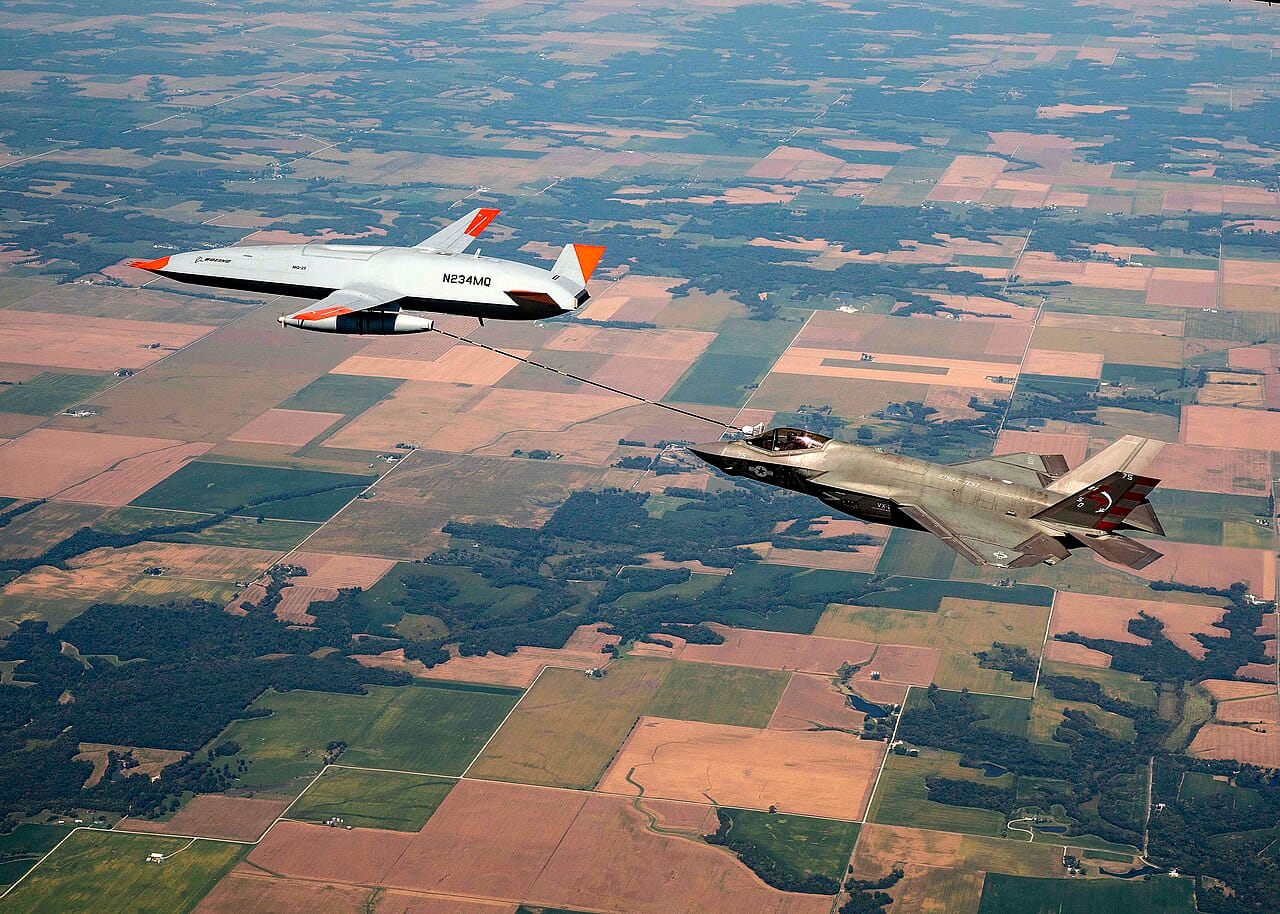
The future carrier air wing will not be all pilots. The U.S. Navy is pressing ahead on a carrier-based “loyal wingman” — an uncrewed combat aircraft built to fly alongside crewed fighters, carry sensors and weapons, and go first into the places nobody wants to send a person.
It is still on the drawing board: four of America’s biggest defense primes are working competing concepts. But the supporting evidence is already catapulting off flight decks. In April, the Navy’s MQ-25A Stingray tanker drone made its first operational test flight — the clearest sign yet that robots are joining the carrier air wing for real.
The question is no longer whether the carrier gets unmanned aircraft. It is how many, how fast, and who builds the brains.
Quick Facts
| What | A carrier-based Collaborative Combat Aircraft (CCA) — an uncrewed “loyal wingman” |
| Designers | Anduril, Boeing, General Atomics and Northrop Grumman (conceptual designs); Lockheed Martin on control architecture |
| Autonomy | Anduril, Shield AI and Collins Aerospace competing on the software |
| Already flying | The MQ-25A Stingray tanker drone — first operational test flight, 27 April 2026 |
| Mission | Fly with crewed jets; carry sensors and weapons; take higher-risk tasks |
| Status | Design phase, with momentum reported building through 2026 |
Four primes, one deck
In late 2025 the Navy put Anduril, Boeing, General Atomics and Northrop Grumman under contract for conceptual carrier-CCA designs, with Lockheed Martin working a common control architecture to tie the drones to the air wing. A separate competition — Anduril, Shield AI and Collins Aerospace — will decide whose autonomy software actually flies the things.
The Navy is not working in a vacuum. In June the Air Force picked General Atomics and Anduril to build its first 150 CCAs — the YFQ-42A and YFQ-44A — and the Navy is watching that template closely as it shapes a carrier-capable cousin.
The tanker that proves it works
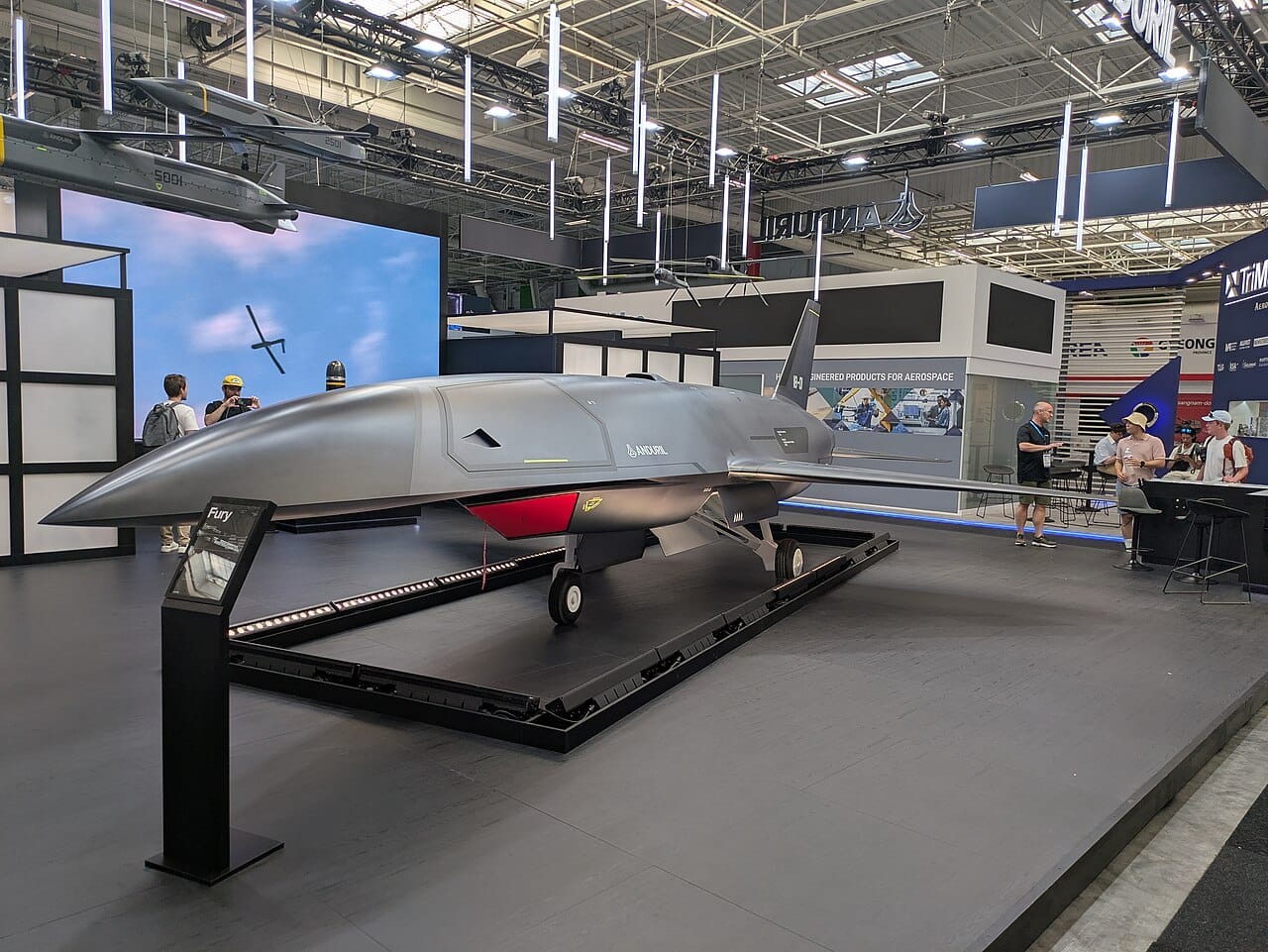
If you want to know whether a big drone can live on a carrier, look at the MQ-25 Stingray. In 2021 the T1 test aircraft became the first unmanned aircraft in history to refuel another aircraft in flight, passing fuel to an F/A-18 Super Hornet and later to an E-2D Hawkeye and an F-35C. On 27 April 2026, Boeing and the Navy flew the first operational MQ-25A — a major step toward putting the type to sea.
The Stingray is a tanker, not a fighter. But it cracks the hardest problem first: integrating a large, autonomous aircraft into the chaos of carrier flight operations. Solve that, and arming the next one is an engineering problem, not a leap of faith.
Why the carrier needs robots
The strategic logic is blunt. Long-range anti-ship missiles are pushing carriers farther from the fight, which shrinks the reach of a crewed air wing. Uncrewed wingmen extend that reach, absorb the riskiest missions, and add cheap mass — aircraft you can afford to lose. Whoever wins the autonomy contest supplies the judgment that lets one pilot command several drones at once.
The aircraft carrier has launched crewed jets for a century. The next aircraft to trap aboard may not have anyone inside it — and the Navy has clearly decided it is done waiting to find out.
Sources: The War Zone; Breaking Defense; Boeing; Naval News.
Related Questions
What is a loyal wingman drone?
A loyal wingman is an uncrewed combat aircraft designed to fly alongside crewed fighters. It can carry sensors and weapons, scout ahead, jam or decoy enemy defenses, and take on high-risk missions, all under the direction of a human pilot or controller. The U.S. military calls these Collaborative Combat Aircraft (CCA).
Is the U.S. Navy building a carrier-based CCA?
Yes. The Navy has placed Anduril, Boeing, General Atomics and Northrop Grumman under contract for conceptual carrier-based CCA designs, with Lockheed Martin developing a common control architecture. The program is in its design phase, with momentum reported building through 2026.
What is the MQ-25 Stingray?
The Boeing MQ-25 Stingray is the U.S. Navy\u2019s carrier-based unmanned aerial-refueling aircraft. In 2021 it became the first uncrewed aircraft to refuel another aircraft in flight, and the first operational MQ-25A completed its first test flight on 27 April 2026.
Which companies are involved in the Navy drone wingman program?
Anduril, Boeing, General Atomics and Northrop Grumman are working conceptual designs, and Lockheed Martin is developing the control architecture. A separate autonomy-software competition involves Anduril, Shield AI and Collins Aerospace.
Why does the Navy want drone wingmen?
Long-range anti-ship missiles are forcing carriers to operate farther from their targets, reducing the reach of a crewed air wing. Uncrewed wingmen extend that reach, take on the riskiest missions, and add affordable mass to the fleet.
When will carrier-based drones be operational?
The MQ-25 tanker is closest, having flown its first operational aircraft in April 2026 ahead of carrier trials. The armed carrier-based loyal wingman remains in the design phase, with fielding expected later this decade or beyond.
Related Posts
0 Comments