

Quick Facts
• Carrier Strike Groups: USS Abraham Lincoln (CVN 72), USS Gerald R. Ford (CVN 78, partial — undergoing repairs in Crete), USS George H.W. Bush (CVN 77, en route)
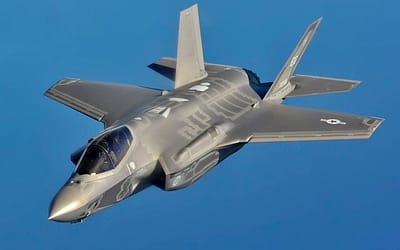
• Aircraft embarked: ~210 total across three air wings (F/A-18E/F Super Hornets, F-35C Lightning IIs, EA-18G Growlers, E-2D Hawkeyes)
• Escort ships: ~12 destroyers, 3 cruisers, multiple submarines
• Last three-carrier presence in the Gulf: 2003 (Iraq invasion)
• Context: Hormuz blockade begins April 13, 2026
• Carrier Strike Groups: USS Abraham Lincoln (CVN 72), USS Gerald R. Ford (CVN 78, partial — undergoing repairs in Crete), USS George H.W. Bush (CVN 77, en route)
• Aircraft embarked: ~210 total across three air wings (F/A-18E/F Super Hornets, F-35C Lightning IIs, EA-18G Growlers, E-2D Hawkeyes)
• Escort ships: ~12 destroyers, 3 cruisers, multiple submarines
• Last three-carrier presence in the Gulf: 2003 (Iraq invasion)
• Context: Hormuz blockade begins April 13, 2026
What Each Carrier Brings
A single carrier strike group is built around one nuclear-powered aircraft carrier and its air wing of roughly 70 aircraft. But the carrier never sails alone. Its escort typically includes two to three guided-missile destroyers, a cruiser, and at least one fast-attack submarine lurking somewhere beneath the surface. Together, they form an integrated air defence, anti-submarine, and strike network that can cover hundreds of thousands of square miles of ocean. The Lincoln has been in the region since before Epic Fury began. Her air wing has been flying combat sorties for weeks. The Ford — the Navy’s newest and most advanced carrier — deployed to the Red Sea in late February but suffered a laundry-room fire in March that forced a stop in Crete for repairs. Some of her escorts remain on station in the Gulf, and her air wing may have cross-decked aircraft to the Lincoln. The Bush left Norfolk on March 31 with a fresh crew and a full air wing. She is the cavalry.
The Firepower Equation
Three carrier strike groups in the same theatre represent a staggering amount of combat power. The combined air wings can generate more than 300 strike sorties per day — roughly equivalent to the entire air force of a medium-sized European country. The escort ships carry hundreds of Tomahawk cruise missiles (though those stockpiles are under strain — see our related coverage), Standard Missiles for air and missile defence, and anti-submarine torpedoes. The real force multiplier, though, is redundancy. One carrier can be taken offline for maintenance or repositioned without leaving a gap. Two carriers can maintain continuous combat air patrols. Three carriers can sustain high-intensity strike operations while simultaneously enforcing a naval blockade and defending the force against missile and drone attack. In the confined waters of the Persian Gulf, however, carriers are also targets. Iranian anti-ship ballistic missiles, cruise missiles, fast-attack boats, and mines all pose threats that cannot be dismissed. The Navy learned in the Tanker War of the 1980s that the Gulf is a treacherous operating environment even without a full-scale conflict.Why Three Matters
The decision to deploy a third carrier is as much political as it is military. Three carriers signal to Iran — and to the world — that the United States is committed to this fight for the long haul. It also signals to allies and adversaries in the Pacific that the Navy can sustain a major operation in one theatre without completely abandoning another. Whether that signal is believable is another question entirely. The Lincoln’s crew has been deployed for months. The Ford is in drydock. The Navy’s total carrier fleet stands at eleven — and with three committed to the Gulf, the Pacific Fleet is stretched thinner than at any time since the early 2000s.
 English
0 Comments