


Where the Warthog Still Flies
The A-10 isn’t gone. Not yet. Michigan’s Air National Guard A-10s just deployed to the Middle East. The 354th Fighter Squadron and 355th Fighter Squadron continue operations from Davis-Monthan. Squadrons in Kunsan, South Korea, and across the service still fly the jet. Close air support missions over Iraq and Syria still have A-10s in the rotation.
But each squadron is now operating on borrowed time. No new pilots are being trained. Maintenance personnel are dwindling. The Air Force is managing the A-10’s final chapter—not as a retirement, but as a slow fade.
The 357th’s closure doesn’t kill the aircraft. It just means there’s no future. Every A-10 in the sky right now represents experience accumulated over years. No recruit can follow in that tradition. The Warthog is becoming a closed book, written only by those who learned in the years before April 3, 2026.
The Silence Over the Schoolhouse
Fifty years of training A-10 pilots ends not with a bang, but with the last class marching off the tarmac. The 357th Fighter Squadron’s formal training mission is history. Future A-10 pilots won’t exist. Operational squadrons will make do with what they have—experienced pilots managing the divestment, teaching what they can to replacements who’ll never sit in a training cockpit built for the Warthog.
The Air Force got what it wanted. The schoolhouse is closed. Whether the fleet follows remains a question only Congress can answer.
Sources: The Aviationist (theaviationist.com), DVIDS Hub, U.S. Air Force official statements, FY2026 National Defense Authorization Act.
Related Reading
The Schoolhouse That Trained Every A-10 Pilot
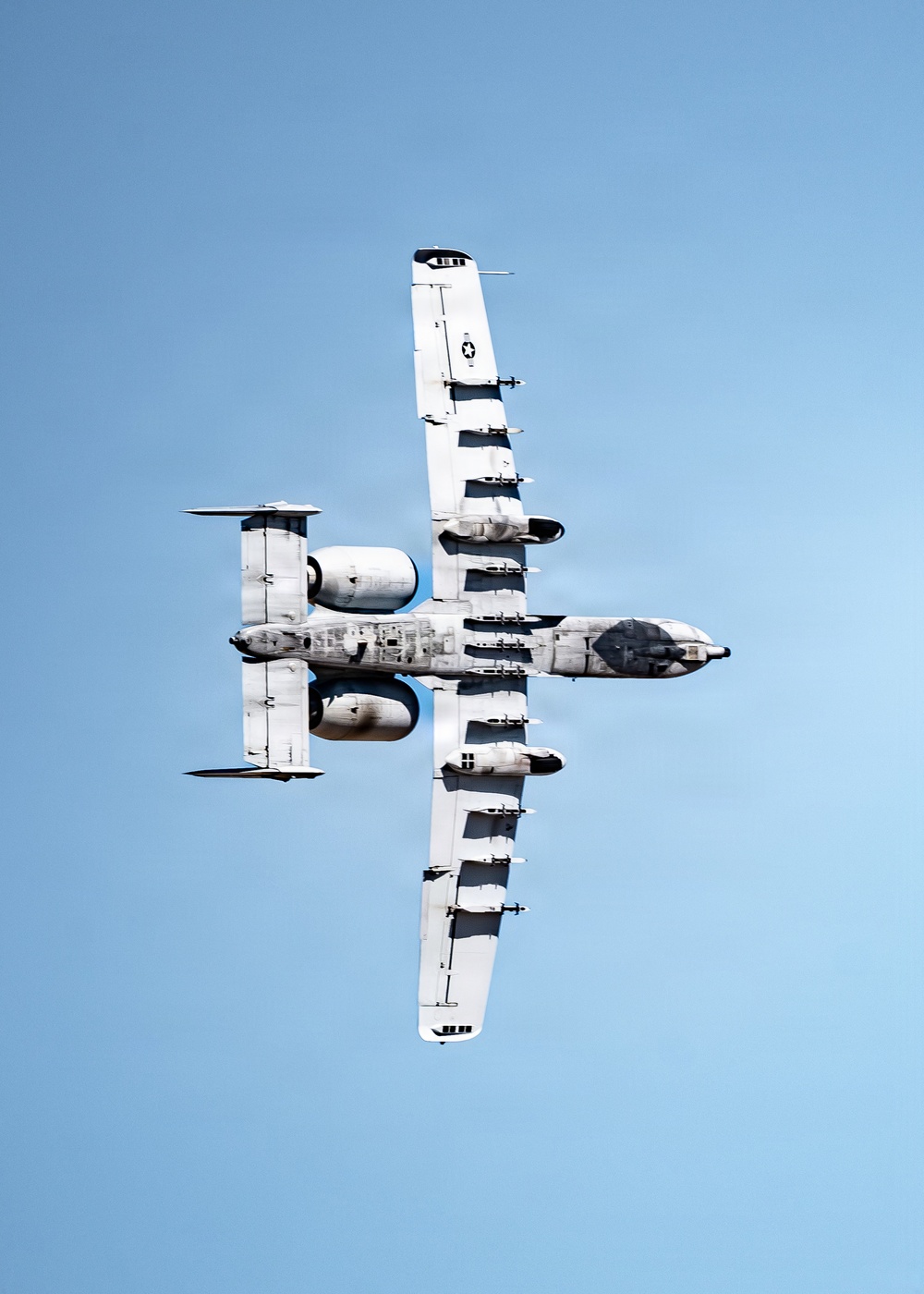
For five decades, the 357th Fighter Squadron has been the sole formal training unit (FTU) for the A-10 Thunderbolt II. Every American A-10 pilot—whether active duty, Reserve, or Air National Guard—passed through their six-month curriculum. The numbers are brutal in their finality. Approximately 70 pilots graduated every year. That’s thousands of fighter pilots, all trained in the same schoolhouse, all learning from instructors who knew the Warthog better than anyone on Earth.
The training pipeline was rigorous. Six months of academic instruction, roughly 40 actual combat-focus sorties, plus simulator work and close-air-support tactics drills. Students learned the A-10’s unusual strengths: the ability to fly slow, turn tight, and put ordnance on target with surgical precision. They also learned the unforgiving truth—the A-10 requires discipline, attention, and respect.
Now, on April 3, 2026, the final cohort walked across that tarmac as graduates. No more students will follow. The 357th’s training mission ends here. The “Dragons” will continue in other roles, but the schoolhouse is closed.

Why the Air Force Wants to Retire the Warthog—and Why Congress Won’t Let Them
The Air Force has been trying to kill the A-10 for years. The argument is simple: F-35 can do everything, modern warfare doesn’t need a dedicated gunship, and retiring the A-10 frees up $423 million in FY2026 alone. In 2025, the Air Force submitted its budget request with the A-10’s death certificate already signed. All 162 remaining airframes, gone. Full fleet retirement by the end of fiscal 2026.
Congress blocked it. The FY2026 National Defense Authorization Act (NDAA) explicitly forbids the Air Force from retiring more than 59 A-10s through September 2026. Lawmakers required the service to maintain at least 93 primary mission aircraft through the fiscal year and mandated a multi-year transition plan. The Air Force must brief Congress by March 31, 2026, on the 2027–2029 roadmap.
So the A-10 lives. For now. But training new pilots? That ends today.
The Broken Chain: From Training to Transition
Here’s where it gets surreal. The final class of A-10 pilots will graduate, get assigned to operational squadrons, and complete their certification training. They’ll fly the jet, maintain it, depend on it. But no one behind them will come through the same training pipeline. The 357th’s schoolhouse is locked.
What happens to an experienced A-10 pilot when the aircraft is divested? Transition. The Air Force’s plan is to move them to the F-35A Lightning II. Not all of them will be happy about it. Some will retire. Others will accept the move and start learning a jet that’s more expensive, more digital, and designed for a different kind of warfare.
The final class will never know what that’s like. They’ll be the Warthog’s last cohort of fresh pilots, the end of a lineage that defined American close air support.
Where the Warthog Still Flies
The A-10 isn’t gone. Not yet. Michigan’s Air National Guard A-10s just deployed to the Middle East. The 354th Fighter Squadron and 355th Fighter Squadron continue operations from Davis-Monthan. Squadrons in Kunsan, South Korea, and across the service still fly the jet. Close air support missions over Iraq and Syria still have A-10s in the rotation.
But each squadron is now operating on borrowed time. No new pilots are being trained. Maintenance personnel are dwindling. The Air Force is managing the A-10’s final chapter—not as a retirement, but as a slow fade.
The 357th’s closure doesn’t kill the aircraft. It just means there’s no future. Every A-10 in the sky right now represents experience accumulated over years. No recruit can follow in that tradition. The Warthog is becoming a closed book, written only by those who learned in the years before April 3, 2026.
The Silence Over the Schoolhouse
Fifty years of training A-10 pilots ends not with a bang, but with the last class marching off the tarmac. The 357th Fighter Squadron’s formal training mission is history. Future A-10 pilots won’t exist. Operational squadrons will make do with what they have—experienced pilots managing the divestment, teaching what they can to replacements who’ll never sit in a training cockpit built for the Warthog.
The Air Force got what it wanted. The schoolhouse is closed. Whether the fleet follows remains a question only Congress can answer.
Sources: The Aviationist (theaviationist.com), DVIDS Hub, U.S. Air Force official statements, FY2026 National Defense Authorization Act.
Related Reading
Quick Facts
- Squadron: 357th Fighter Squadron (Dragons)
- Base: Davis-Monthan Air Force Base, Arizona
- Aircraft: A-10C Thunderbolt II
- Final Graduation: April 3, 2026
- Pilots Per Year (now ended): ~70 total-force pilots
- What Closes: The sole formal training unit (FTU) for A-10 pilots
- What Continues: Operational A-10 squadrons fly through FY2026; Michigan ANG A-10s deployed to Middle East; Congressional block on full fleet retirement
- What’s Next: A-10 pilots transition to F-35A; Davis-Monthan realigns to special operations focus
The Schoolhouse That Trained Every A-10 Pilot
For five decades, the 357th Fighter Squadron has been the sole formal training unit (FTU) for the A-10 Thunderbolt II. Every American A-10 pilot—whether active duty, Reserve, or Air National Guard—passed through their six-month curriculum. The numbers are brutal in their finality. Approximately 70 pilots graduated every year. That’s thousands of fighter pilots, all trained in the same schoolhouse, all learning from instructors who knew the Warthog better than anyone on Earth.
The training pipeline was rigorous. Six months of academic instruction, roughly 40 actual combat-focus sorties, plus simulator work and close-air-support tactics drills. Students learned the A-10’s unusual strengths: the ability to fly slow, turn tight, and put ordnance on target with surgical precision. They also learned the unforgiving truth—the A-10 requires discipline, attention, and respect.
Now, on April 3, 2026, the final cohort walked across that tarmac as graduates. No more students will follow. The 357th’s training mission ends here. The “Dragons” will continue in other roles, but the schoolhouse is closed.
Why the Air Force Wants to Retire the Warthog—and Why Congress Won’t Let Them
The Air Force has been trying to kill the A-10 for years. The argument is simple: F-35 can do everything, modern warfare doesn’t need a dedicated gunship, and retiring the A-10 frees up $423 million in FY2026 alone. In 2025, the Air Force submitted its budget request with the A-10’s death certificate already signed. All 162 remaining airframes, gone. Full fleet retirement by the end of fiscal 2026.
Congress blocked it. The FY2026 National Defense Authorization Act (NDAA) explicitly forbids the Air Force from retiring more than 59 A-10s through September 2026. Lawmakers required the service to maintain at least 93 primary mission aircraft through the fiscal year and mandated a multi-year transition plan. The Air Force must brief Congress by March 31, 2026, on the 2027–2029 roadmap.
So the A-10 lives. For now. But training new pilots? That ends today.
The Broken Chain: From Training to Transition
Here’s where it gets surreal. The final class of A-10 pilots will graduate, get assigned to operational squadrons, and complete their certification training. They’ll fly the jet, maintain it, depend on it. But no one behind them will come through the same training pipeline. The 357th’s schoolhouse is locked.
What happens to an experienced A-10 pilot when the aircraft is divested? Transition. The Air Force’s plan is to move them to the F-35A Lightning II. Not all of them will be happy about it. Some will retire. Others will accept the move and start learning a jet that’s more expensive, more digital, and designed for a different kind of warfare.
The final class will never know what that’s like. They’ll be the Warthog’s last cohort of fresh pilots, the end of a lineage that defined American close air support.
Where the Warthog Still Flies
The A-10 isn’t gone. Not yet. Michigan’s Air National Guard A-10s just deployed to the Middle East. The 354th Fighter Squadron and 355th Fighter Squadron continue operations from Davis-Monthan. Squadrons in Kunsan, South Korea, and across the service still fly the jet. Close air support missions over Iraq and Syria still have A-10s in the rotation.
But each squadron is now operating on borrowed time. No new pilots are being trained. Maintenance personnel are dwindling. The Air Force is managing the A-10’s final chapter—not as a retirement, but as a slow fade.
The 357th’s closure doesn’t kill the aircraft. It just means there’s no future. Every A-10 in the sky right now represents experience accumulated over years. No recruit can follow in that tradition. The Warthog is becoming a closed book, written only by those who learned in the years before April 3, 2026.
The Silence Over the Schoolhouse
Fifty years of training A-10 pilots ends not with a bang, but with the last class marching off the tarmac. The 357th Fighter Squadron’s formal training mission is history. Future A-10 pilots won’t exist. Operational squadrons will make do with what they have—experienced pilots managing the divestment, teaching what they can to replacements who’ll never sit in a training cockpit built for the Warthog.
The Air Force got what it wanted. The schoolhouse is closed. Whether the fleet follows remains a question only Congress can answer.
Sources: The Aviationist (theaviationist.com), DVIDS Hub, U.S. Air Force official statements, FY2026 National Defense Authorization Act.
Related Reading
The morning of April 3, 2026, started like a hundred others at Davis-Monthan Air Force Base. But as the final class of A-10C Thunderbolt II student pilots walked across the tarmac after their last sortie, something shifted. The schoolhouse that had trained every American A-10 pilot for decades was closing its doors for good. No more first-time landings. No more nervous rookie pilots learning to handle the most purpose-built close-air-support jet ever built. The era of the Warthog trainer was officially over.
For half a century, the 357th Fighter Squadron at Davis-Monthan earned the nickname “Dragons” by turning pilots into A-10 experts. On April 3, they graduated their last class. Approximately 70 total-force pilots—active duty, Reserve, and Air National Guard—walk that pipeline every year. No more.
This isn’t the death of the A-10 itself. Not yet. But it marks a sharp turn in the road. Training is done. What remains is divestment, transition, and the quiet reality of an aircraft the Air Force wants gone but Congress keeps delaying.
Quick Facts
- Squadron: 357th Fighter Squadron (Dragons)
- Base: Davis-Monthan Air Force Base, Arizona
- Aircraft: A-10C Thunderbolt II
- Final Graduation: April 3, 2026
- Pilots Per Year (now ended): ~70 total-force pilots
- What Closes: The sole formal training unit (FTU) for A-10 pilots
- What Continues: Operational A-10 squadrons fly through FY2026; Michigan ANG A-10s deployed to Middle East; Congressional block on full fleet retirement
- What’s Next: A-10 pilots transition to F-35A; Davis-Monthan realigns to special operations focus
The Schoolhouse That Trained Every A-10 Pilot
For five decades, the 357th Fighter Squadron has been the sole formal training unit (FTU) for the A-10 Thunderbolt II. Every American A-10 pilot—whether active duty, Reserve, or Air National Guard—passed through their six-month curriculum. The numbers are brutal in their finality. Approximately 70 pilots graduated every year. That’s thousands of fighter pilots, all trained in the same schoolhouse, all learning from instructors who knew the Warthog better than anyone on Earth.
The training pipeline was rigorous. Six months of academic instruction, roughly 40 actual combat-focus sorties, plus simulator work and close-air-support tactics drills. Students learned the A-10’s unusual strengths: the ability to fly slow, turn tight, and put ordnance on target with surgical precision. They also learned the unforgiving truth—the A-10 requires discipline, attention, and respect.
Now, on April 3, 2026, the final cohort walked across that tarmac as graduates. No more students will follow. The 357th’s training mission ends here. The “Dragons” will continue in other roles, but the schoolhouse is closed.
Why the Air Force Wants to Retire the Warthog—and Why Congress Won’t Let Them
The Air Force has been trying to kill the A-10 for years. The argument is simple: F-35 can do everything, modern warfare doesn’t need a dedicated gunship, and retiring the A-10 frees up $423 million in FY2026 alone. In 2025, the Air Force submitted its budget request with the A-10’s death certificate already signed. All 162 remaining airframes, gone. Full fleet retirement by the end of fiscal 2026.
Congress blocked it. The FY2026 National Defense Authorization Act (NDAA) explicitly forbids the Air Force from retiring more than 59 A-10s through September 2026. Lawmakers required the service to maintain at least 93 primary mission aircraft through the fiscal year and mandated a multi-year transition plan. The Air Force must brief Congress by March 31, 2026, on the 2027–2029 roadmap.
So the A-10 lives. For now. But training new pilots? That ends today.
The Broken Chain: From Training to Transition
Here’s where it gets surreal. The final class of A-10 pilots will graduate, get assigned to operational squadrons, and complete their certification training. They’ll fly the jet, maintain it, depend on it. But no one behind them will come through the same training pipeline. The 357th’s schoolhouse is locked.
What happens to an experienced A-10 pilot when the aircraft is divested? Transition. The Air Force’s plan is to move them to the F-35A Lightning II. Not all of them will be happy about it. Some will retire. Others will accept the move and start learning a jet that’s more expensive, more digital, and designed for a different kind of warfare.
The final class will never know what that’s like. They’ll be the Warthog’s last cohort of fresh pilots, the end of a lineage that defined American close air support.
Where the Warthog Still Flies
The A-10 isn’t gone. Not yet. Michigan’s Air National Guard A-10s just deployed to the Middle East. The 354th Fighter Squadron and 355th Fighter Squadron continue operations from Davis-Monthan. Squadrons in Kunsan, South Korea, and across the service still fly the jet. Close air support missions over Iraq and Syria still have A-10s in the rotation.
But each squadron is now operating on borrowed time. No new pilots are being trained. Maintenance personnel are dwindling. The Air Force is managing the A-10’s final chapter—not as a retirement, but as a slow fade.
The 357th’s closure doesn’t kill the aircraft. It just means there’s no future. Every A-10 in the sky right now represents experience accumulated over years. No recruit can follow in that tradition. The Warthog is becoming a closed book, written only by those who learned in the years before April 3, 2026.
The Silence Over the Schoolhouse
Fifty years of training A-10 pilots ends not with a bang, but with the last class marching off the tarmac. The 357th Fighter Squadron’s formal training mission is history. Future A-10 pilots won’t exist. Operational squadrons will make do with what they have—experienced pilots managing the divestment, teaching what they can to replacements who’ll never sit in a training cockpit built for the Warthog.
The Air Force got what it wanted. The schoolhouse is closed. Whether the fleet follows remains a question only Congress can answer.
Sources: The Aviationist (theaviationist.com), DVIDS Hub, U.S. Air Force official statements, FY2026 National Defense Authorization Act.
Related Reading
The morning of April 3, 2026, started like a hundred others at Davis-Monthan Air Force Base. But as the final class of A-10C Thunderbolt II student pilots walked across the tarmac after their last sortie, something shifted. The schoolhouse that had trained every American A-10 pilot for decades was closing its doors for good. No more first-time landings. No more nervous rookie pilots learning to handle the most purpose-built close-air-support jet ever built. The era of the Warthog trainer was officially over.
For half a century, the 357th Fighter Squadron at Davis-Monthan earned the nickname “Dragons” by turning pilots into A-10 experts. On April 3, they graduated their last class. Approximately 70 total-force pilots—active duty, Reserve, and Air National Guard—walk that pipeline every year. No more.
This isn’t the death of the A-10 itself. Not yet. But it marks a sharp turn in the road. Training is done. What remains is divestment, transition, and the quiet reality of an aircraft the Air Force wants gone but Congress keeps delaying.
Quick Facts
- Squadron: 357th Fighter Squadron (Dragons)
- Base: Davis-Monthan Air Force Base, Arizona
- Aircraft: A-10C Thunderbolt II
- Final Graduation: April 3, 2026
- Pilots Per Year (now ended): ~70 total-force pilots
- What Closes: The sole formal training unit (FTU) for A-10 pilots
- What Continues: Operational A-10 squadrons fly through FY2026; Michigan ANG A-10s deployed to Middle East; Congressional block on full fleet retirement
- What’s Next: A-10 pilots transition to F-35A; Davis-Monthan realigns to special operations focus
The Schoolhouse That Trained Every A-10 Pilot
For five decades, the 357th Fighter Squadron has been the sole formal training unit (FTU) for the A-10 Thunderbolt II. Every American A-10 pilot—whether active duty, Reserve, or Air National Guard—passed through their six-month curriculum. The numbers are brutal in their finality. Approximately 70 pilots graduated every year. That’s thousands of fighter pilots, all trained in the same schoolhouse, all learning from instructors who knew the Warthog better than anyone on Earth.
The training pipeline was rigorous. Six months of academic instruction, roughly 40 actual combat-focus sorties, plus simulator work and close-air-support tactics drills. Students learned the A-10’s unusual strengths: the ability to fly slow, turn tight, and put ordnance on target with surgical precision. They also learned the unforgiving truth—the A-10 requires discipline, attention, and respect.
Now, on April 3, 2026, the final cohort walked across that tarmac as graduates. No more students will follow. The 357th’s training mission ends here. The “Dragons” will continue in other roles, but the schoolhouse is closed.
Why the Air Force Wants to Retire the Warthog—and Why Congress Won’t Let Them
The Air Force has been trying to kill the A-10 for years. The argument is simple: F-35 can do everything, modern warfare doesn’t need a dedicated gunship, and retiring the A-10 frees up $423 million in FY2026 alone. In 2025, the Air Force submitted its budget request with the A-10’s death certificate already signed. All 162 remaining airframes, gone. Full fleet retirement by the end of fiscal 2026.
Congress blocked it. The FY2026 National Defense Authorization Act (NDAA) explicitly forbids the Air Force from retiring more than 59 A-10s through September 2026. Lawmakers required the service to maintain at least 93 primary mission aircraft through the fiscal year and mandated a multi-year transition plan. The Air Force must brief Congress by March 31, 2026, on the 2027–2029 roadmap.
So the A-10 lives. For now. But training new pilots? That ends today.
The Broken Chain: From Training to Transition
Here’s where it gets surreal. The final class of A-10 pilots will graduate, get assigned to operational squadrons, and complete their certification training. They’ll fly the jet, maintain it, depend on it. But no one behind them will come through the same training pipeline. The 357th’s schoolhouse is locked.
What happens to an experienced A-10 pilot when the aircraft is divested? Transition. The Air Force’s plan is to move them to the F-35A Lightning II. Not all of them will be happy about it. Some will retire. Others will accept the move and start learning a jet that’s more expensive, more digital, and designed for a different kind of warfare.
The final class will never know what that’s like. They’ll be the Warthog’s last cohort of fresh pilots, the end of a lineage that defined American close air support.
Where the Warthog Still Flies
The A-10 isn’t gone. Not yet. Michigan’s Air National Guard A-10s just deployed to the Middle East. The 354th Fighter Squadron and 355th Fighter Squadron continue operations from Davis-Monthan. Squadrons in Kunsan, South Korea, and across the service still fly the jet. Close air support missions over Iraq and Syria still have A-10s in the rotation.
But each squadron is now operating on borrowed time. No new pilots are being trained. Maintenance personnel are dwindling. The Air Force is managing the A-10’s final chapter—not as a retirement, but as a slow fade.
The 357th’s closure doesn’t kill the aircraft. It just means there’s no future. Every A-10 in the sky right now represents experience accumulated over years. No recruit can follow in that tradition. The Warthog is becoming a closed book, written only by those who learned in the years before April 3, 2026.
The Silence Over the Schoolhouse
Fifty years of training A-10 pilots ends not with a bang, but with the last class marching off the tarmac. The 357th Fighter Squadron’s formal training mission is history. Future A-10 pilots won’t exist. Operational squadrons will make do with what they have—experienced pilots managing the divestment, teaching what they can to replacements who’ll never sit in a training cockpit built for the Warthog.
The Air Force got what it wanted. The schoolhouse is closed. Whether the fleet follows remains a question only Congress can answer.
Sources: The Aviationist (theaviationist.com), DVIDS Hub, U.S. Air Force official statements, FY2026 National Defense Authorization Act.
 English
0 Comments