

In the spring of 1946, in a factory near Pisa that Allied bombers had flattened only months before, an engineer wheeled out a strange little machine — a step-through scooter with a rounded steel body and a small engine tucked by the rear wheel. Enrico Piaggio walked slowly around it. And then, the story goes, he said just four words: “Sembra una vespa.” It looks like a wasp.
The name stuck, and the world got the Vespa. What almost nobody remembers is that the company which built that scooter had, only a few years earlier, been building four-engine bombers.
This is the story of Piaggio — a company that has been, in turn, a railway works, one of Italy’s great aircraft makers, the creator of the most famous scooter on earth, and, as of last year, the property of a Turkish drone empire. Few names in aviation have lived so many lives.
| Founded | 1884, near Genoa, by Rinaldo Piaggio |
| Started as | Locomotives and railway carriages |
| Famous aircraft | P.108 bomber (WWII), P.180 Avanti |
| The pivot | The Vespa scooter, 1946 |
| Aircraft arm today | Owned by Turkey’s Baykar since 2025 |
It began with locomotives
Piaggio was not born to fly. In 1884, a 20-year-old named Rinaldo Piaggio founded Piaggio & C. near Genoa to build locomotives and railway carriages. It was the First World War that pulled the company into the sky: from 1917 Piaggio began turning out motor torpedo boats, seaplanes and aircraft, at first under licence and then to its own designs. By the 1930s it had become a genuine aviation power, setting 21 world records for speed and altitude between 1937 and 1939 from a gleaming new factory at Pontedera.
The four-engine bomber
Piaggio’s wartime masterpiece was the P.108, which first flew in 1939 — the only four-engine heavy bomber Italy operated during the Second World War, a machine in the same broad class as Britain’s Lancaster or America’s B-17. It carries a dark footnote: in August 1941, Bruno Mussolini, the dictator’s 23-year-old son, was killed while flying a P.108 prototype near Pisa when two engines failed on approach and the bomber stalled into a house short of the runway.
The war did not spare the company that built it. The Pontedera plant was pounded flat by Allied bombing, and by 1945 Piaggio’s proud aviation business was a field of rubble.

“It looks like a wasp”
Out of that rubble came the pivot that made Piaggio a household name. Enrico Piaggio, Rinaldo’s son, looked at a broke, broken Italy and saw not a market for bombers but a desperate need for cheap, simple personal transport. An early attempt he disliked, so he handed the problem to Corradino D’Ascanio — and this is the delicious twist. D’Ascanio was not a motorcycle man at all. He was a distinguished aeronautical engineer and a pioneer of the helicopter, and he actively disliked motorbikes: too dirty, too bulky, impossible to fix at the roadside.
So he designed the Vespa the way an aircraft engineer would. He gave it a stressed-steel monocoque body instead of a tubular frame, put the engine beside the rear wheel so a punctured tyre could be changed as easily as an aeroplane’s, shielded the rider’s legs so their clothes stayed clean, and made it light enough for anyone to ride. The result rolled out of the rebuilt Pontedera works in April 1946.
Within ten years, a million had been built. The Italian language gained a verb — vespare, to go somewhere by Vespa — and to this day more than 18 million have been produced. A helicopter engineer who hated motorcycles had built the most famous scooter in history.

Two companies, two destinies
Success on two wheels eventually pulled the company apart. In 1964 Piaggio’s aeronautical and scooter divisions were split into separate firms. The scooter side — today’s Piaggio Group, still headquartered at Pontedera and owner of Vespa, Aprilia, Moto Guzzi and Gilera — became one of the great names of European motoring.
The aviation side kept flying, and in 1986 it produced its own quiet masterpiece: the P.180 Avanti. With its engines mounted as pushers behind the wing, a small foreplane up front and a shape unlike anything else in the sky, the Avanti became one of the most distinctive — and fastest — turboprops ever built. If you have ever heard an unmistakable, high, buzzing note overhead and looked up to see an aircraft that seemed to be flying backwards, that was an Avanti.
From Pontedera to Ankara
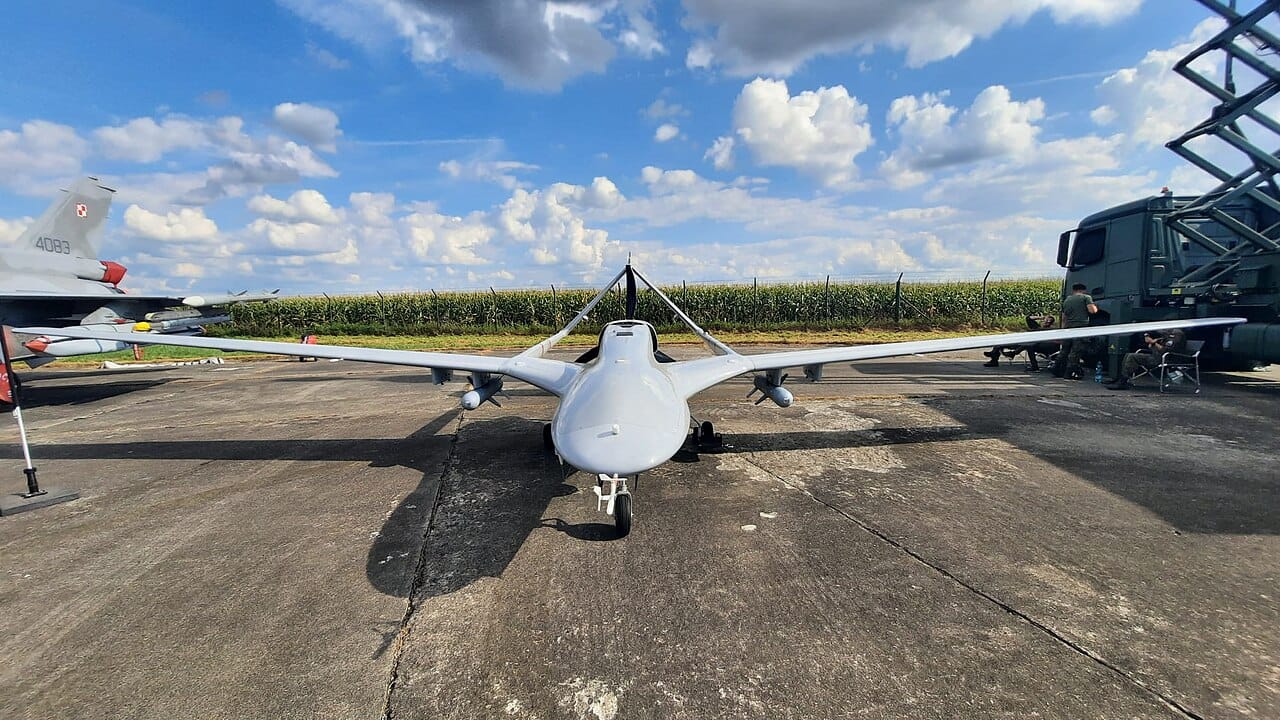
The aviation arm’s luck ran out. Piaggio Aerospace slid into receivership in 2018 and spent six years under Italian state administration, its future uncertain. Then, at the end of 2024, it found an unexpected saviour: Baykar — the Turkish company behind the Bayraktar TB2, the combat drone that has reshaped modern warfare from Ukraine to the Caucasus. The deal was finalised in 2025.
So the 141-year-old Italian house that built railway carriages, seaplanes, a wartime bomber, the Vespa and the beautiful Avanti now belongs to a drone maker in Ankara.
A company of many lives
From a locomotive works near Genoa to bombers, from bombers to a scooter that looked like a wasp, from the Vespa to the elegant Avanti, and from Italian bankruptcy to a Turkish drone empire — Piaggio has reinvented itself again and again. It all traces back to a bombed-out factory, a helicopter engineer who couldn’t stand motorcycles, and four words from a man watching a wasp take shape in front of him.
Sources: Piaggio Group historical archive; Piaggio Aerospace; Breaking Defense; Defense News; Wikipedia.
Related Questions
What was the Piaggio P.108?
The Piaggio P.108 was the only four-engine heavy bomber Italy operated during World War II, first flying in 1939. It sat in the same broad class as Britain's Avro Lancaster and America's B-17 Flying Fortress. It was built by Piaggio, the Italian firm far better known today for the Vespa scooter.
How did Bruno Mussolini die?
Bruno Mussolini, the 23-year-old son of Italian dictator Benito Mussolini, died in August 1941 while flying a Piaggio P.108 bomber prototype near Pisa. Two of its engines failed on approach and the aircraft stalled into a house short of the runway. Fatal accidents shadowed early heavy bombers, much like the B-25 that crashed into the Empire State Building in 1945.
What company originally made the Vespa scooter?
The Vespa was made by Piaggio, an Italian company founded in 1884 that built locomotives and railway carriages before becoming a major aircraft manufacturer. After Allied bombing destroyed its Pontedera aircraft factory during World War II, Piaggio pivoted to a cheap, practical two-wheeler for a ruined economy. The scooter launched in 1946 and became the most famous of its kind in the world.
Who designed the Vespa, and why does it look the way it does?
The Vespa was designed by Corradino D'Ascanio, an aeronautical engineer who had worked on helicopters and openly disliked motorcycles. He applied aircraft thinking: a stressed-steel monocoque body rather than a tubular frame, the engine placed beside the rear wheel so a flat tyre could be changed as easily as an aeroplane's, and a front shield to keep the rider's clothes clean.
How did the Vespa get its name?
The Vespa was named by Enrico Piaggio, who on first seeing the 1946 prototype reportedly said 'Sembra una vespa' - 'It looks like a wasp,' a nod to its narrow waist and buzzing engine. The name stuck immediately. Italian even gained a new verb, 'vespare,' meaning to travel somewhere by Vespa.
How many Vespas have been produced?
More than 18 million Vespas have been produced since the scooter first appeared in 1946. Within its first ten years alone, a million had been built. Conceived as affordable, clean and easy-to-ride post-war transport, the Vespa grew into a global symbol of Italian style and one of the best-selling scooters ever made.
What did Piaggio make before the Vespa?
Before the Vespa, Piaggio built locomotives, railway carriages and, from the early 20th century, aircraft. By the 1930s it was a genuine aviation power, setting 21 world speed and altitude records between 1937 and 1939. Its wartime peak was the four-engine P.108 bomber, developed as Italy fought the air and sea war that produced dramatic episodes like the 1940 Battle of Taranto.
Who owns Piaggio Aerospace now?
Piaggio Aerospace, the aviation arm of the company, was acquired by Baykar, the Turkish manufacturer famous for the Bayraktar TB2 combat drone. The deal placed one of Italy's oldest aircraft makers inside a fast-growing unmanned-aircraft empire. It marked yet another reinvention for a firm that has been a railway works, a WWII bomber builder and the maker of the Vespa.
Learning how Piaggio dynamically shifted its massive manufacturing focus from heavy WWII military bombers to creating the iconic, affordable Vespa scooter to rebuild post-war Italian mobility is absolutely fascinating. It is amazing how structural aeronautical engineering principles directly influenced the clean, unibody design and front aircraft-style suspension of early step-through models. Personally, understanding this industrial heritage makes riding a Vespa feel like piloting a piece of history. Are there any museum exhibits showcasing these early aviation prototypes?