
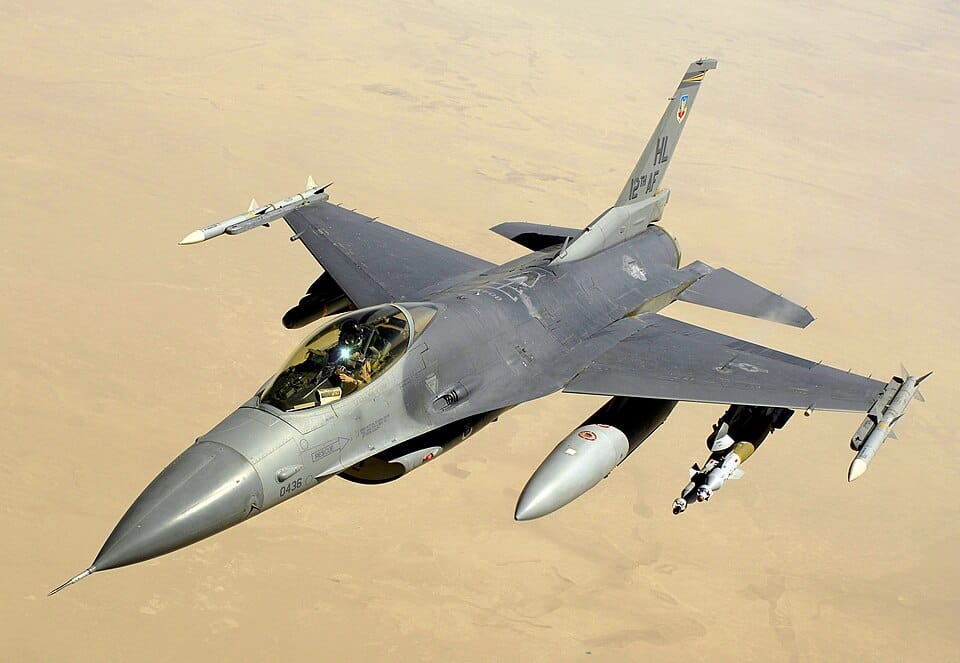
Quick Facts
Designation: AGM-188A Rusty Dagger
Programme: ERAM (Extended Range Attack Munition) / FAMM-L
Developer: Zone 5 Technologies
Weight Class: 225 kg (500 lb)
Propulsion: PBS Aerospace TJ80 turbojet
Speed: High subsonic (Mach 0.6+)
Range: 930+ km (500+ nm) air-launched
Guidance: GPS/INS with autonomous visual navigation option
Warhead: Penetration, fragmentation, and blast options with variable fuze
Test Platform: F-16D, 40th Flight Test Squadron, Eglin AFB, Florida
Ukraine Procurement: 3,350 units approved ($825M), first batch of 840 due October 2026
Production Target: 1,000 missiles per year
From Contract to Combat-Ready in Record Time
The ERAM programme began in August 2024. Contracts were awarded in October of that year. By January 21, 2026, the Air Force had conducted a live-warhead test — a full detonation that met all primary objectives and provided the data necessary to mature the weapon system further. The April tests pushed the envelope to airborne integration. An F-16D assigned to the 40th Flight Test Squadron — the Air Force’s premier tactical aircraft test unit at Eglin — carried the AGM-188A through captive-carry evaluations, fit and function checks, and airborne release trials over the Gulf of Mexico.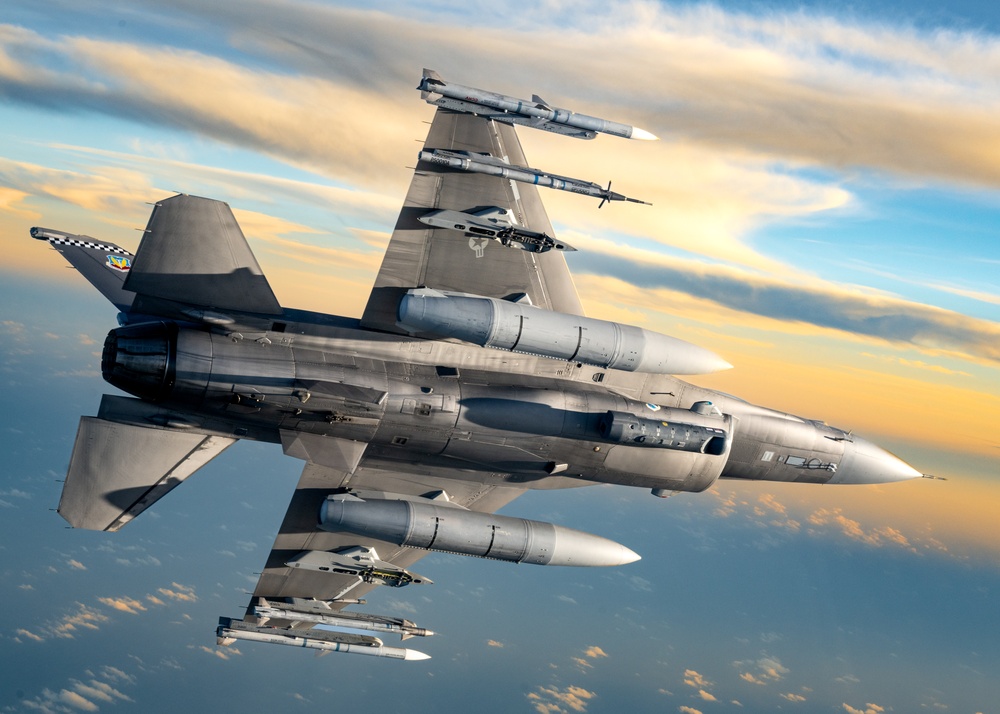
The Engineering: Small, Cheap, Lethal
The Rusty Dagger is built around the PBS Aerospace TJ80 turbojet — a compact, reliable powerplant that gives the missile sustained flight at high subsonic speed over ranges that exceed 930 kilometres when air-launched. For context, that range places targets deep inside Russian-held territory within reach of Ukrainian F-16s operating from western Ukrainian airfields. At 225 kilograms, the AGM-188A sits in the 500-pound class. It is rail-launched from fighter aircraft — and, notably, the ERAM programme also envisions pallet deployment from cargo aircraft, a concept that would allow C-130s or C-17s to function as ad-hoc missile trucks. The guidance package combines GPS and inertial navigation with an autonomous visual navigation option — a critical capability in environments where GPS signals are jammed or degraded, as they routinely are over the Ukrainian front lines. The warhead offers penetration, fragmentation, and blast modes with a variable fuze, giving strike planners flexibility against hardened targets, vehicles, or personnel in the open.Ukraine: 3,350 Missiles, $825 Million
In August 2025, Ukraine was approved to procure up to 3,350 ERAM units — including spares and support equipment — at a total estimated value of $825 million. The first batch of 840 missiles is scheduled for delivery in October 2026. The numbers matter. Ukraine has fought much of its war with a chronic shortage of precision stand-off weapons. HIMARS and Storm Shadow have been transformational but scarce. The Rusty Dagger is designed to be produced at scale — 1,000 units per year — at a unit cost that makes mass employment economically viable. For Ukrainian F-16 pilots, the AGM-188A changes the tactical equation. Instead of flying into the teeth of Russian air defences to deliver gravity bombs or short-range glide weapons, they can launch from well behind the front line, at altitude, and let the turbojet do the rest. The 930-kilometre range means that Crimean targets, logistics hubs, and command nodes deep in occupied territory are all within reach.Competition and Context
Zone 5 Technologies is not alone in the ERAM competition. CoAspire holds a parallel contract for its Rapidly Adaptable Affordable Cruise Missile (RAACM), though the Rusty Dagger appears to be further along in testing. The Air Force’s strategy of funding multiple competitors is deliberate — it accelerates development, keeps unit costs under pressure, and hedges against any single programme’s failure. The broader context is the Pentagon’s pivot toward affordable mass. After decades of building small numbers of exquisitely capable weapons — Tomahawks at $2 million each, JASSMs at $1.5 million — the defence establishment has recognised that quantity has a quality of its own. In a peer conflict with China or Russia, the U.S. will need thousands of precision stand-off weapons, not hundreds. The Rusty Dagger is the leading edge of that shift. A cruise missile that can be built at scale, launched from the most common fighter jet on earth, and guided to its target even when GPS is jammed — for a fraction of the cost of its predecessors. The name may be folksy. The capability is anything but.Sources: Air & Space Forces Magazine, Army Recognition, Defence Express, Militarnyi, designation-systems.net



 English
0 Comments