The AGM-86B entered service in 1982. Ronald Reagan was president. The Space Shuttle had flown exactly three times. Top Gun was four years from release. And the Air Force fully expected this nuclear cruise missile to be retired within two decades.
It is 2026, and the AGM-86B is still the primary air-launched nuclear weapon in the American arsenal. Now, the Air Force Nuclear Weapons Center at Tinker Air Force Base has posted a sole-source solicitation to Boeing for the remanufacture of 550 Elevon Actuator Controllers — a critical flight-control component — to keep the missile operational through July 2033. That is 51 years of service for a weapon designed during the Carter administration.
Quick Facts
• Weapon: AGM-86B Air-Launched Cruise Missile (ALCM)
• In service since: 1982
• New contract: Sole-source IDIQ to Boeing for 550 Elevon Actuator Controllers
• Delivery rate: 8 units/month (94 per year)
• Contract duration: Through July 2033
• Replacement: AGM-181 Long Range Standoff (LRSO) — still in development
• Solicitation posted: April 6, 2026 (offers due May 18)
The Elevon Actuator: A Small Part With a Nuclear Mission
The Elevon Actuator Controller governs the missile’s flight-control surfaces — the small fins that steer the AGM-86B during its terrain-following flight profile toward its target. Without functioning actuators, the missile cannot navigate. Without navigation, a nuclear weapon is useless — worse than useless, it is a liability.
The remanufacture programme will restore 550 of these assemblies at a rate of eight per month, roughly 94 per year. The fact that Boeing is the sole source is not surprising — the company built the original missile and remains the only entity with the technical data, tooling, and institutional knowledge to maintain it. What is notable is that the government has explicitly stated that funds are not yet appropriated. The solicitation was posted in anticipation of future funding, a sign of urgency that bureaucratic niceties cannot fully disguise.
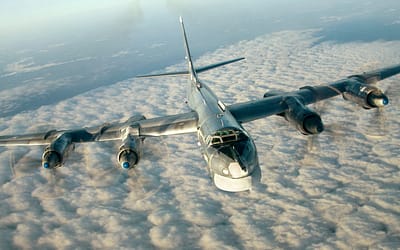
An AGM-86 Air-Launched Cruise Missile. Designed in the late 1970s, the weapon remains central to the U.S. nuclear triad. US Air Force / Wikimedia Commons
Why the Replacement Isn’t Ready
The AGM-86B was supposed to be replaced years ago. Its successor is the AGM-181 Long Range Standoff weapon, or LRSO, being developed by Raytheon. The LRSO promises modern stealth, a new warhead, and digital mission planning. It is the future of air-launched nuclear deterrence.
But the future is late. The LRSO programme has encountered the familiar delays of nuclear weapons development — a domain where testing constraints, certification requirements, and the sheer complexity of integrating a new warhead with a new airframe conspire to push timelines to the right. Until LRSO is fielded at scale, every B-52H in Air Force Global Strike Command depends on a missile that was designed when engineers still used slide rules.
Fifty-One Years and Counting
The AGM-86B is carried exclusively by the B-52H Stratofortress — itself an aircraft that first flew in 1952. Together, they form the oldest nuclear delivery system in any nation’s arsenal. The bomber is being re-engined. The missile is being remanufactured. Neither will be replaced before the 2030s.
There is something quietly extraordinary about a weapons system that has served through the Cold War, the unipolar moment, the War on Terror, and now a hot war in the Middle East — all without ever being fired in anger. The AGM-86B’s entire purpose is to never be used. But to ensure it is never used, it must always be ready. And keeping a 44-year-old missile ready requires 550 new actuator controllers, eight per month, delivered to Tinker AFB, Oklahoma.
The solicitation closes on May 18. The work will begin shortly thereafter. And the Cold War’s longest-serving weapon will fly on.
Sources: Defence Blog, Army Recognition, Interesting Engineering, Air & Space Forces Magazine
It reads like the plot of a heist film. Smuggle swarms of attack drones thousands of kilometres into the enemy’s heartland, hidden inside ordinary cargo trucks. Park them, unremarked, beside the most valuable aircraft in the arsenal. Then, at a chosen moment,...
You step onto a parked airliner and everything just works. The cabin lights are on, the air is cool, screens are glowing — and yet the two great engines on the wings are stone-cold silent. Somewhere behind you, a faint high-pitched whine is the only clue to what...
Launching a torpedo is the easy part. The hard part is what happens next: keeping a one-tonne self-propelled bomb running dead straight and at exactly the right depth, through the chaos of the sea, toward a ship that is moving and may be more than a mile away. There...




 English
0 Comments