

Quick Facts
- Mission type: SIGINT/ELINT — mapping Soviet radar, intercepting communications
- Active period: 1947–1977 (peak intensity 1950–1967)
- Aircraft used: RB-29, RB-50, RB-47, P2V Neptune, EC-121, C-130, ERB-47H
- Aircraft shot down: At least 31 confirmed
- Airmen killed or captured: 200+ (many never recovered)
- Cover story: “Training accident” or “navigation error”
- Declassified: Partially, starting in the 1990s
Mapping the Enemy’s Eyes
The logic behind the ferret programme was brutally simple. If the United States ever needed to send bombers into Soviet airspace — whether to strike military targets or to retaliate after a nuclear attack — those bombers needed to know exactly where every radar station, every surface-to-air missile battery, and every fighter base was located. And the only way to find out was to fly close enough to make the Soviets turn their radars on. The concept came from World War II, when modified bombers carrying electronic receivers had mapped German and Japanese radar networks. After 1945, the same techniques were turned against the Soviet Union. Converted B-29s — redesignated RB-29s — packed with receivers, oscilloscopes, and wire recorders, began flying along the periphery of Soviet airspace as early as 1947.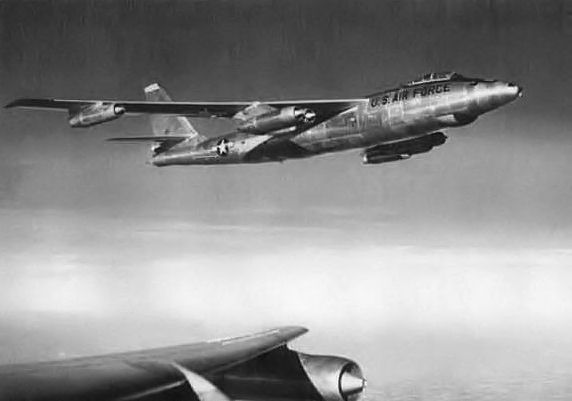
The Shootdowns Nobody Talked About
On April 8, 1950, a Navy PB4Y-2 Privateer on a ferret mission over the Baltic Sea was attacked by Soviet La-11 fighters near Latvia. All ten crew members were killed. The Navy told the families it was a training flight. The wreckage was never recovered. It was one of the earliest confirmed shootdowns, but far from the last. Over the next seventeen years, the attacks came with grim regularity. An RB-29 over the Sea of Japan in 1951 — all twelve crew lost. An RB-50 near Vladivostok in 1953 — seventeen aboard, one survivor. An RB-47H over the Barents Sea in 1960 — four killed, two captured by the Soviets and held for seven months. The pattern was always the same. Soviet fighters would intercept the American aircraft, sometimes firing warning shots, sometimes attacking without warning. The lumbering reconnaissance planes — converted bombers with no offensive armament — had almost no chance of surviving an encounter with a MiG-15 or MiG-17. And every time, the United States government denied the true nature of the mission. The aircraft were “off course.” They were on “routine training.” They suffered “mechanical failure.” The lie was maintained for decades, even to the families of the dead.The Men in the Back
The ferret crews were a peculiar breed. The pilots and navigators in the cockpit flew the plane, but the real mission belonged to the electronic warfare officers and cryptologic technicians crammed into windowless compartments in the fuselage. They were called Ravens — a name borrowed from the electronic countermeasures operators of World War II.
Project Home Run and the Deep Penetrations
Not all ferret flights stayed on the periphery. In the spring of 1956, the Air Force launched Project Home Run — a series of deep penetration flights over the Soviet Arctic. Operating from Thule Air Base in Greenland, RB-47 Stratojets flew directly over Soviet territory in the Arctic, photographing military installations and probing radar coverage. Over seven weeks, 156 missions were flown. Some aircraft penetrated hundreds of miles into Soviet airspace, flying over Novaya Zemlya, the Kola Peninsula, and Siberian military complexes. The intelligence gathered was invaluable — but the risk was staggering. Had the Soviets managed to shoot down an RB-47 deep over their territory, the diplomatic consequences could have rivalled the U-2 incident that would come four years later. Project Home Run remained classified until 1998. The crews who flew those missions received no public recognition for over forty years.The Families Left in the Dark
For the wives, children, and parents of the airmen who never came home, the silence was perhaps the cruelest part. A knock on the door. A telegram. A uniformed officer reading from a script about a training accident. No details. No location. No body to bury. Some families spent decades searching for answers. After the Cold War ended, a few received partial information — confirmation that their loved ones had been on intelligence missions, that they had been attacked by Soviet forces, that the government had known the truth all along. The NSA began declassifying some records in the 1990s, and a memorial wall at NSA headquarters at Fort Meade now bears the names of the fallen cryptologic technicians. But many questions remain unanswered. Some airmen who were captured may have been held in Soviet prisons for years without acknowledgment. Others disappeared entirely — their aircraft lost over open ocean, their remains never found, their stories told only in classified files that may never be fully opened.A Debt That Took Decades to Acknowledge
The ferret missions were among the most dangerous and least recognised operations of the Cold War. The men who flew them operated in a space between war and peace — not technically in combat, but facing lethal force from an enemy that knew exactly what they were doing. They gathered intelligence that shaped American nuclear strategy, identified vulnerabilities in Soviet air defences, and gave SAC bomber crews the targeting data they needed. And for their sacrifice, they received silence. Training accident. Navigation error. Classified. It took until 2000 for the US government to officially recognise many of the shootdown incidents. It took even longer for some families to learn where and how their sons and husbands had died. The ferret programme remains one of the Cold War’s most sobering stories — a reminder that the conflict claimed lives in ways that were hidden not just from the enemy, but from the nation that sent those men into harm’s way. Sources: Smithsonian Air & Space Magazine, National Security Agency declassified records, National Vigilance Park memorial archivesRelated Posts
 English
Great history William smith the actor did this during the Korean War.