
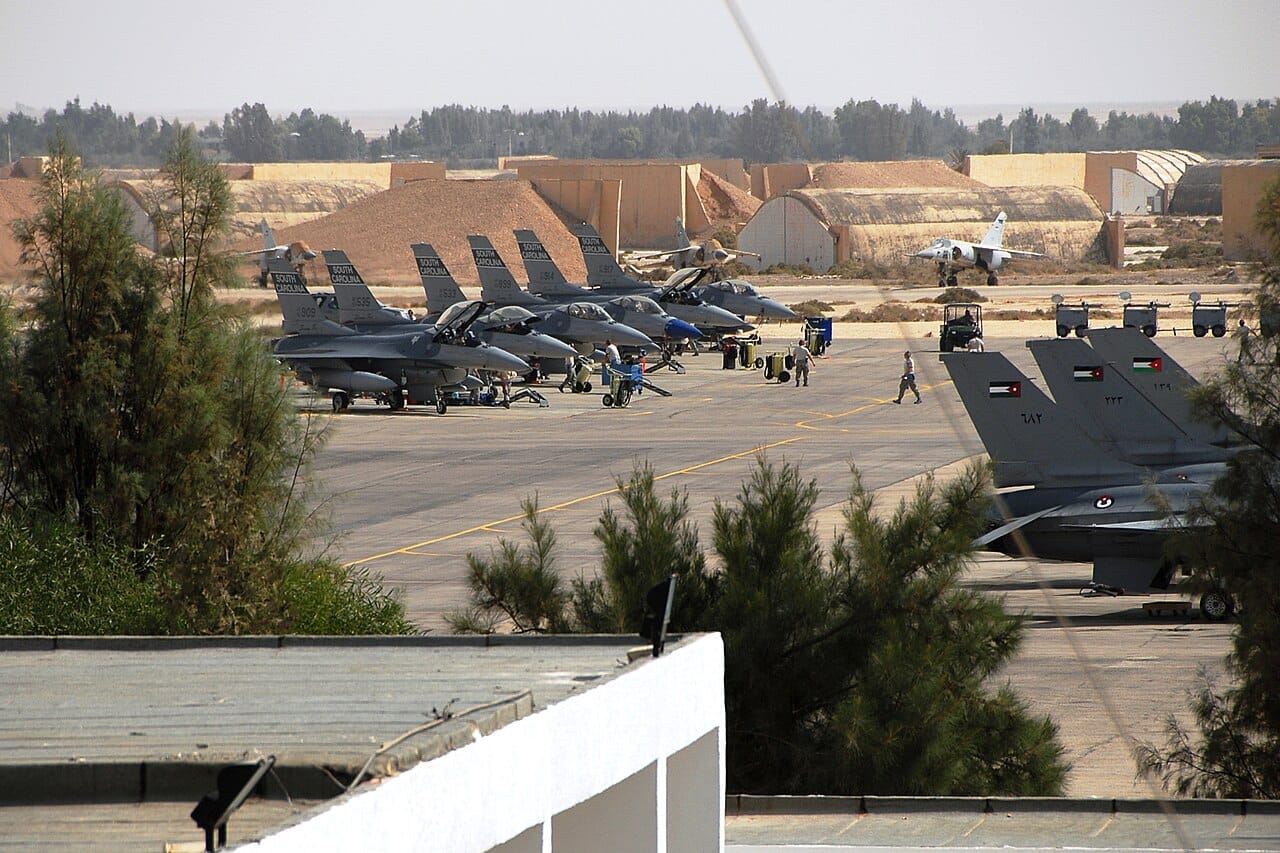
The air base is named after a man who died in an aeroplane. Lieutenant Muwaffaq Salti was a Royal Jordanian Air Force pilot, killed in combat with Israeli fighters on 13 November 1966 during the Battle of Samu. Jordan gave his name to the base at Azraq, out in the eastern desert, and it has carried it ever since.
Last Friday, Iranian ballistic missiles and drones came down on it. When US Central Command released its account the next day, three American families had been told, or were about to be told, that somebody was not coming home.
This is a story about an air base, and it is the least interesting thing about it.
Quick Facts
Base: Muwaffaq Salti Air Base, Azraq, Zarqa Governorate, Jordan
Named after: Lt Muwaffaq Salti, RJAF, killed in action 13 November 1966
Resident units: Royal Jordanian Air Force squadrons 1, 2 and 6, flying F-16s there since 1997
The attack: Iranian ballistic missiles and one-way attack drones, 17 July 2026. At least two missiles struck the base
US casualties, Jordan: two service members killed, one missing, four evacuated to hospital and since discharged
US casualties, Iraq: one service member killed on 18 July during a controlled detonation of ordnance from a downed Iranian drone, one wounded
CENTCOM total to 19 July: three killed, one missing
Earlier attempt: eight ballistic missiles fired at the same base on 9 July, all reported intercepted, no casualties
What Central Command has confirmed
The sequence, as far as it can be established from CENTCOM statements and the outlets reporting them, runs like this.
Iranian ballistic missiles and drones struck Muwaffaq Salti on Friday. CENTCOM announced on Saturday that two US service members had been killed while defending against the attack, that one was missing, and that four more had been evacuated to hospital and subsequently discharged. Others sustained minor injuries.
On Saturday, in northern Iraq, a further US service member was killed and another wounded during a controlled detonation of unexploded ordnance recovered from a downed Iranian one-way attack drone. On Sunday, CENTCOM said searchers had recovered unidentified human remains at the site of the Jordan attack, and that examination was under way to establish whether they belong to the missing service member.
That brings the confirmed count to three killed and one unaccounted for. It also raises the number of American service members killed in this war to sixteen.
A note on dates. Outlets differ on whether the Jordan attack fell on Friday 17 or Saturday 18 July, largely because CENTCOM's confirmation came a day after the event. We have followed the accounts that place the strike on the 17th and the announcement on the 18th. Some early headlines also reported four dead; the figure attributable to CENTCOM at the time of writing is three killed and one missing.
The names have not been released. CENTCOM withholds them until twenty-four hours after next of kin are notified, which is why this article does not have any. By the time you read it, they may exist somewhere in a press release, three ordinary names that mean nothing to almost everybody and everything to a handful of people.
Why this base, and why now
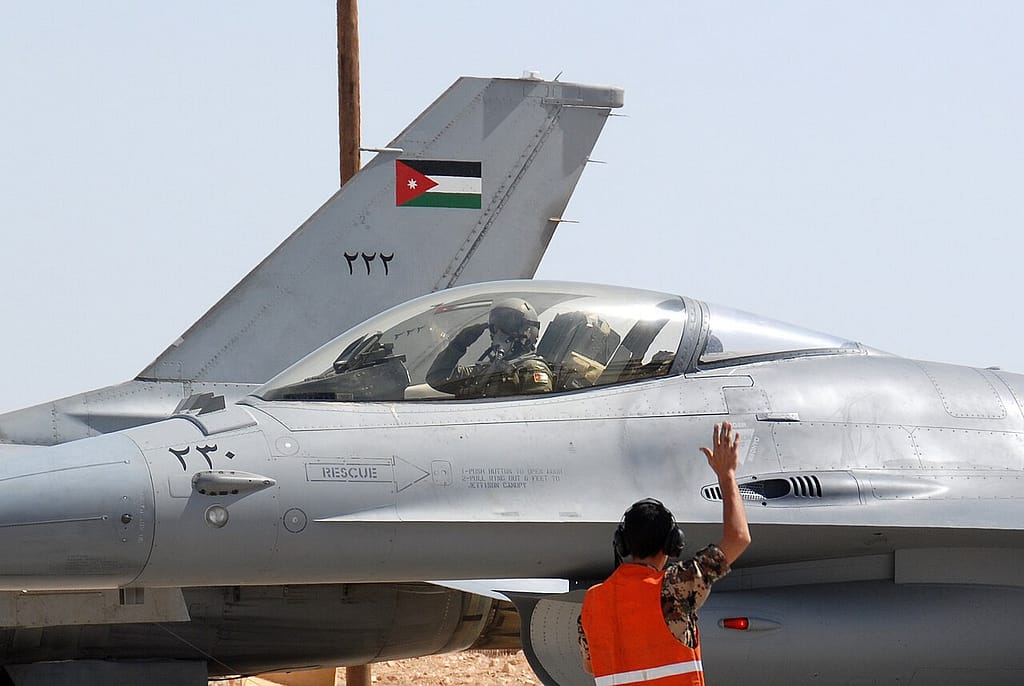
Muwaffaq Salti is not an American base. It is a Jordanian one, home to three F-16 squadrons, which has hosted American and allied aircraft since the campaign against ISIS and has taken on far greater weight during the current war. It sits in the eastern desert with useful geography and a long runway, which is exactly the combination that makes an air base valuable and makes it a target.
Jordan has spent this war trying to occupy an almost impossible position: a treaty relationship with the United States, a border with Israel, a large and unenthusiastic public, and Iranian munitions crossing its airspace. Being struck on 9 July and again on 17 July is the cost of that position, and Amman has very little room to respond to it.
The arithmetic that let something through
On 9 July, eight Iranian ballistic missiles were fired at this same base and all eight were reported intercepted. Nobody was hurt, nothing was damaged, and almost nobody outside the region noticed. On 17 July, at least two got through.
The difference is the part of modern air defence that does not make headlines until it fails. Iranian strike packages increasingly pair ballistic missiles with large numbers of Shahed-type one-way attack drones. The drones are slow and individually unimpressive. They cost tens of thousands of dollars. The interceptors that stop them cost millions.
That asymmetry is the entire point. A defender facing a mixed raid has to decide, in seconds and with imperfect information, which tracks are cheap distractions and which are the two-million-dollar ballistic missiles that will actually kill people. Spend your interceptors on the drones and the missiles leak through. Ignore the drones and they arrive. Do it for long enough and you simply run out of interceptors, which Gulf states are reportedly close to doing.
Air defence is often described as a shield. It is closer to a budget. Every engagement spends something that cannot be replaced at the rate it is being used, and eventually the sums stop working. Friday was what that looks like from underneath.
The name on the gate
There is a small, uncomfortable symmetry in all this. Muwaffaq Salti was killed defending Jordanian airspace in 1966, in a confrontation that had nothing to do with Iran and everything to do with a different set of borders. Sixty years later, the base named in his memory became the place where three Americans died in somebody else's quarrel, on ground that belongs to neither of them.
Air bases collect these stories. That is really all an air base is: a strip of concrete that outlives everybody who ever took off from it.
Sources: US Central Command, The Aviationist, Air & Space Forces Magazine, Defense News, NBC News, CNN, Axios, NPR, PBS NewsHour, Washington Post.

0 Comments