
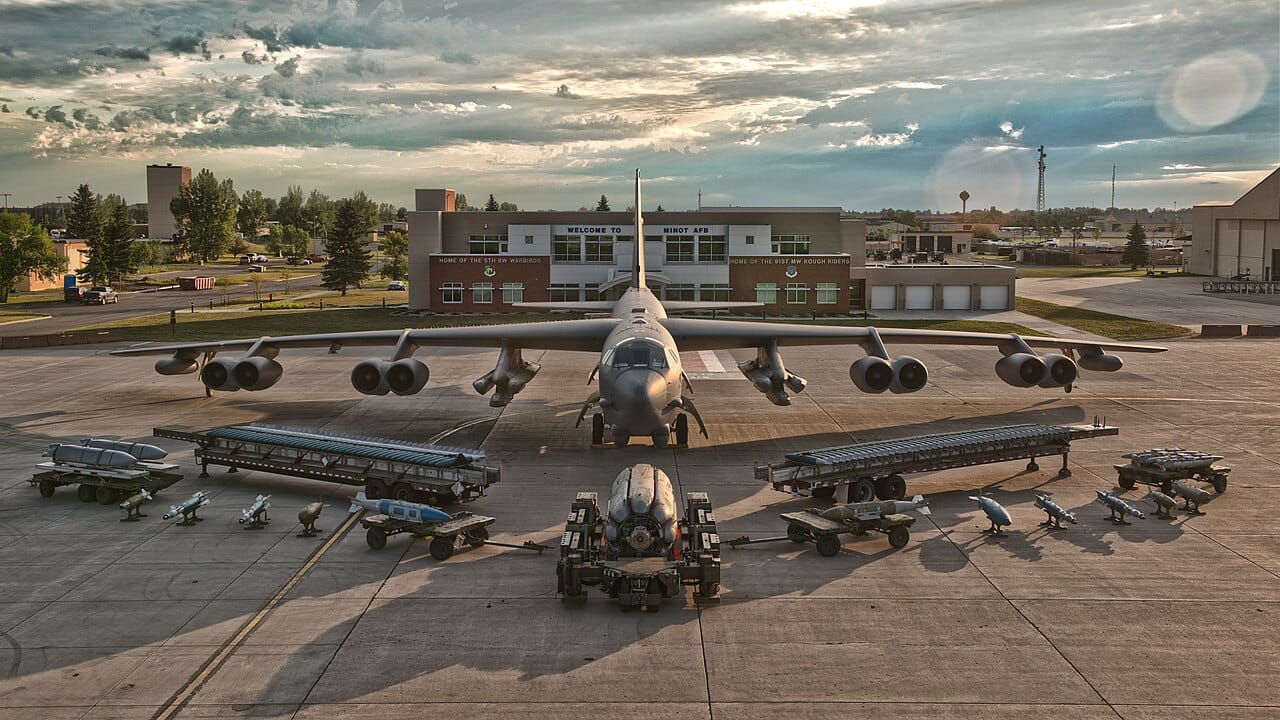
On 10 January 1964, a B-52H Stratofortress flown by a Boeing test crew on a structural test flight near East Spanish Peak in southern Colorado when it flew into the worst clear-air turbulence anyone aboard had ever experienced. There was no warning, no cloud cover, no thunderstorm. Just a sudden, brutal shake that snapped the entire vertical stabilizer off the back of the bomber.
Then the crew — Boeing test pilot Charles “Chuck” Fisher, co-pilot Richard V. Curry, and two others — discovered something that nobody had ever practised in a simulator: how to fly a 220,000-kilogram strategic bomber with no rudder, almost no fin, and zero yaw stability.
They flew it for six hours. They landed it intact at Blytheville Air Force Base in Arkansas. The aircraft did not break up. Nobody died. It is one of the most extraordinary feats of improvised airmanship in the history of strategic aviation.
The 10 January 1964 Blytheville incident — explained. Via @hasnnan1996 on Instagram
Quick Facts
Aircraft: Boeing B-52H Stratofortress, serial 61-0023
Unit: Boeing flight test (B-52H instrumented for USAF structural testing)
Date: 10 January 1964
Event: Vertical stabilizer broken off in clear-air turbulence
Vertical fin lost: ~83% of vertical stabilizer area
Recovery technique: Differential thrust + ailerons + airbrake drag for yaw control
Flight duration after damage: ~6 hours
Landing site: Blytheville AFB, Arkansas (later Eaker AFB)
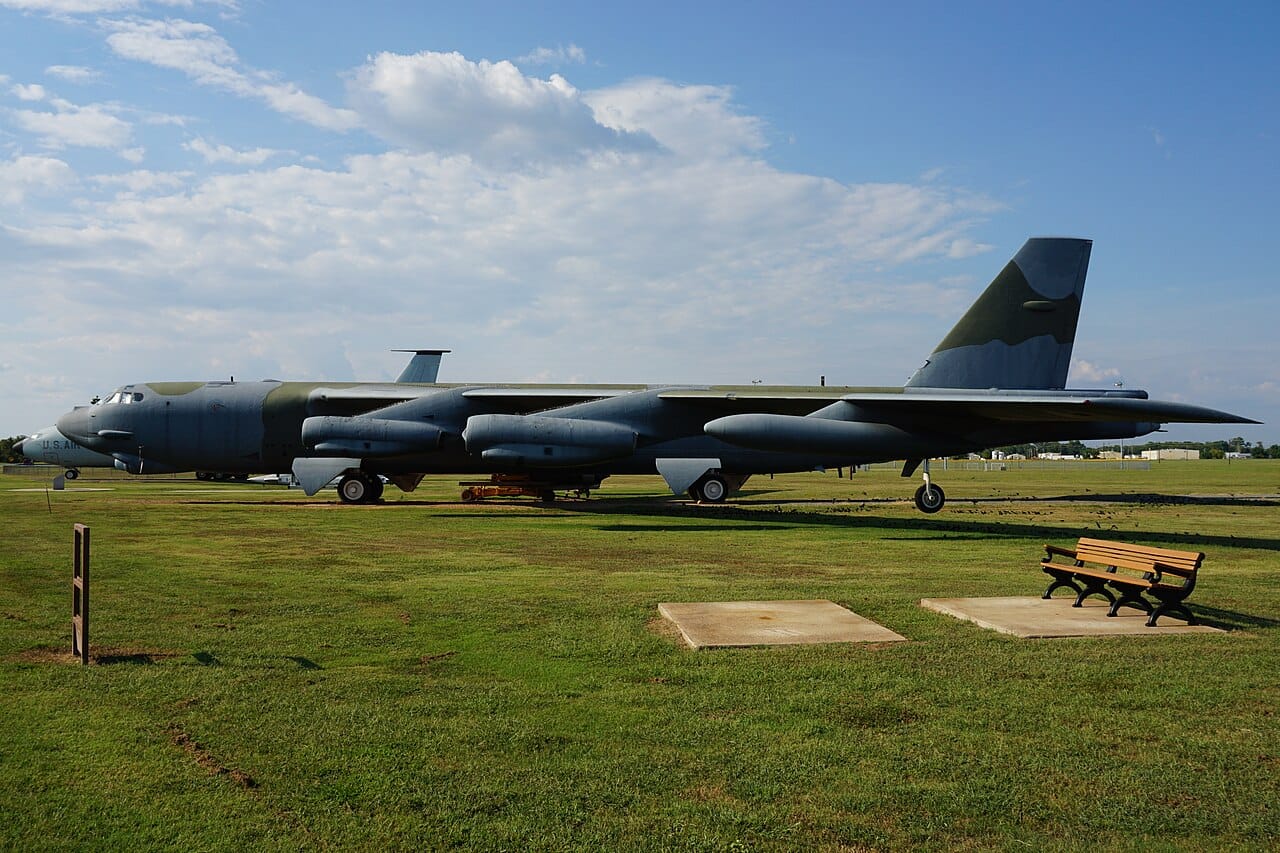
The Hit That Should Have Killed Them
The crew was flying at 14,300 feet over the Sangre de Cristo Mountains of southern Colorado. The aircraft was instrumented for structural testing of high-speed, low-level flight — the mission profile SAC had adopted to evade Soviet radar. Without warning, the bomber pitched up violently, then was hammered by a series of violent vertical jolts.
The crew heard a metallic bang behind them. The cabin pressure flicked momentarily. The aircraft yawed hard to the right and started to roll. Fisher took the controls. Nothing in his training told him what came next.
Behind the cockpit, almost the entire vertical fin had snapped off at its root. What was left was a stub barely a metre tall — enough to keep the rudder hardware attached but not enough to provide any meaningful yaw stability. The aircraft was, aerodynamically, two-thirds of a flying wing.
Inventing a New Flight Manual
Modern fighter aircraft have flight control software that can compensate for a lost tail. The B-52H of 1964 had four men, eight throttle levers, and the ailerons. That was the entire toolkit.
What Fisher and his crew did over the next six hours has become a case study in test-pilot circles. They used differential engine thrust — advancing the throttles on the right-side engines while pulling them back on the left — to push the nose left or right, replacing the lost rudder. They used the ailerons for roll control as designed. And they used the fuselage-mounted air brakes as variable drag plates: extending one side more than the other added another tiny yaw input.
None of this was in the manual. Fisher and his crew invented it as they flew. Every adjustment had to be made smoothly and slowly — abrupt inputs would have set up the aerodynamic divergence that the fin was supposed to suppress, and the aircraft would have departed controlled flight in seconds.
Six Hours in the Air
The recovery flight took about six hours. An F-100 Super Sabre chase plane joined up to escort and visually inspect, confirming by radio that almost the entire fin was gone — a fact he had until then only inferred from the handling. With gusty winds ruling out a landing back at Wichita, the crew diverted to Blytheville AFB in Arkansas and its long runway.
The landing was straight-in, slow, and on speed. The aircraft touched down gently, rolled long, and stopped without a single piece of damage on the ground. Fisher climbed out and walked around the back. Almost nothing was left of the tail.
The Engineering Aftermath
Boeing studied the wreckage and the flight data closely. The Blytheville incident showed the B-52's clear-air turbulence load envelope was wrong; the fin had failed at loads much lower than the certification figures suggested. Boeing redesigned the fin attachment, increased the load tolerance for production aircraft, and quietly retrofitted the rest of the H-fleet.
The aircraft itself, 61-0023, was repaired and returned to service. It flew with the Air Force until 2008, when it was placed in storage at Tinker Air Force Base, Oklahoma. Fisher later called the bomber “the finest airplane I’ve ever flown.”
It remains the only known case of a strategic bomber landing intact after losing its entire vertical stabilizer in flight. And it is the reason every B-52 currently flying has a tail fin built to a stronger standard than the one that broke 62 years ago.
Sources: USAF Accident Investigation Board, Boeing 1964 incident report, "Strategic Air Command Aircraft Losses" (Knaack), pilot interviews via Air & Space Forces Magazine archives.
Related Questions
Can a B-52 fly without its tail fin?
Yes - remarkably, one did. On 10 January 1964, a B-52H lost about 83% of its vertical stabilizer in violent clear-air turbulence over Colorado. The Boeing test crew kept the bomber airborne for roughly six hours using differential engine thrust, ailerons, and airbrakes for yaw control, then landed it safely.
What happened to the B-52 that lost its tail in 1964?
On 10 January 1964, a B-52H flown by Boeing test pilot Chuck Fisher hit severe clear-air turbulence near East Spanish Peak, Colorado, which snapped off most of its vertical stabilizer. With no rudder and almost no fin, the crew flew on for about six hours and landed intact at Blytheville Air Force Base, Arkansas.
How did the crew control the tailless B-52?
With the vertical fin gone, the crew had no rudder and zero yaw stability. They improvised, using differential thrust from the eight engines, the ailerons, and airbrake drag to steer the bomber’s heading. No one had ever practised this in a simulator, making the recovery one of aviation’s great feats of airmanship.
What caused the B-52 to lose its tail?
Clear-air turbulence - sudden, severe atmospheric disturbance with no visible warning - tore the fin off. The B-52H was instrumented for structural testing of high-speed, low-level flight when it flew into the worst turbulence the crew had ever experienced, snapping the entire vertical stabilizer from the bomber’s rear.
Did anyone die on the tailless B-52 flight?
No. Despite losing 83% of a tail fin that should have made the aircraft unflyable, the Boeing crew brought the B-52H home with no fatalities. The bomber itself - a design so durable it is expected to serve for a century - was not destroyed and landed intact.
Why was the B-52 being flown when it lost its tail?
The B-52H was on a structural test flight, instrumented to study the stresses of high-speed, low-level flight - the demanding profile the bomber adopted as enemy defences improved. That testing role reflects how the B-52 kept adapting across decades, a longevity traced in this history of military aviation.
0 Comments