
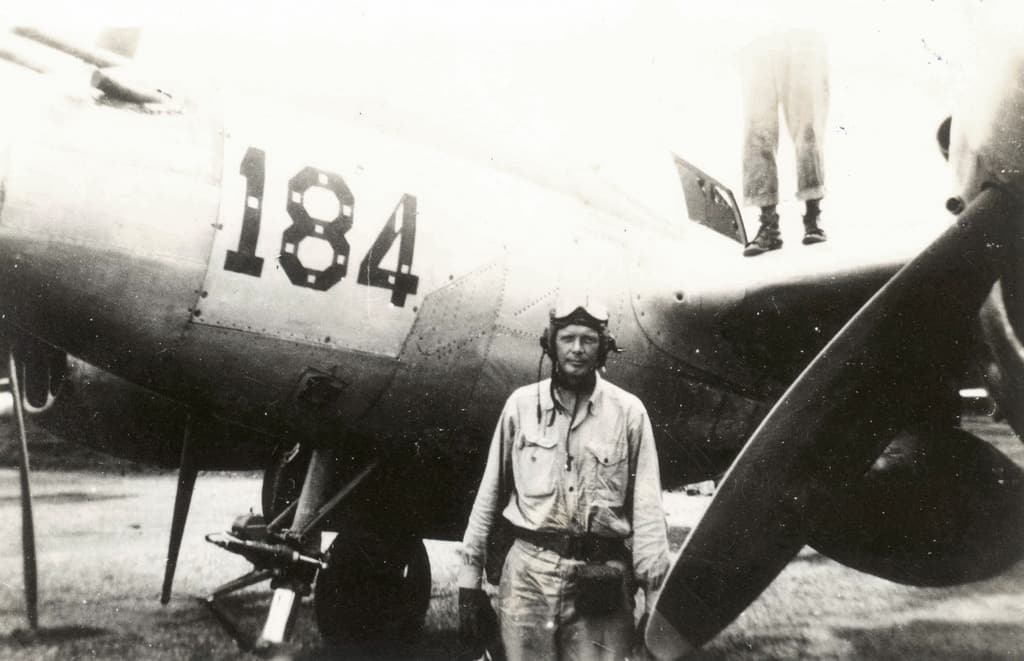
By the summer of 1944, Charles Lindbergh was the most famous pilot alive and one of the most controversial men in America. He had crossed the Atlantic alone in 1927 and been adored for it. Then he had campaigned to keep the United States out of the war, clashed bitterly with President Roosevelt, and resigned his Army commission. When Pearl Harbor came and he offered to serve, the administration turned him down flat.
So he found another way in. That summer, a 42-year-old civilian with no uniform and no authorization to fire a gun was strapping into fighter cockpits over the South Pacific — and, on one July morning, shooting down an enemy plane in a head-on pass that nearly killed them both.
Quick Facts
- Who: Charles Lindbergh — the 1927 solo-Atlantic hero, by 1944 a civilian
- Role: “Technical observer” for United Aircraft in the South Pacific
- Missions: Over 50 combat sorties — in F4U Corsairs and P-38 Lightnings
- Kill: One Japanese aircraft, head-on, July 28, 1944
- Contribution: Fuel-economy techniques that stretched P-38 range by hundreds of miles
- Status: Entirely unofficial — he had no commission and no business being there
A back door into the war
Rebuffed by Washington, Lindbergh went to work for private industry, and by 1944 he was a consultant to United Aircraft, maker of the F4U Corsair. His official job was to study how the fighter performed in combat conditions. To do that honestly, he argued, he had to fly the missions himself.
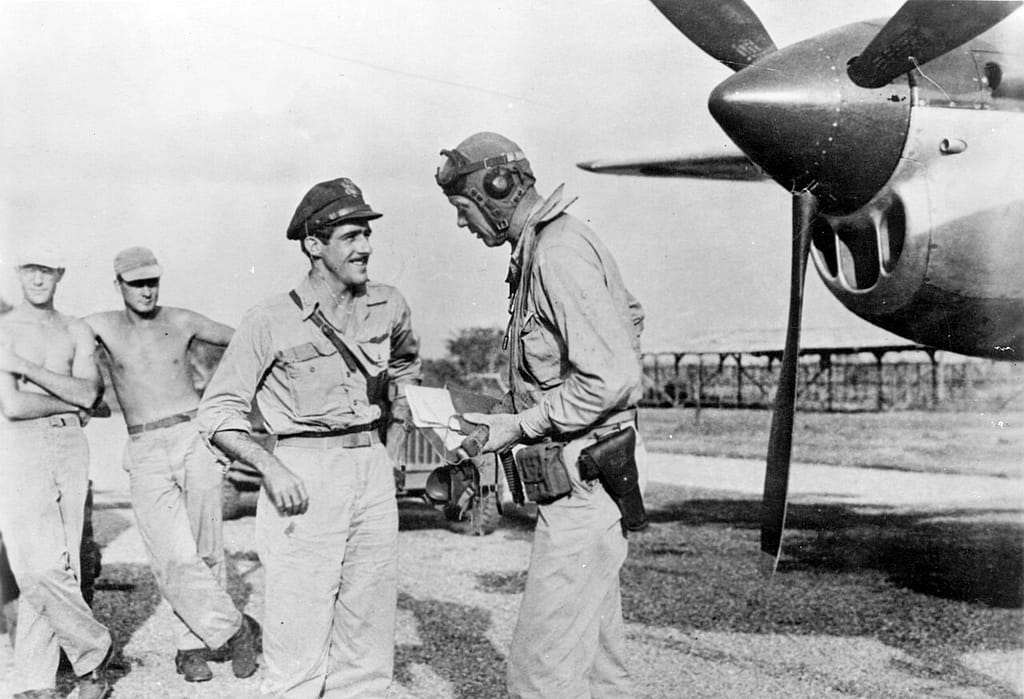
He started in the Solomons, flying Corsairs with Marine squadrons on bombing and strafing runs. Then he moved to New Guinea and talked his way into the P-38 Lightning — an aircraft he had never flown — with the 475th Fighter Group. Its commander, Colonel Charles MacDonald, simply opened his screen door one day to find the Lone Eagle standing there, introducing himself.
The trick that changed the war in the Pacific
Lindbergh’s real gift to the war was not marksmanship — it was fuel. He showed the young pilots how to lean their engines, drop the rpm and raise the manifold pressure, and coax hundreds of extra miles out of the same tanks without hurting the engines. He reckoned the P-38’s combat radius could jump from around 570 miles to 700 or 750 and still land with an hour of fuel to spare.
In a theatre measured in vast stretches of empty ocean, that was transformative. General George Kenney was impressed enough to let Lindbergh keep flying as an observer — officially not to shoot, though everyone understood he might strafe “a little.” The man who had once flown the Spirit of St. Louis to Paris on careful fuel management was now teaching a generation how to do the same in combat.
Ten feet from a mid-air collision
On July 28, 1944, escorting bombers against a Japanese airfield near New Guinea, Lindbergh’s flight of four P-38s dove on two enemy aircraft. Colonel MacDonald hit the first; the plane straightened out and flew directly at Lindbergh. He held the trigger down and his gunsight on the oncoming engine as they closed head-on at a combined speed of more than 500 miles an hour.
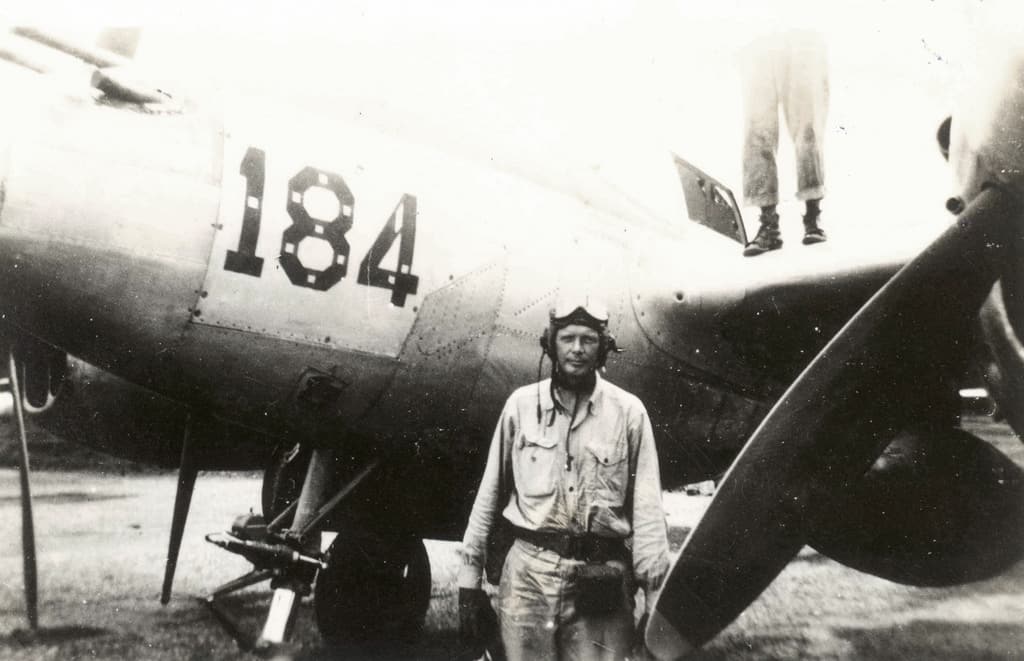
They missed. The enemy plane, hammered by Lindbergh’s cannon and machine guns, rolled over and fell to the sea. His wingman, Lieutenant Miller, confirmed the kill — Lindbergh had been so fixed on his own gunsight that he never saw the Japanese pilot firing back at him.
A complicated hero
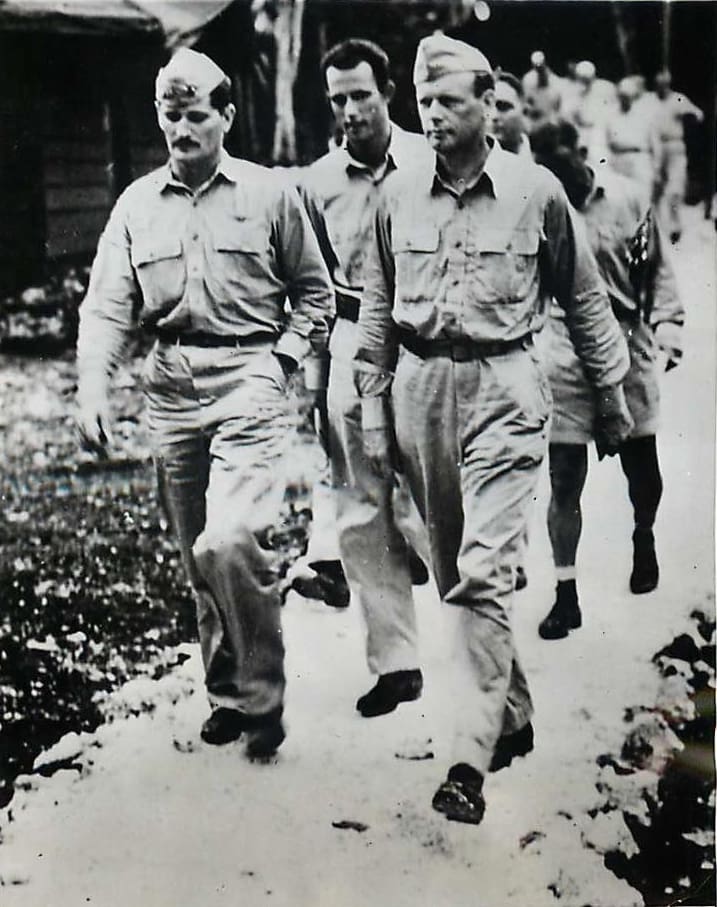
Lindbergh flew more than 50 combat missions before quietly going home. The Army could hardly publicise the fact that a celebrated civilian — and a man the President despised — had been flying and fighting in its aircraft, so the story stayed largely in the shadows for years.
He remains one of the twentieth century’s most contradictory figures: a peerless aviator, a pre-war isolationist whose speeches did real damage to his reputation, and, in 1944, a middle-aged civilian who taught the American air forces to fly farther and then went out and proved it under fire. The fuel-economy lessons outlived the controversy — they helped win the air war over the Pacific.
Sources: The Wartime Journals of Charles A. Lindbergh (1970); A. Scott Berg, “Lindbergh” (1998); EyeWitness to History; charleslindbergh.com; Wikipedia.
0 Comments