
The number is 10,000. Pentagon procurement officers, briefing reporters at the Department of War on 13 May 2026, used that number with the casual fluency of a Costco executive describing a quarterly shipment. Ten thousand low-cost cruise missiles in three years, plus another 12,000 Blackbeard hypersonics over five. Roughly 7,000 long-range strike rounds a year for the next half-decade — at a moment when the U.S. fired close to a thousand Tomahawks during Operation Epic Fury and still had the inventory ticker turning red.
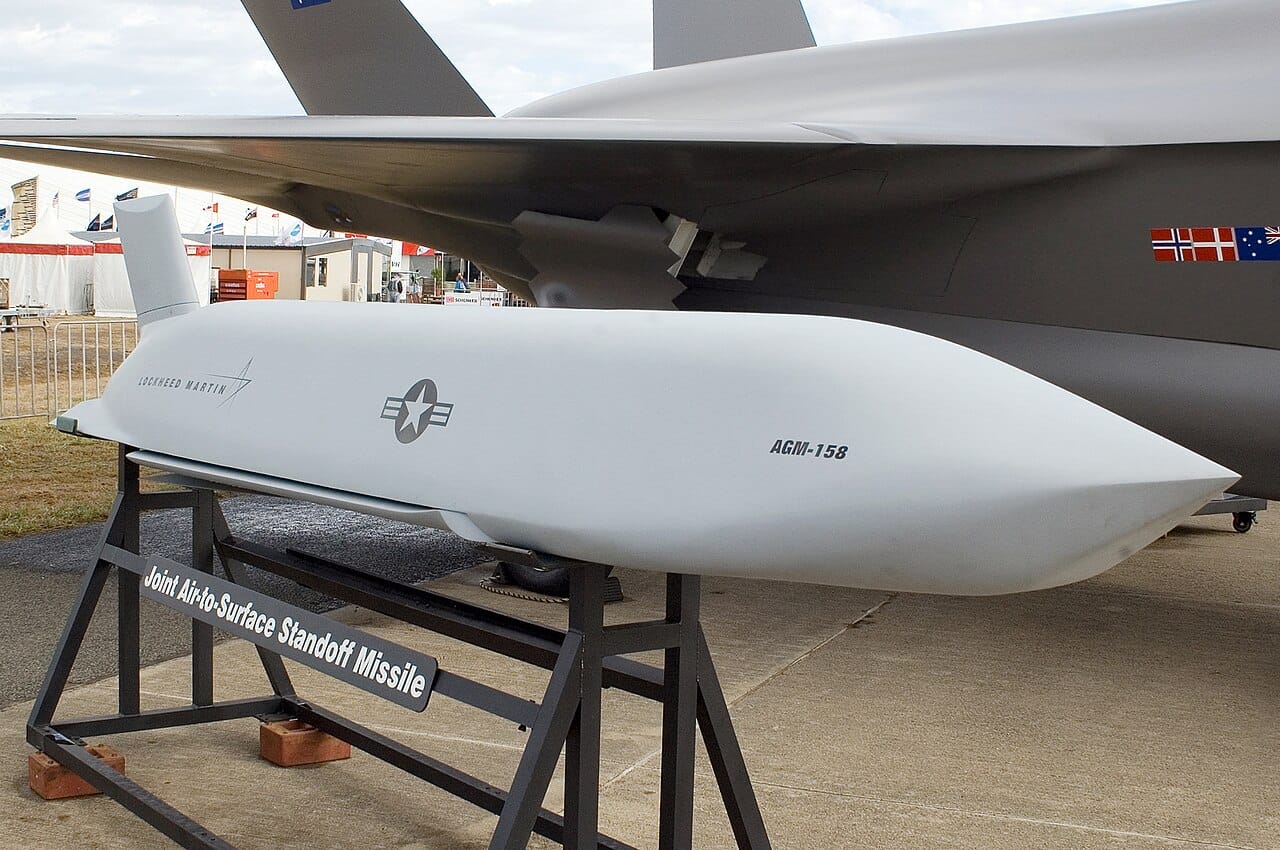
For the better part of two decades, the U.S. military’s long-range strike posture has been built around exquisite weapons — Tomahawks at $2 million a copy, JASSM-ERs at $1.5 million, LRASMs at $3 million. The plan announced on 13 May, formalised through the new Low Cost Containerization Munitions Program (LCCMP) and a parallel Blackbeard contract structure, says explicitly that the exquisite-weapons era is ending. Cheap volume is now the strategic imperative.
From One War, a New Doctrine
The Pentagon doesn’t usually overhaul its weapons procurement doctrine in 90 days. It did this one in less than that. The trigger was the Iran campaign — Operation Epic Fury — which opened in early March 2026 and ran for roughly two months. During that window, U.S. forces fired more than 850 Tomahawks. The combat result was decisive. The inventory result was alarming. By the end of April, U.S. Navy planners were quietly briefing Congress that the Pacific theatre could not be supported simultaneously if a Chinese contingency arose.

The arithmetic of two-front deterrence simply did not work with $2-million missiles. With Tomahawks fired faster than they can be built, every additional target list became a strategic decision rather than a tactical one. The new doctrine takes the volume problem and solves it by attacking the price. If a long-range strike round costs $250,000 instead of $2 million, you can hold a magazine of 50,000 rounds for the same money as 5,000 Tomahawks — and that, the Pentagon now argues, is the inventory deterrence China respects.
The Five Companies Who Just Won the Lottery
The framework contracts went to a deliberately unusual mix of vendors. Anduril, the Silicon Valley defence start-up, is in for its Barracuda-500M containerised cruise missile (already separately under contract for 3,000 surface-launched rounds for the U.S. Army). CoAspire, Leidos and Zone 5 round out the cruise-missile vendor pool. None of them are traditional primes. Castelion, the company building the Blackbeard hypersonic, is even less conventional — it was founded in 2022 by ex-SpaceX engineers and has yet to fire a missile in a test the public has seen.

That deliberate exclusion of the traditional primes — Lockheed, Raytheon, Boeing, Northrop — is the most-debated element of the plan. Pentagon procurement reformers, who have spent a decade trying to break the big four’s stranglehold on weapons production, see it as long-overdue progress. The traditional primes see it as a destabilising experiment. Lockheed’s Tomahawk line, Raytheon’s JASSM line and Boeing’s Harpoon line are all still in production — but they are now competing for a slice of a pie the Pentagon is explicitly trying to grow without them.
Castelion and the Blackbeard Bet
The hypersonic side of the plan is, in some ways, more audacious than the cruise-missile side. Castelion’s Blackbeard is a small, road-mobile hypersonic missile designed to be produced in volume — the same logic as the cruise-missile programme, but applied to a weapon class that has historically cost $10 million or more per round. The Pentagon is reportedly seeking authority to buy a minimum of 500 Blackbeards annually under a two-year multi-year contract, with options for up to five years.

Total demand: 12,000 Blackbeards across five years. By comparison, the U.S. has fielded fewer than 30 LRHW Dark Eagles to date. The Blackbeard is positioned to be the hypersonic equivalent of a Hellfire — a high-speed, comparatively cheap, deployed-in-bulk strike weapon that solves the time-on-target problem against moving or hardened targets the cruise missiles can’t reach quickly enough.
The Container Doctrine
The thread tying every weapon in the new procurement plan together is the launch method. All of these missiles fit inside standard 20-foot ISO shipping containers. Sixteen Barracuda-500Ms per container. Multiple Blackbeards per container. The whole architecture is designed around the fact that a container on a flatbed truck, a barge or a C-130 ramp is the most logistically dispersible launch platform ever invented.
The strategic value comes from indistinguishability. A Filipino port handles thousands of containers a day. A Polish forest road accepts container trucks without raising eyebrows. An Australian remote airstrip can park a C-130 load of containers nightly. None of these signal “missile launcher” to a satellite analyst. That dispersion — combined with sheer volume — produces a deterrence calculation Beijing and Moscow have to assume the worst about.
What Could Go Wrong
The risks are not small. Building 1,000 cruise missiles a year requires industrial capacity that does not currently exist. Anduril’s Mississippi facility is being expanded, but is still years from full output. The smaller vendors face a steeper climb. The supply chain for solid-rocket motors, jet fuel tanks, GPS receivers and inertial measurement units is currently saturated. Pentagon procurement officials have already warned that hitting the 10,000-missile target by 2030 depends on supply chain investments that have not been authorised.
There is also a doctrinal risk. The U.S. Air Force, Navy, Marine Corps and Army all have separate long-range strike doctrines. A container-launched cruise missile makes sense for the Army’s land-based Indo-Pacific Fires concept. It is less obvious how the Navy or Air Force integrates the same weapon into existing battle networks. The 13 May plan does not yet resolve those doctrinal seams — it just commits to building the missiles and figuring out the doctrine later.
A New Pentagon Logic
The 10,000-missile plan is, more than anything else, a signal of how the Pentagon now thinks about the next war. The American defence establishment spent thirty years building a force optimised for quality over quantity. China’s PLA, working backwards from very different assumptions, built a force optimised for quantity over quality. The Pentagon now appears to have concluded that quality alone cannot deter, and that the next decade will be about industrial scale rather than technological elegance.
Ten thousand cruise missiles. Twelve thousand hypersonics. Five companies, three of which barely existed five years ago. The U.S. military’s long-range strike inventory is about to look very different. The first test rounds ship in June.
Sources: The War Zone (Joseph Trevithick); Breaking Defense (Valerie Insinna); DefenseScoop; Interesting Engineering; Defence-blog; Tectonic Defense; Executive Gov; Department of War press release of 13 May 2026.


 English
0 Comments