
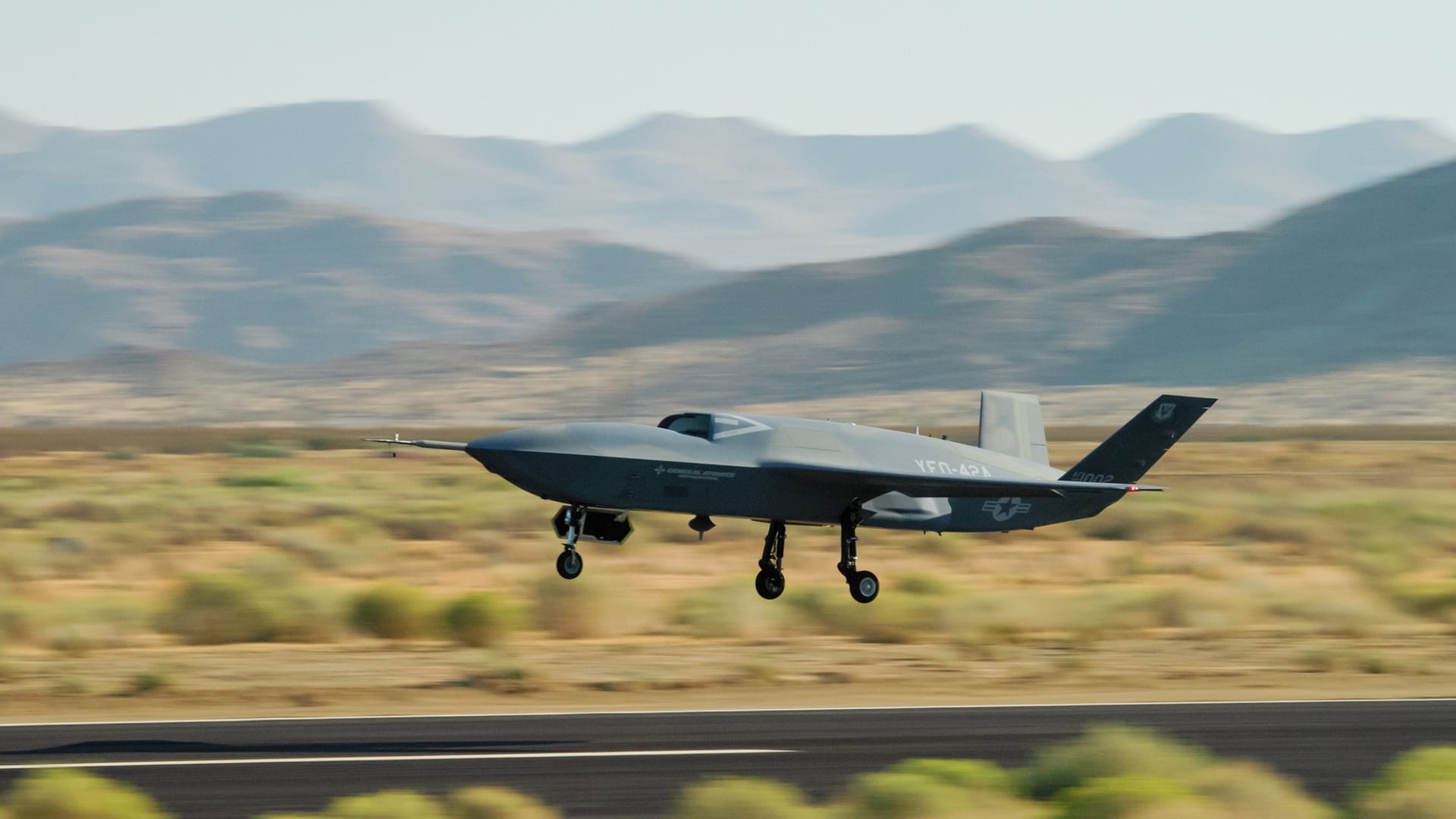
For two years, America’s robot fighter jets carried a single telling letter in their names: Y, the prefix the Pentagon slaps on prototypes. On June 17, 2026, the Air Force quietly deleted it — and with it, any doubt about where this program is headed.
The service awarded its first-ever production contracts for Collaborative Combat Aircraft, the semi-autonomous “loyal wingman” drones meant to fly alongside crewed fighters. General Atomics and Anduril both won. The United States is now committed to mass-producing autonomous combat aircraft.
Quick Facts
- What: the U.S. Air Force’s first Collaborative Combat Aircraft (CCA) production contracts
- When: June 17, 2026 — roughly four months ahead of schedule
- Winners: General Atomics (FQ-42A) and Anduril (FQ-44A “Fury”)
- Scale: at least 150 CCAs combined by the end of the decade, for Increment 1 alone
- The tell: both drones dropped the “Y” prototype prefix — they are now production aircraft
Drop the Y
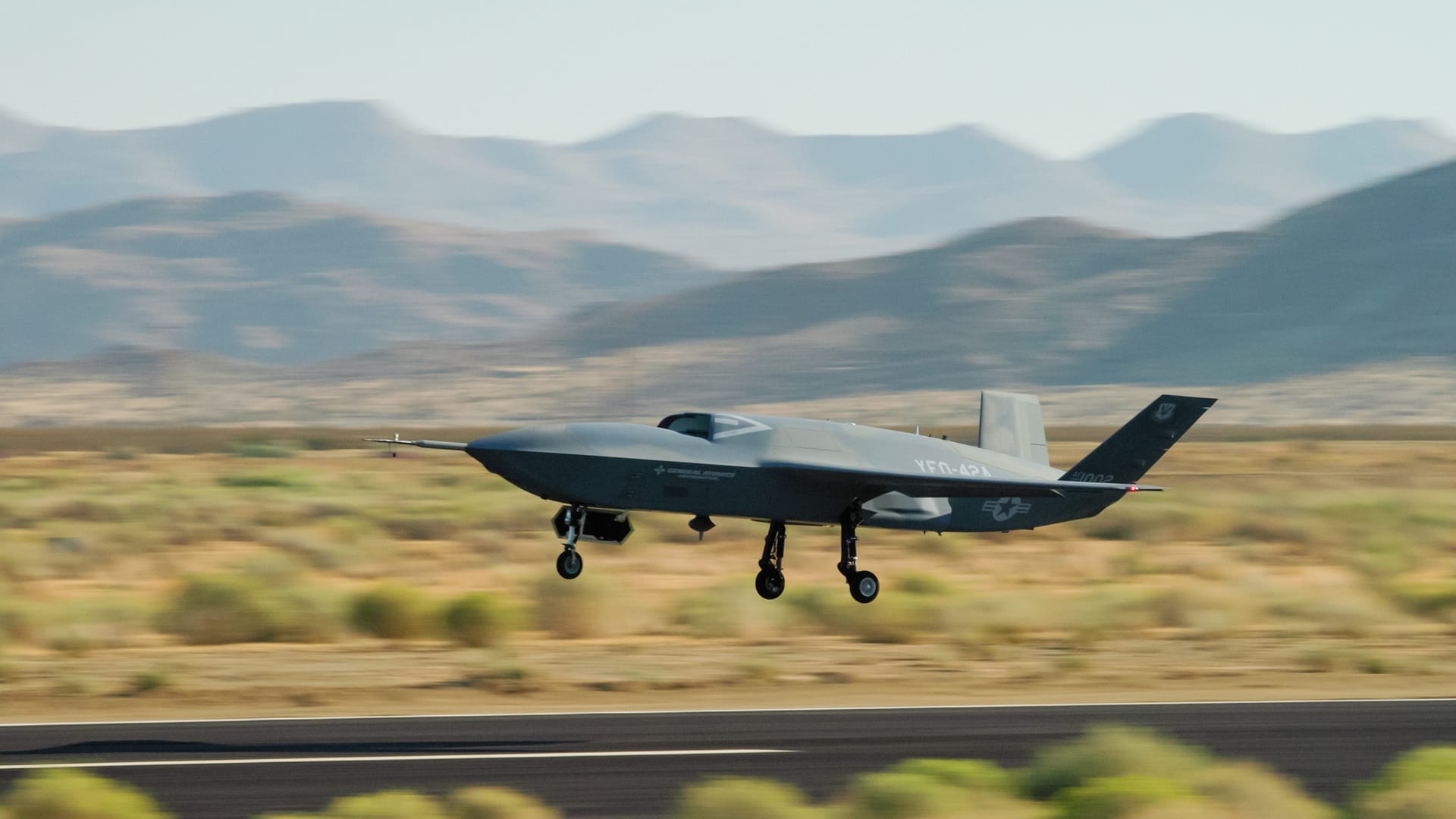
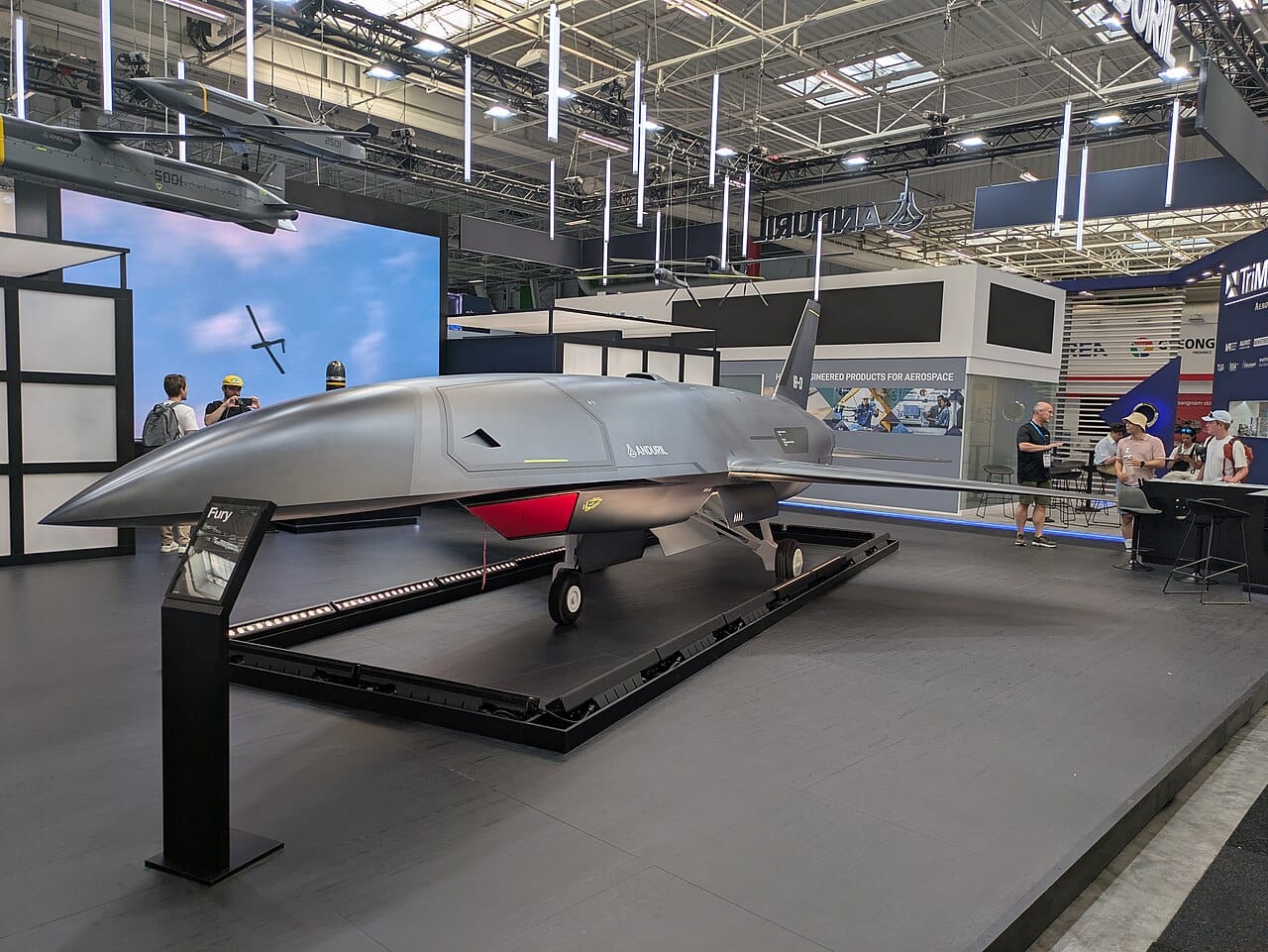
The two winners are the General Atomics FQ-42A and the Anduril FQ-44A, nicknamed “Fury.” Until last week they were the YFQ-42A and YFQ-44A — experimental test vehicles. Dropping the “Y” is bureaucratic shorthand for a very big deal: these are no longer science projects, they are aircraft the Air Force intends to buy in bulk.
And bulk is the point. The service plans to field at least 150 of them by the end of the decade in this first increment alone, and the contracts landed roughly four months early — a startling pace for a Pentagon program.
Two Companies, One Robot Air Force
Keeping both General Atomics and Anduril in the game is deliberate. The Air Force wants competition, two production lines, and the ability to play one supplier against the other on price — the opposite of how it bought the single-source F-35. Each drone is designed to be cheap enough to risk, smart enough to fly itself, and lethal enough to matter, pairing with F-22s, F-35s and the future F-47 to add mass in a fight.
The Brains Are the Hard Part
Building the airframes turns out to be the easy bit. The real challenge is the autonomy — the software that lets a drone fly formation, read a battlefield, and make decisions at machine speed without a pilot in the seat. So the Air Force split that work out separately, awarding mission-autonomy contracts to Anduril, Shield AI and Collins Aerospace.
Secretary of the Air Force Troy Meink said the awards would help field more than 150 combat-capable CCAs by the end of the decade. After years of slideware and speculation, the age of the robot wingman just stopped being theoretical.
Sources: U.S. Air Force; Defense News; Breaking Defense; Aviation Week; General Atomics.
 English
0 Comments