
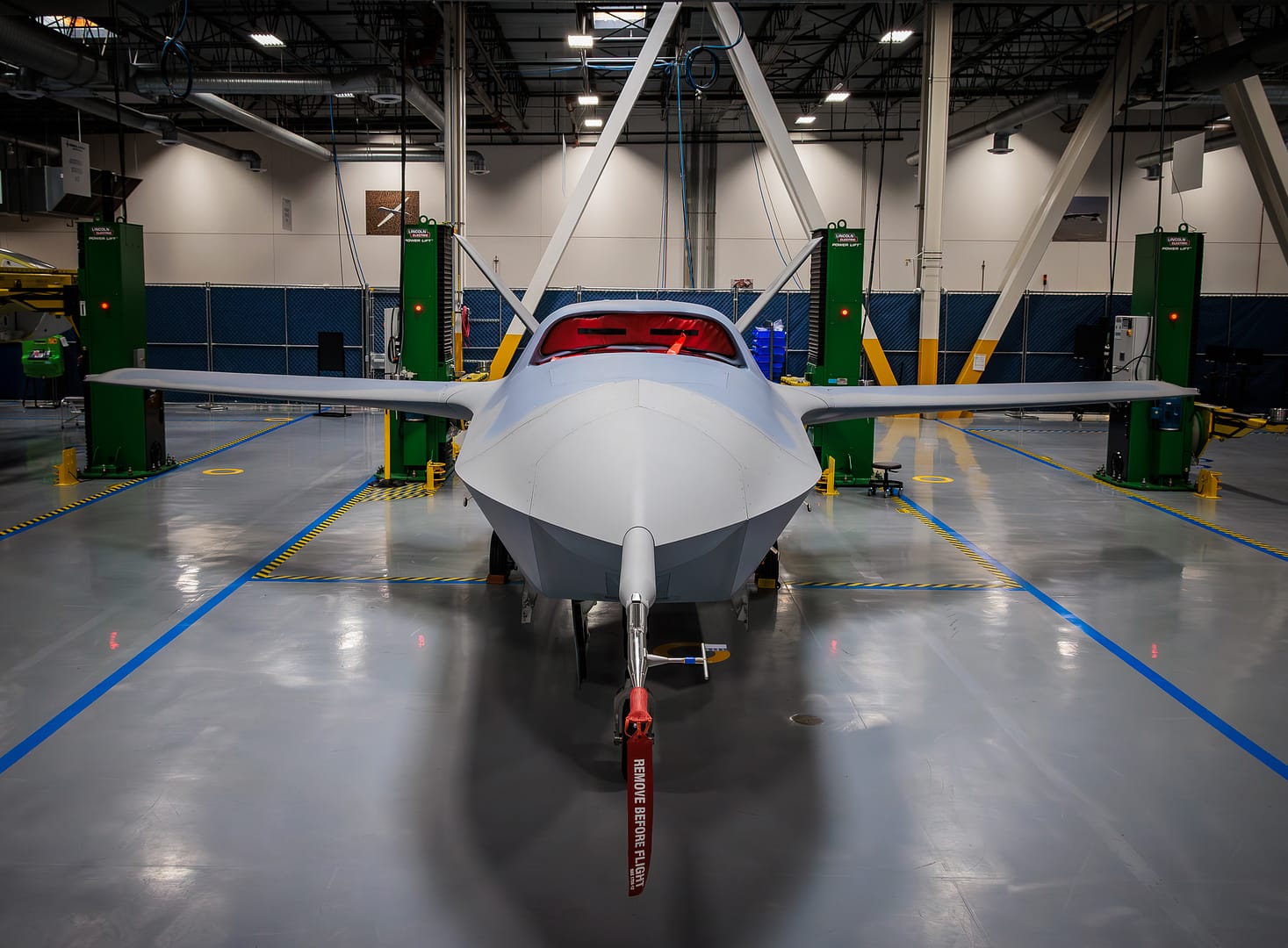
On April 6, 2026, a YFQ-42A prototype crashed during takeoff at Gray Butte Airport near Palmdale, California. The aircraft was destroyed. No one was hurt — because no one was on board.
Six weeks later, on May 21, General Atomics announced the drone was flying again. The Air Force called it “failing forward.” And that phrase tells you everything about how the Pentagon is building the future of air combat.
Quick Facts
- Aircraft: General Atomics YFQ-42A Dark Merlin
- Type: Collaborative Combat Aircraft (CCA) / AI-piloted drone wingman
- Program: USAF CCA Increment 1
- Competitor: Anduril YFQ-44A Fury
- First flight: August 2025 (first successful USAF CCA flight)
- Named after: The Merlin falcon — known for speed and hunting other raptors
Dark Merlin: The Robot Wingman
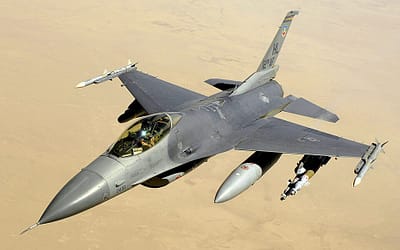
The YFQ-42A — nicknamed “Dark Merlin” by General Atomics — is one of the Air Force’s Collaborative Combat Aircraft (CCA). The concept is deceptively simple: semi-autonomous drones that fly alongside manned fighters like F-35s and F-22s, absorbing risk, carrying weapons, and extending the pilot’s reach.
The design evolved from the XQ-67A Off-Board Sensing Station, featuring a dorsal-mounted engine inlet with serrated edges reminiscent of the B-2 stealth bomber, V-tails, an internal weapons bay, and high wing sweep for fighter-like maneuverability. Exact performance specs remain classified.
The Crash That Was a Feature, Not a Bug
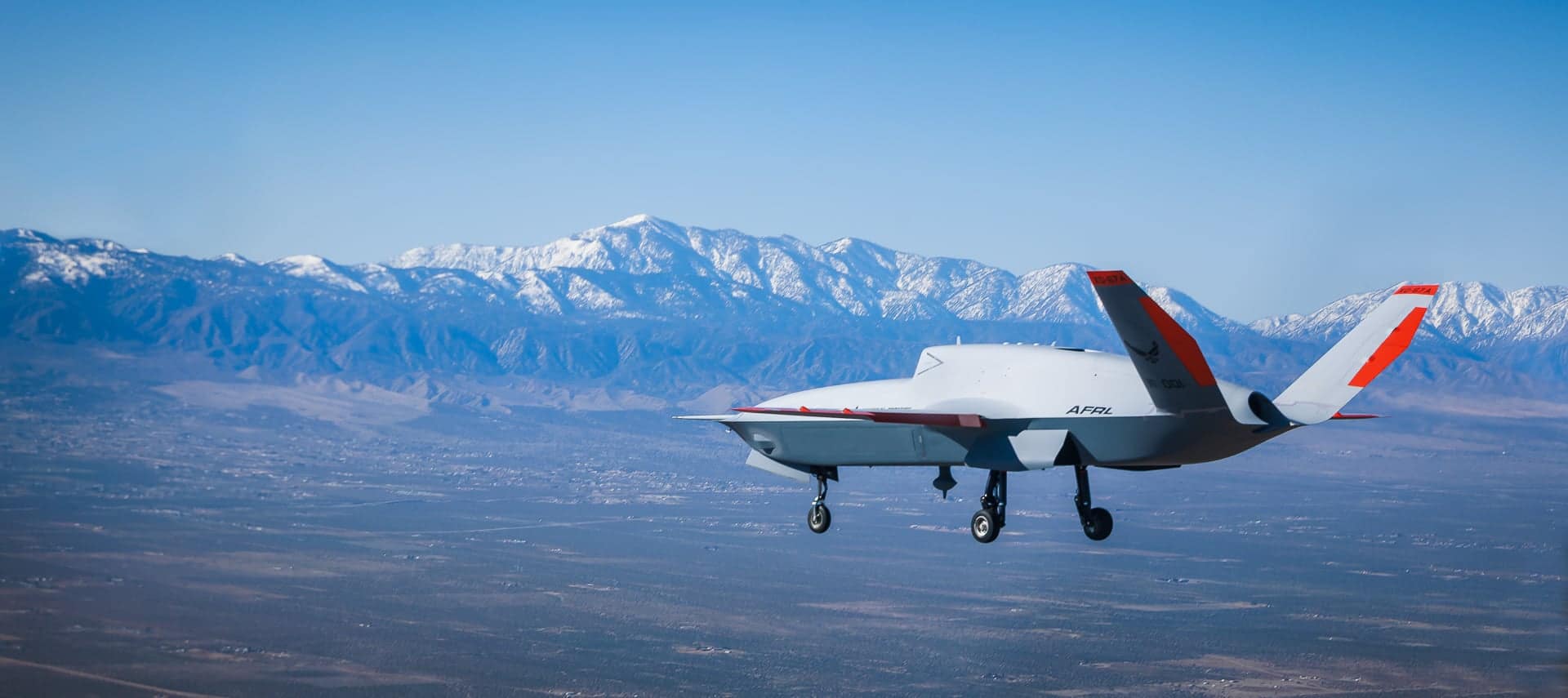
A joint Air Force and General Atomics safety review traced the crash to an autopilot miscalculation for the weight and center of gravity of the aircraft. Critically, this was the basic flight-control autopilot — not the AI mission autonomy system being developed by Shield AI and Collins Aerospace. The autopilot handles takeoff and landing; the AI handles combat decisions.
The fix was a software update. Ground testing continued throughout the pause, and by May 21 the drone was back in the air. Col. Timothy Helfrich, the Air Force’s CCA acquisition executive, put it plainly: “We pushed the envelope, identified a risk, learned from the data, and have cleared the YFQ-42A to return to flight.”
The Race to September 30
Dark Merlin isn’t alone. Anduril’s YFQ-44A “Fury” made its maiden flight on October 31, 2025, entered serial production at Anduril’s Arsenal-1 factory in Ohio in March 2026, and has been photographed carrying an AIM-120 AMRAAM in captive carry. While General Atomics’ drone was grounded, regular airmen — not test pilots — flew the Fury on multiple sorties from Edwards AFB.
The Air Force must make its Increment 1 production decision by September 30, 2026 — the end of the fiscal year. The initial buy is 100-150 aircraft, with $996.5 million in FY2027 procurement funding requested. The long-term goal: over 1,000 CCAs, teaming two drones with each of 200 NGAD platforms and 300 F-35s.
The cost target was originally about $30 million per unit — one-third of an F-35. Air Force officials say they are “doing much better” than that.
Why Crashing Is the Point
In manned aviation, a crash during testing is a catastrophe. In unmanned aviation, it’s data. The entire CCA concept is built around expendability — these drones are designed to be cheap enough to lose. If the Air Force can’t accept losing them in testing, it certainly can’t accept losing them in combat, and the whole program falls apart.
Dark Merlin crashed, learned, and flew again in six weeks. That’s not a failure. That’s exactly how you build a robot wingman.
Sources: The War Zone, AIAA, General Atomics, Air & Space Forces Magazine, Breaking Defense
 English
0 Comments