
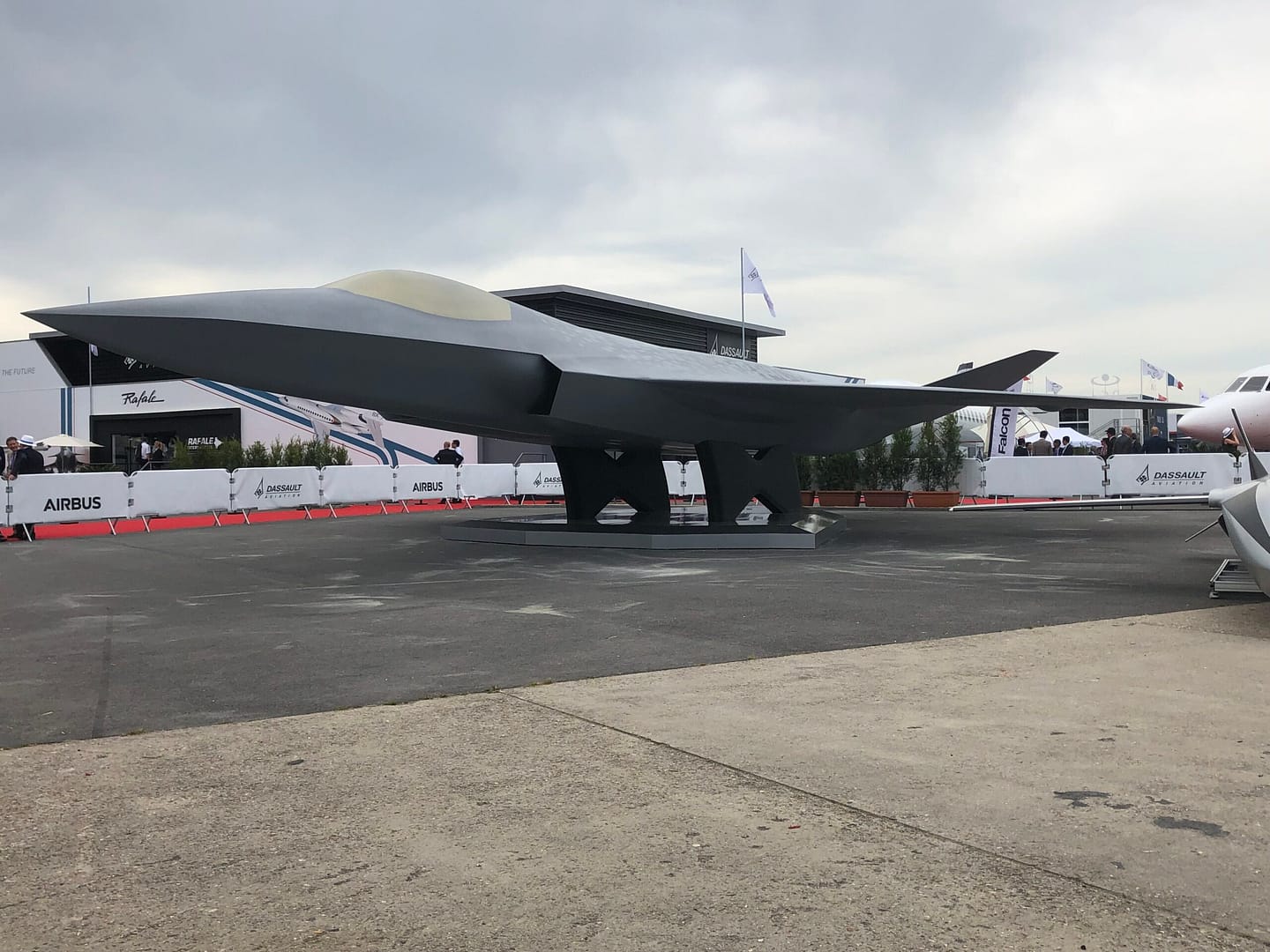
Europe’s flagship sixth-generation fighter project is falling apart in slow motion — and now Airbus is quietly reaching out to Sweden’s Saab. The conversations, first reported this week, would have been unthinkable five years ago. They are not unthinkable now.
FCAS — the Future Combat Air System linking France’s Dassault, Germany’s Airbus and Spain’s Indra — has been gridlocked for months over workshare, intellectual property and who, exactly, leads the design. With Dassault publicly questioning whether the consortium can survive, Airbus is exploring a Plan B that, if it ever happened, would redraw Europe’s air-combat map.
Quick Facts
FCAS partners (today): France (Dassault), Germany (Airbus), Spain (Indra)
Friction: Workshare, IP rights, design leadership
Airbus alternative: Saab partnership, possibly merging with GCAP (UK/Italy/Japan)
Saab status: Not currently in any sixth-generation programme
Implication: Europe could split into two competing sixth-gen tracks
Why FCAS Is Breaking
The fundamental disagreement is about who leads. Dassault, with a century of independent fighter design behind it, has consistently demanded full design authority on the FCAS airframe — the position Mirage and Rafale established. Airbus, representing the German government’s share and a larger industrial base, has refused to accept a junior role.
The dispute has metastasised into specific technical fights. Should the FCAS use Safran or Rolls-Royce-derived engines? Who owns the flight-control software? Where does final assembly happen? Each of these arguments has consumed months of negotiation without producing a stable answer.
Meanwhile, GCAP — the British–Italian–Japanese sixth-generation fighter — has actually started cutting metal. The contrast has not been lost on Berlin.
Why Saab
Saab is a perfect partner for an Airbus-led future fighter for three reasons. First, the Swedish firm has decades of experience designing high-performance fighters from a small industrial base — exactly the kind of pragmatic engineering culture FCAS lacks. Second, Saab has no existing sixth-generation commitments to navigate. Third, Sweden’s geopolitical orientation has aligned more tightly with Germany and the Nordic NATO bloc than ever before.
An Airbus–Saab axis could either operate as a parallel European sixth-gen track, or — and this is the more interesting scenario — merge with GCAP to consolidate Europe’s effort into a single, well-funded programme. Italy and Japan would not necessarily object; Britain might.
What Dassault Says
Eric Trappier, Dassault’s chief executive, has been blunt for months. France can build a sixth-generation fighter on its own, he has argued repeatedly. The Rafale F5 — which begins flight test next year with significant stealth and electronic-warfare upgrades — represents a credible bridge from the current generation to a French-led successor.
That posture is partly negotiating leverage. But it is also a hint that Paris is now content to let FCAS collapse rather than accept a German-Spanish equality of design authority. If that calculation holds, the question is no longer whether Europe gets one sixth-generation fighter or two. It is whether the second one comes from Stockholm or only ever exists on a Berlin whiteboard.
Sources: The War Zone, Defense News, French Ministry of Armed Forces statements.


 English
0 Comments