
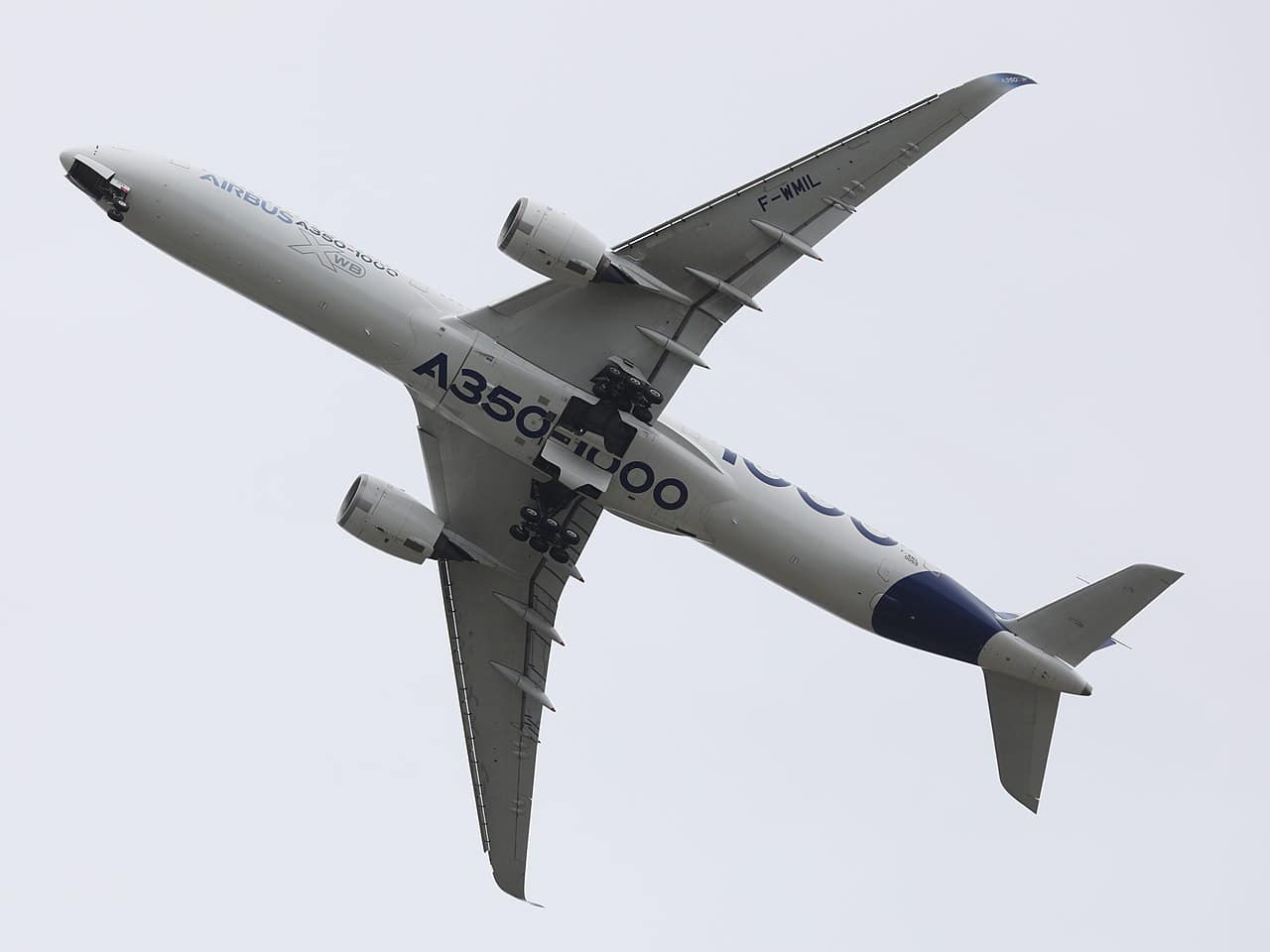
Atlas Air is the world's largest operator of Boeing 747 freighters. The carrier flies more 747-8Fs and 747-400s than any other airline on Earth. The 747 is, in many ways, the brand. So when Atlas walks into Toulouse and signs a $7-billion order for 20 firm and 20 option Airbus A350Fs, that is a tectonic shift in the freighter market.
The 747 production line closed in 2023. Boeing's nearest replacement, the 777-8F, is years behind schedule. Airbus, which never had a credible large freighter before, has just pulled the most loyal customer of its rival into its own showroom.
Quick Facts
Airline: Atlas Air Worldwide (Purchase, NY)
Aircraft: Airbus A350F (freighter variant of A350-1000)
Order size: 20 firm + 20 options
Approximate value: $7 billion firm, ~$14 billion if all options exercised
Payload: 109 tonnes — comparable to 777F, 25% better fuel burn than 747-400F
First delivery: 2029 (planned)
Strategic context: Atlas's first major Airbus order; replaces 747-400Fs over the next decade

The End of the 747F Era
The Boeing 747 freighter has been the backbone of global air cargo for fifty years. The 747-8F, the final variant, set the gold standard with a 134-tonne payload and a nose-loading capability that lets oversize cargo slide straight in. But the line is closed. The newest 747-8F was built in 2023 and Atlas owns most of them.
The 777-8F was supposed to be the natural replacement. It will be — eventually. Boeing has slipped the entry-into-service date repeatedly and is now targeting 2029 at earliest. That is too late for Atlas, which has 747-400Fs reaching their economic-life cliff in 2028-2030. Airbus showed up with an aircraft on offer, on a delivery schedule that fits Atlas's fleet plan, and Atlas signed.
What the A350F Brings
The A350F is, in essence, an A350-1000 with a strengthened floor, a forward main-deck cargo door, and freight-optimised systems. It carries 109 tonnes — less than a 747-8F's 134 tonnes, but more than enough for the bread-and-butter container routes that make up 80 percent of the global cargo market. Fuel burn is roughly 25 percent better than a 747-400F per tonne-kilometre, and 15 percent better than a 777F.

Why This Matters Beyond Atlas
Air Lease Corporation and CMA CGM signed for the A350F first. Singapore Airlines followed. Now Atlas. Once a cargo airline starts buying Airbus, its training pipelines, MRO contracts, and pilot hiring all bend toward Airbus too. Boeing's freighter dominance, which has been near-total for half a century, ends not with the 747 production cut but with this contract.
Aviation industry analysts now expect Boeing to accelerate the 777-8F programme aggressively or risk losing FedEx, UPS, and Cargolux's follow-on orders to Airbus too. Whichever way it plays out, the freighter market just became a real competition for the first time since 1970.
Sources: Reuters, Aviation Week, Airbus press release, Atlas Air investor briefing.
Related Questions
What did Atlas Air order from Airbus?
Atlas Air Worldwide signed a roughly $7 billion order for 20 firm Airbus A350F freighters plus 20 options, potentially worth around $14 billion if all options are exercised. It is Atlas's first major Airbus order and a landmark win for Airbus in the large-freighter market, with first delivery planned for 2029.
What is the Airbus A350F?
The A350F is the dedicated freighter version of the A350-1000 widebody. It carries a payload of about 109 tonnes — comparable to Boeing's 777F — while burning roughly 25% less fuel than the older 747-400F, making it an efficient replacement for ageing four-engine cargo jets.
Why is the Atlas Air order significant for Airbus?
Atlas Air is the world's largest operator of Boeing 747 freighters, so its switch to the A350F pulls Boeing's most loyal cargo customer into the Airbus camp. With the 747 line closed and Boeing's 777-8F delayed, Airbus has seized momentum — part of how Airbus overtook Boeing in 2026.
Why did Boeing stop making the 747?
Boeing ended 747 production in 2023 after demand for large four-engine jets collapsed in favour of more efficient twins. The 747 reshaped global travel and freight over five decades; you can read the full story of the aircraft that made flying affordable for everyone.
When will Atlas Air receive its A350F freighters?
First delivery of Atlas Air's A350Fs is planned for 2029, with the aircraft progressively replacing its 747-400F fleet over the following decade. The phased introduction lets Atlas modernise its freighter capacity while continuing to operate its existing widebody cargo aircraft in the meantime.
Are airlines shifting from Boeing to Airbus?
Airbus has been winning high-profile orders across segments, from Atlas Air's freighters to passenger deals like AirAsia's record 150 A220s. Delivery delays and the closure of key Boeing programmes have helped Airbus build a strong order lead in the mid-2020s.



0 Comments