
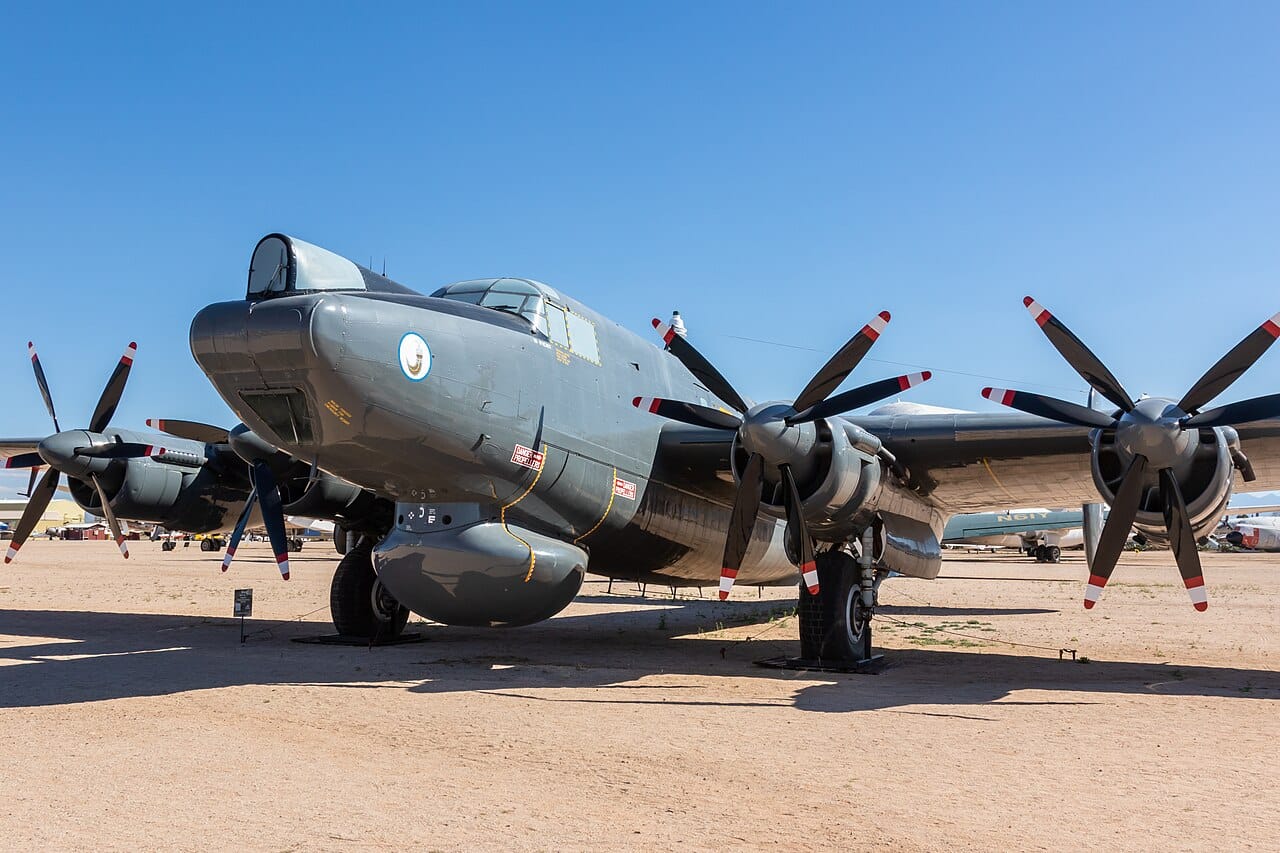
In the summer of 1991, the Royal Air Force flew supersonic Tornados, was preparing for the Eurofighter, and had just watched stealth aircraft debut over Iraq. And the aircraft it relied on to spot incoming threats and guard the northern approaches to Britain was a piston-engined machine descended from a Second World War bomber, carrying a radar designed in the 1940s.
This was the Avro Shackleton AEW.2, known to its crews as the Growler for the bone-deep drone of its four Rolls-Royce Griffon engines. It was meant to serve for a few years as a stopgap. It served for nineteen — and outlived the sleek jet that was supposed to replace it.
It is one of the great accidental survivors in aviation: an obsolete design, kept flying long past its time not out of sentiment, but because its replacement turned into one of the most expensive failures in British defence history.
Quick Facts
Aircraft: Avro Shackleton AEW.2 (developed from the Avro Lincoln, itself a descendant of the Lancaster)
Role: Airborne early warning — a stopgap from 1972
Radar: AN/APS-20, a 1940s American set salvaged from retired Fairey Gannet AEW.3s
Engines: four Rolls-Royce Griffons — the last piston engine Rolls-Royce produced
Operator: No. 8 Squadron, RAF Lossiemouth; twelve aircraft converted
Retired: 1 July 1991, replaced by the Boeing E-3D Sentry
A Bomber's Grandchild
The Shackleton's roots run straight back to the war. Avro built the Lancaster; from the Lancaster came the Lincoln; and from the Lincoln, in the late 1940s, came the Shackleton, a long-range maritime patrol aircraft built to hunt submarines across the grey wastes of the North Atlantic. It entered service in 1951 and spent two decades on cold, low, endless Coastal Command patrols.
Its four Griffon engines — the last piston engines Rolls-Royce ever built — drove contra-rotating propellers, and the sound they made was the aircraft's signature. Crews did not call it elegant. They called it the Growler, and reckoned the noise followed them home.
Starting the Griffons on preserved Shackleton WR963 — the sound that earned the "Growler" name.
A Stopgap Built From Spare Parts
By the late 1960s Britain needed airborne early warning — a flying radar to watch for low-level intruders slipping under coastal stations. The permanent answer was years away, so the RAF improvised. Engineers took twelve tired Shackleton MR.2 airframes and bolted into their bellies the AN/APS-20, an American search radar that dated to the Second World War and had been pulled from the Royal Navy's retiring Fairey Gannet early-warning aircraft.
The result, redesignated AEW.2, first flew in 1971 and went to No. 8 Squadron at RAF Lossiemouth. With typically dry service humour, the crews named each aircraft after a character from the children's television show The Magic Roundabout — Dougal, Florence, Ermintrude and the rest. It was meant to hold the line only until a modern jet arrived.
The Jet That Never Came
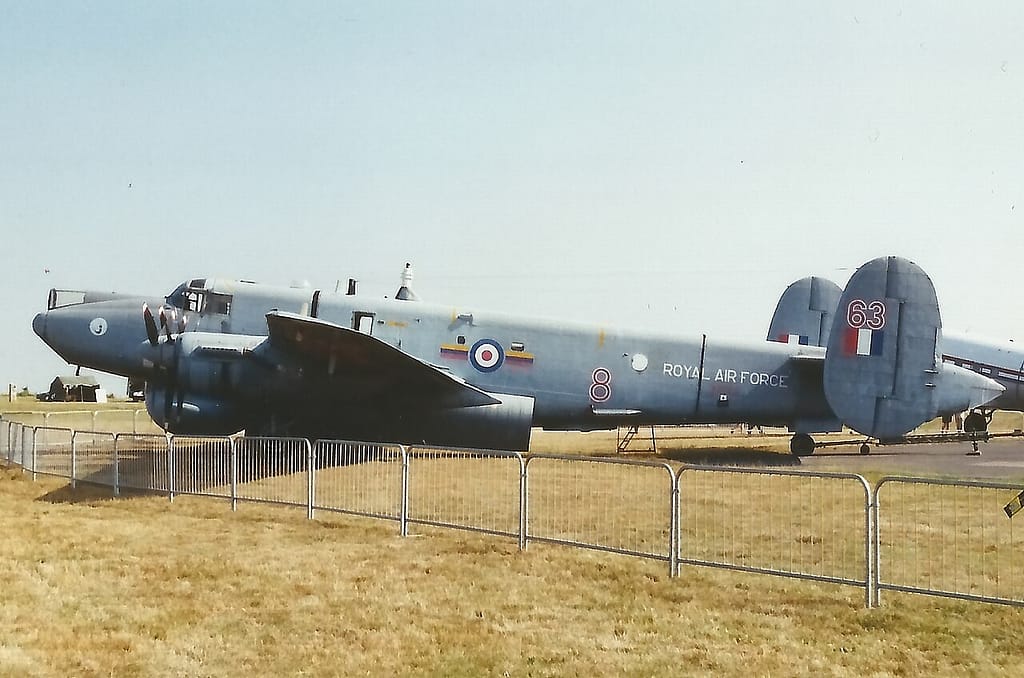
The modern jet was the Nimrod AEW.3, and it broke. The programme to give Britain a home-grown airborne-radar aircraft dragged through the late 1970s and 1980s, swallowed more than a billion pounds, and never produced a working radar. It was cancelled in 1986. With no replacement, the "interim" Shackletons simply kept flying — year after year, their 1940s radar staring out over the North Sea while the rest of the RAF moved into the jet age.
The Shackleton in its final days of RAF service.
Soldiering On to 1991
In the end, the RAF gave up on building its own and bought American. The Boeing E-3D Sentry, a modern jet AWACS, took over the mission, and on 1 July 1991 No. 8 Squadron finally stood its Shackletons down at Lossiemouth. A design begun in the 1940s, carrying a radar of the same vintage, had guarded British skies into the last decade of the century.
Its afterlife has been kinder than its service. Preserved airframes survive, and at least one, WR963 "Ermintrude", still runs its Griffons for the crowds — now cared for at the Yorkshire Air Museum. Fire them up, and the Growler still growls.
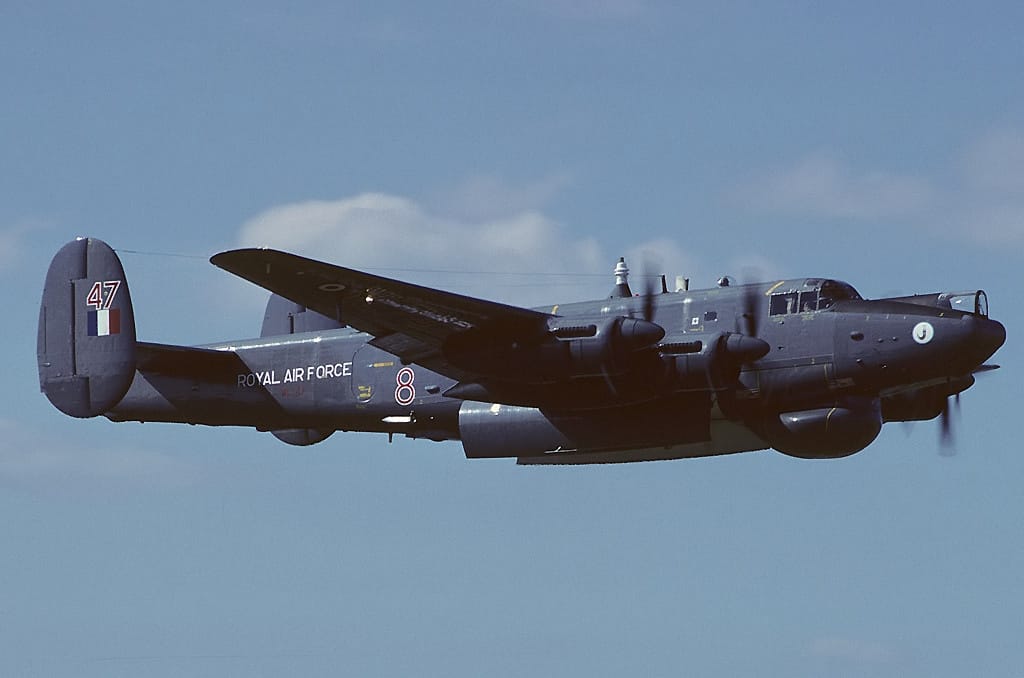
Four Rolls-Royce Griffons in full song at an engine run.
The Shackleton is remembered fondly precisely because it should never have been there. It was too old, too loud and too slow, kept aloft by the failure of something newer. And it did the job anyway, for two decades longer than anyone intended — which is a very British kind of triumph.
Sources: BAE Systems heritage; The War Zone; Key Aero; Vintage Aviation News; The Shackleton Association; Wikipedia.
0 Comments