
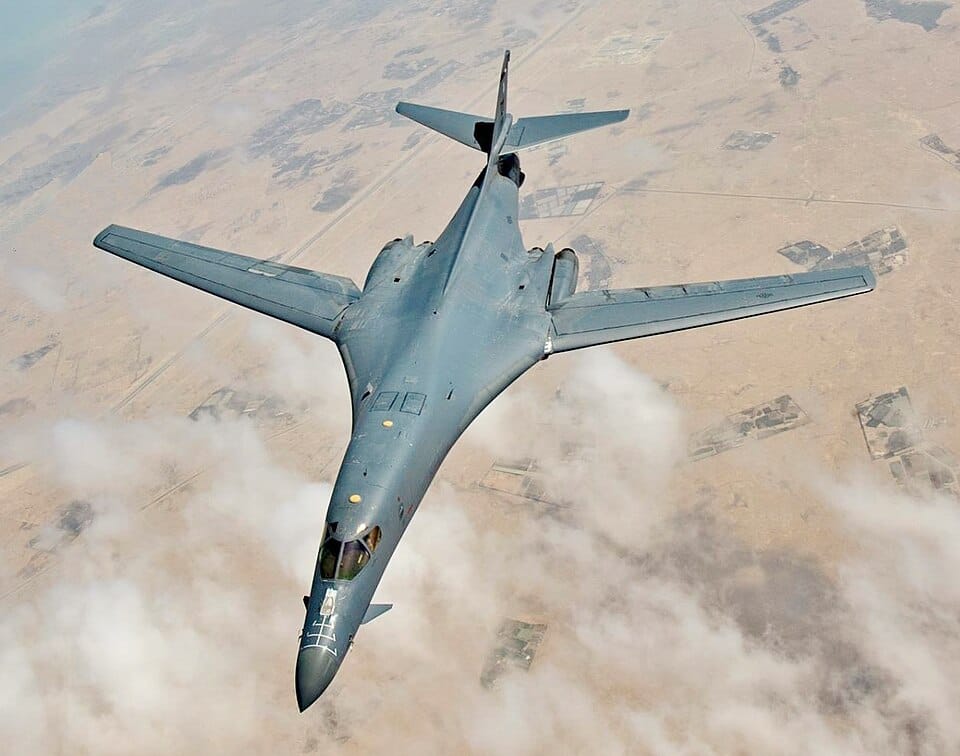
The B-1B Lancer is getting the biggest weapons upgrade in its operational history. The U.S. Air Force's Load Adaptable Modular (LAM) pylon program will restore six dormant external hardpoints on the bomber, boosting its total precision weapons capacity by roughly 50 percent. The result is what defense planners are calling the "Super B-1B" — a platform capable of carrying up to 36 precision-guided munitions on a single sortie, including hypersonic missiles that cannot fit inside its internal bays.
With the B-21 Raider still years from full operational capability and the B-1B's retirement now pushed from 2030 to at least 2037, the Air Force is betting heavily on keeping the Lancer lethal for another decade. More than $50 million has been requested in the FY2026 budget to make it happen.
✈️ Aircraft: B-1B Lancer (44 active airframes)
🔧 Upgrade: Load Adaptable Modular (LAM) external pylons
🎯 Weapons capacity: Up to 36 precision weapons (from ~24 internal only)
🚀 New external carriage: LRASM, JASSM-ER, ARRW hypersonic missiles
💰 FY2026 budget request: $50M+
📅 Retirement pushed: From 2030 to at least 2037
Restoring the Lancer's Dormant Hardpoints
The most consequential aspect of the upgrade is hypersonic weapons integration. The AGM-183A Air-launched Rapid Response Weapon (ARRW) is physically too large to fit inside the B-1B's three internal weapons bays. External pylons solve that problem instantly, giving the Lancer the ability to carry weapons that travel at speeds exceeding Mach 5 to strike targets thousands of kilometers away.
Combined with LRASM anti-ship missiles for maritime strike and JASSM-ER cruise missiles for land attack, the "Super B-1B" becomes arguably the most versatile strike platform in the U.S. inventory. A single Lancer sortie could engage a naval task force, neutralize inland air defenses, and destroy time-critical leadership targets — all without returning to base to rearm.
Budget, Timeline, and Strategic Logic

The Air Force has requested more than $50 million in FY2026 funding for the LAM program, with initial operational testing expected within the next two fiscal years. Boeing, which inherited the B-1B programme from original manufacturer Rockwell, is closely involved in the integration work alongside several weapons systems contractors.
The fiscal logic is compelling. Retiring the B-1B fleet prematurely would leave a bomber capacity gap that the still-maturing B-21 Raider cannot yet fill. By extending the Lancer's service life to at least 2037 and dramatically increasing its weapons payload, the Air Force gets substantially more combat capability per dollar than any new-build alternative could deliver in the same timeframe.
The B-1B has flown more combat sorties over Afghanistan, Iraq, and Syria than any other American heavy bomber. With LAM pylons, the Bone — as its crews call it — is poised to remain the workhorse of U.S. long-range strike well into the late 2030s.
Sources: U.S. Air Force Global Strike Command, FY2026 Defense Budget Request, Congressional Research Service bomber modernization reports, The War Zone.
Related Questions
What is the B-1B Lancer?
The B-1B Lancer is a supersonic, variable-sweep-wing heavy bomber operated by the US Air Force, with 44 active airframes. Originally designed for nuclear and conventional strike, it became a conventional bombing workhorse. The Lancer's development history ran from Cold War cancellation to frontline combat service.
How is the B-1B's firepower being upgraded?
The B-1B's firepower is being boosted by the Load Adaptable Modular (LAM) pylon program, which restores six dormant external hardpoints. This raises its precision-weapon capacity by roughly 50 percent, from about 24 internal weapons to up to 36 per sortie, creating what planners call the Super B-1B. More than $50 million was requested in the FY2026 budget.
What weapons can the upgraded B-1B carry?
The upgraded B-1B can carry up to 36 precision-guided munitions, including LRASM anti-ship missiles, JASSM-ER cruise missiles, and the AGM-183A ARRW hypersonic missile. The hypersonic weapon, too large for the internal bays, rides on external pylons, letting the Lancer strike targets thousands of kilometres away at speeds exceeding Mach 5.
What is a hypersonic missile?
A hypersonic missile travels faster than Mach 5, more than five times the speed of sound, and manoeuvres unpredictably, making it very hard to intercept. The AGM-183A ARRW carried externally by the upgraded B-1B is one example. Carrying such large, fast weapons is a major reason ageing bombers are being modernised rather than retired.
When will the B-1B Lancer retire?
The B-1B Lancer's retirement has been pushed back from 2030 to at least 2037, because its intended successor, the B-21 Raider, remains years from full operational capability. Keeping the Lancer lethal through upgrades like external pylons buys time, mirroring how the B-52 is being modernised to fly for decades more.


0 Comments