

Aviation history is full of brilliant failures. Machines that looked like they were designed by a committee that never met, built by engineers who either knew something nobody else did — or had lost a very expensive bet. Some of these aircraft flew beautifully. Some flew once. Some should never have left the drawing board. All of them are fascinating.
This is a tour of the strangest aircraft ever built — machines that broke every rule of conventional design, sometimes on purpose, sometimes by accident, and occasionally with spectacular results.
Quick Facts
Aircraft featured: Stipa-Caproni, Vought V-173, Blohm & Voss BV 141, NASA AD-1, Grumman X-29, Goodyear Inflatoplane, and more
Time span: 1932 (Stipa-Caproni) to 1984 (X-29)
Common thread: Every aircraft on this list flew — these are not paper designs or wind tunnel models
Survival rate: Most exist only in museums today — if they survived at all
The Barrel Plane: Stipa-Caproni (1932)
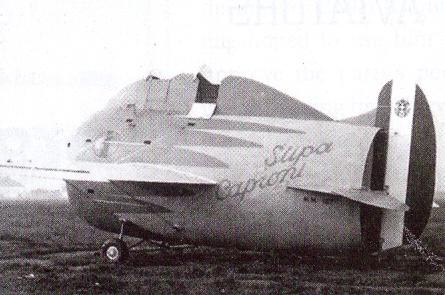
Italian engineer Luigi Stipa believed he could dramatically increase propeller efficiency by enclosing it inside a barrel-shaped fuselage. The result was the Stipa-Caproni, and it looked exactly like what it was: a biplane with an enormous hollow barrel where the fuselage should be. The propeller sat inside the barrel, the pilot sat on top, and the whole thing looked like an angry wine cask with wings.
The remarkable thing is that Stipa was right — aerodynamically, at least. The barrel acted as a shrouded propeller duct, and the concept was sound. Test flights in 1932 showed improved thrust efficiency at low speeds. The aircraft was stable, controllable, and reasonably comfortable to fly. It was also absurdly draggy and slower than a conventional aircraft of similar power. The Italian Air Ministry politely declined to order any. But Stipa’s ducted propeller concept lived on — it is the direct ancestor of the turbofan engine that powers every modern airliner.
The Flying Pancake: Vought V-173 (1942)
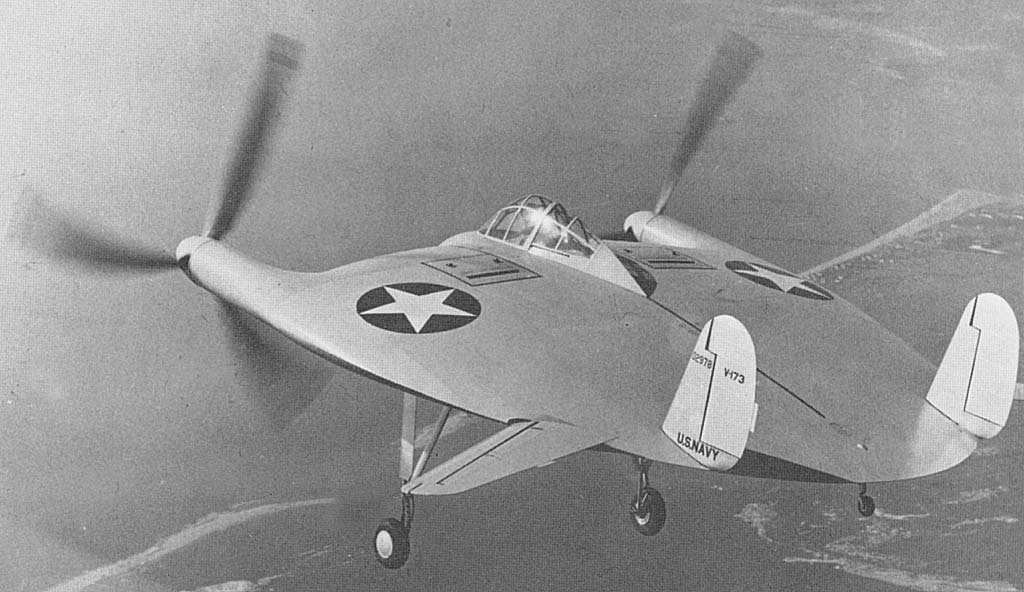
Charles H. Zimmerman at Vought-Sikorsky designed an aircraft with a disc-shaped wing — nearly circular, with two propellers mounted at the leading edge and a conventional tail at the back. The V-173, nicknamed the “Flying Pancake,” was a proof-of-concept for a Navy fighter that could take off and land at extremely low speeds, potentially operating from small escort carriers or even cargo ships.
The V-173 first flew in 1942 and proved astonishingly capable. It could fly as slowly as 64 km/h without stalling — about half the stall speed of a conventional fighter. It was virtually impossible to spin. Test pilot Boone Guyton reported that the aircraft was “very pleasant to fly” and could hover nearly motionless into a strong headwind. The disc wing generated enormous lift at high angles of attack, exactly as Zimmerman had predicted.
The Navy ordered a full-scale fighter version, the XF5U-1, powered by two 1,350-horsepower Pratt & Whitney radials connected to enormous four-blade propellers via a complex shaft system. But by the time the XF5U was ready for flight testing in 1947, jets had arrived. The Navy cancelled the programme. The XF5U prototype was so strongly built that it resisted demolition — workers had to use a wrecking ball to destroy it.
The Lopsided Spy Plane: Blohm & Voss BV 141 (1938)
If symmetry is a fundamental principle of aircraft design, nobody told Richard Vogt. The German engineer at Blohm & Voss designed the BV 141 as a tactical reconnaissance aircraft with a completely asymmetric layout: the engine and fuselage on the left, and a fully glazed observation gondola on the right, connected by the wing but otherwise separate structures.
It looked like a mistake — as if two different aircraft had been welded together by someone who was not paying attention. But Vogt’s logic was rigorous. The asymmetric layout gave the observer an unobstructed 360-degree field of view, unblocked by engines or propellers. The torque of the single engine was partially offset by the asymmetric weight distribution. And the aircraft’s handling was, by all accounts, excellent.
The Luftwaffe test pilots who flew the BV 141 praised its stability and visibility. But the German Air Ministry could never quite get over how it looked. They kept ordering more conventional alternatives — the Focke-Wulf Fw 189, which did the same job with a conventional twin-boom layout. Only 28 BV 141s were built. None survive today, but the aircraft remains one of the most visually striking designs in aviation history.

The Inflatable Plane: Goodyear Inflatoplane (1956)
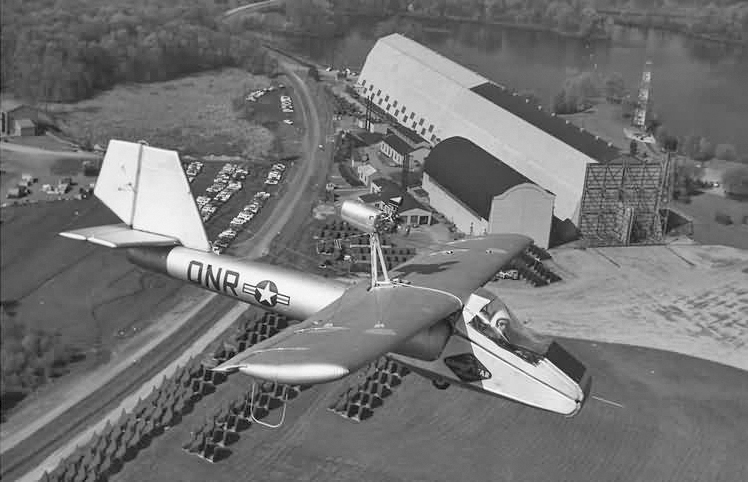
In the 1950s, the US Army asked Goodyear — yes, the tyre company — to build an aircraft that could be packed into a container, dropped behind enemy lines, inflated by a downed pilot, and flown to safety. Goodyear delivered the GA-468 Inflatoplane, and it actually worked.
The entire airframe was made of rubberised fabric inflated to 5 psi. Wings, fuselage, tail — all inflatable. Only the engine, propeller, control cables, and landing gear were rigid. The aircraft could be packed into a container the size of a large suitcase, inflated with a compressor in about five minutes, and flown at speeds up to 115 km/h. It had a range of over 600 kilometres.
Goodyear built 12 prototypes in various configurations, including a two-seat trainer. Test flights proved the concept was viable — the Inflatoplane flew, it was controllable, and it could indeed be inflated from a compact package. But the Army ultimately decided that an aircraft vulnerable to a single bullet or a sharp stick was not ideal for combat rescue operations. The programme was cancelled in 1973. One surviving example is at the Smithsonian’s Udvar-Hazy Center.
The Scissors Wing: NASA AD-1 (1979)
What if you could pivot the entire wing on a central bearing, sweeping it obliquely so one wing pointed forward and the other backward? NASA engineer R.T. Jones calculated that an oblique wing would dramatically reduce drag at transonic speeds while maintaining excellent low-speed performance. The result was the AD-1, one of the strangest-looking aircraft to ever fly at Edwards Air Force Base — and that is saying something.
The AD-1 was a small, low-cost demonstrator powered by two tiny turbojets. Its fibreglass wing could be pivoted from 0 degrees (straight) to 60 degrees (sharply oblique) in flight. At zero sweep, it looked like a normal aircraft. At 60 degrees, it looked like a pair of scissors that had learned to fly.
NASA flew the AD-1 79 times between 1979 and 1982. The concept worked — drag reduction at transonic speeds was confirmed. But handling qualities degraded badly at high sweep angles, with significant roll-yaw coupling that made the aircraft difficult to control. A production oblique-wing aircraft would have required a sophisticated fly-by-wire system to manage the asymmetric aerodynamics. The concept has never been developed further, but it resurfaces periodically in studies of future long-range transports and bombers.

The Backward Wing: Grumman X-29 (1984)
Most aircraft sweep their wings backward. The Grumman X-29 swept them forward — and in doing so, created one of the most aerodynamically unstable aircraft ever flown. The forward-swept wing offered theoretical advantages in manoeuvrability and control at high angles of attack, but it was inherently divergent: at speed, the wing wanted to twist further forward, increasing the angle of attack until the wing failed structurally.
The X-29 solved this with three technologies: an aeroelastic tailored composite wing (the carbon fibre layup was designed to resist the twisting forces), a close-coupled canard for pitch control, and a triple-redundant digital fly-by-wire system that made 40 corrections per second to keep the aircraft from tumbling out of control. Without the computers, the X-29 would have been unflyable. With them, it was extraordinary — test pilots reported exceptional agility and controllability at angles of attack up to 67 degrees.
Two X-29s were built and flew 422 research missions at Edwards AFB between 1984 and 1992. The data proved that forward-swept wings worked as predicted and that digital flight controls could manage extreme instability. No production fighter has adopted forward sweep — the structural weight penalty and complexity remain prohibitive — but the X-29’s fly-by-wire lessons fed directly into the F-22 Raptor’s flight control system.
Aviation’s strangest aircraft share a common trait: they look wrong but fly right. Or at least fly. In a discipline defined by invisible forces — lift, drag, thrust, weight — appearance is a terrible guide to capability. The engineers who built these machines understood something that their critics did not: the air does not care what your aircraft looks like. It only cares about the numbers.
Sources: NASA, Smithsonian National Air and Space Museum, Bundesarchiv, US Naval Aviation Museum


 English
0 Comments