
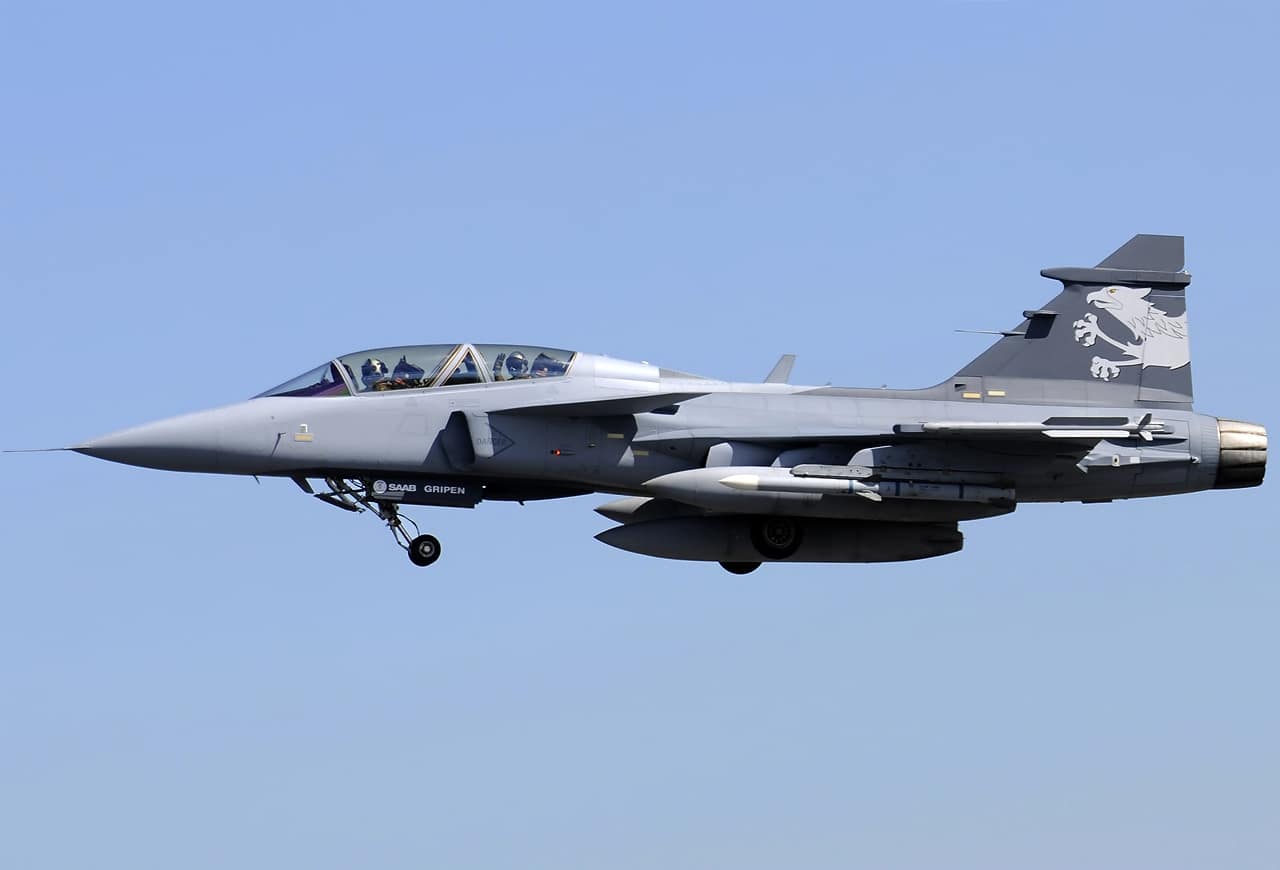
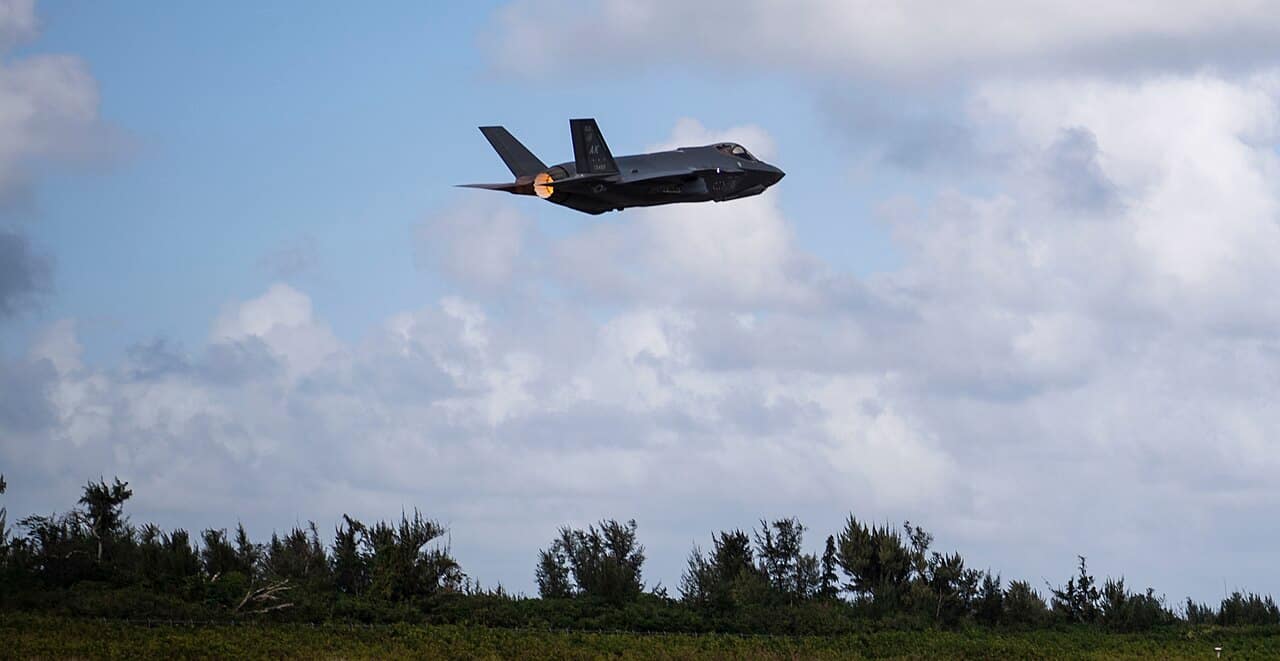
For years, Canada’s next fighter was a settled question: 88 Lockheed Martin F-35As, full stop. In 2026, that certainty has dissolved. Ottawa is now seriously studying something far more unusual — buying a chunk of Swedish Saab Gripens instead of some of those F-35s, and building them on Canadian soil.
It would be one of the most consequential fighter decisions in NATO this decade, and it is being driven as much by trade politics as by air power.
Quick Facts
- Country: Canada (Royal Canadian Air Force)
- The idea: split the future fighter fleet between U.S. F-35As and Swedish Saab Gripen Es
- Scale: up to roughly 140 jets — reports range from 30 F-35s + 60 Gripens to 72–88 F-35s plus up to 72 Gripens
- The twist: the Gripens could be assembled in Canada
- Why: a review of the F-35 buy launched by PM Mark Carney in March 2025, amid trade tensions with Washington
- Timing: no decision yet — expected after the U.S. midterm elections in late 2026
From 88 F-35s to a Split Fleet
The numbers being floated vary, but the direction is consistent. In June 2026 the CBC reported that Canada was examining expanding its planned fleet to around 140 aircraft, mixing 72 to 88 F-35As with up to 72 Gripen Es. Earlier, La Presse had described a working option closer to 30 F-35s and 60 Gripens. Either way, the all-American single-type fleet is no longer the only plan on the table.
The catalyst was a review launched by Prime Minister Mark Carney in March 2025, in the middle of a bruising trade and tariff dispute with the Trump administration. Carney signalled that Canada would honour its first 16 committed F-35s while shopping around for the rest.
Why Sweden, and Why Now
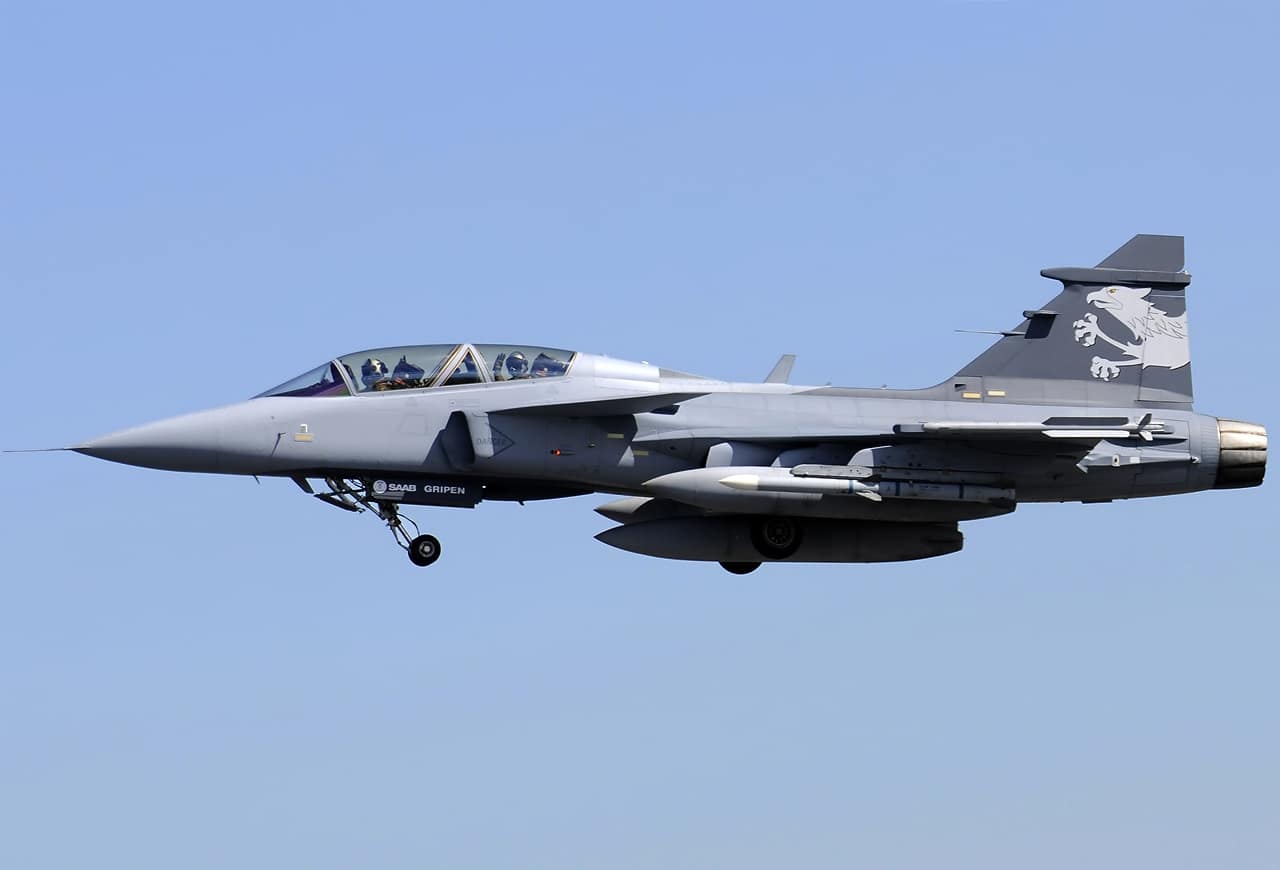
The appeal of the Gripen is not stealth — the F-35 wins that contest easily. It is sovereignty and cost. The Gripen is famously cheap to fly, designed to operate from stretches of highway with a small ground crew, and Saab has dangled something Lockheed cannot: a Canadian final-assembly line that could even build Gripens for export, including jets bound for Ukraine.
For a government stung by its dependence on an unpredictable neighbour, a fighter partly built at home has obvious political appeal. The official line, however, remains studiously non-committal.
The Two-Jet Problem
A split fleet is not free. Operating two different fighters means two supply chains, two training pipelines, two maintenance ecosystems — a permanent overhead that air forces usually try hard to avoid. The F-35 also plugs Canada into a vast allied stealth network that the Gripen, for all its virtues, does not.
Supporters counter that the cost savings and industrial benefits of a partial Gripen buy could outweigh the complexity — and that spreading the fleet across two suppliers is itself a kind of insurance.
A Decision Held Hostage to Politics
What makes this saga so unusual is that the choice may not be decided on military grounds at all. Ottawa sees the F-35 program as a bargaining chip in the renegotiation of the Canada-U.S.-Mexico trade agreement, and a final answer is not expected until after the American midterm elections late in 2026. Until then, the world’s longest undefended border has a fighter question hanging over it.
Sources: CBC News; La Presse; Defense News; Army Recognition; Wings Magazine.


 English
0 Comments