
Aviation World, History & Legends, Military Aviation
Picture the Deutschlandhalle in Berlin in February 1938. The arena is packed. Down on the floor sits a contraption that looks like a light trainer that has lost its wings and grown two enormous three-blade fans on outrigger struts. A slight young woman climbs into the...
Aviation World, History & Legends
It was the eve of the Obon holiday, when families across Japan travel home to honour their ancestors. Japan Airlines Flight 123 lifted off from Tokyo’s Haneda Airport at 18:12 on 12 August 1985, bound for Osaka. The aircraft was a Boeing 747SR, a short-range...
Aviation World, History & Legends
It was supposed to be an ordinary Tuesday. Southwest Airlines Flight 1380 lifted off from New York’s LaGuardia Airport on the morning of 17 April 2018, bound for Dallas with 149 people aboard. First Officer Darren Ellisor was flying the leg; in the left seat,...
Aviation World, History & Legends
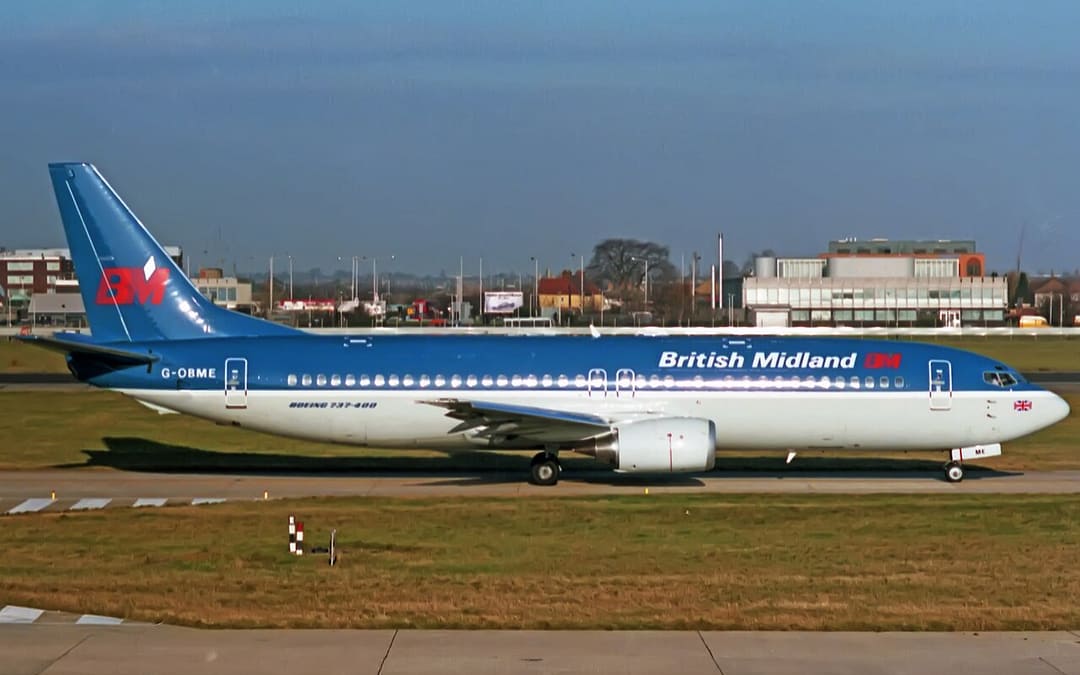
It was meant to be one of the shortest, dullest legs in the timetable. At 19:52 on 8 January 1989, British Midland Flight 92 climbed away from London Heathrow bound for Belfast, a Boeing 737-400 with 118 passengers and eight crew aboard. The aircraft was almost...
Aviation World, History & Legends
On the morning of 27 March 1977, neither KLM Flight 4805 nor Pan Am Flight 1736 was meant to be anywhere near Tenerife. Both Boeing 747s were bound for Gran Canaria when a bomb planted by a separatist group tore through the terminal at Las Palmas. With a warning of a...
Aviation World, History & Legends
There are aircraft one admires, and there are aircraft one falls a little in love with. The Latécoère 631 belongs firmly to the second category. Conceived in Toulouse, the spiritual home of French aviation, she was the last and grandest of the great...
Aviation World, History & Legends
In the 1930s, the most civilised way to cross a continent was aboard a vast, slow, four-engined biplane that looked like it belonged to the age of the Wright Brothers, and travelled at roughly the speed of a modern express train. The Handley Page HP.42 was the...
Aviation World, History & Legends
Some aircraft look powerful. A few look beautiful. The Scaled Composites Proteus looks impossible, a spindly, insect-like machine of twin booms, stalky tandem wings and a slender pod, apparently held together by optimism. It seems far too fragile to fly. And yet this...
Aviation World, History & Legends
Seventy-four years ago today, on 16 August 1952, a large and beautiful British airliner lifted off from Filton for the first time. Passengers who later flew in it swore it was the smoothest, quietest airliner they had ever experienced, so hushed that it earned an...
Aviation World, History & Legends
Before there was a Channel Tunnel, and before roll-on, roll-off ferries could swallow a hundred cars at a time, there was a stranger, more glamorous way to take your car to France: you drove it into the nose of an aeroplane. The aircraft that did the swallowing was...





Recent Comments