

Quick Facts
| Nationality | South African/British 🇿🇦🇬🇧 |
| Aerial Victories | 50+ (possibly the highest Commonwealth ace) |
| Aircraft Flown | Gloster Gladiator, Hawker Hurricane |
| Wars | World War II (North Africa, Greece) |
| Born / Died | 3 Jul 1914 – 20 Apr 1941 (age 26) |
| Unit | No. 80 Sqn RAF |
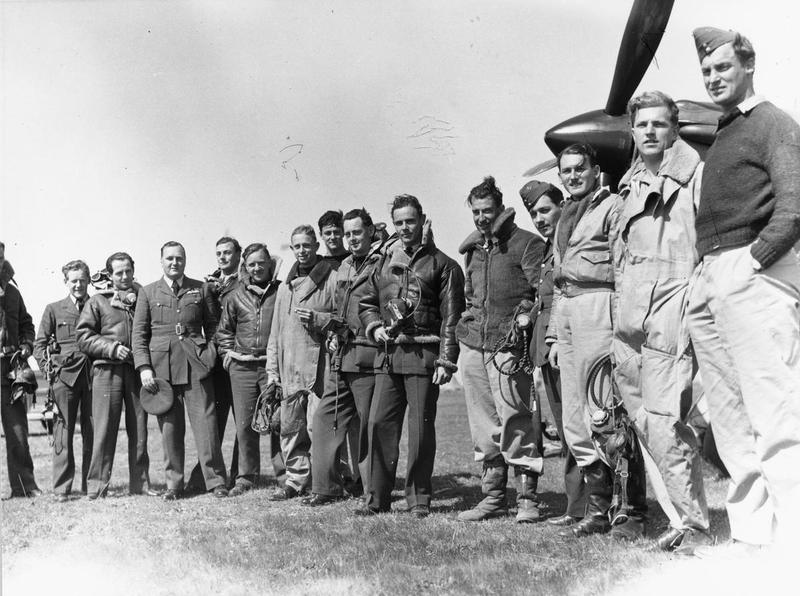
He may be the greatest fighter ace that history nearly forgot. Marmaduke Thomas St John "Pat" Pattle is believed to have scored more aerial victories than any other British Commonwealth pilot in World War II — yet his records were largely lost, his story barely known outside specialist circles. What survives is remarkable enough.
A South African in the Desert
Born on 3 July 1914 in Butterworth, South Africa, Pattle joined the RAF in 1936 and was posted to 80 Squadron in Egypt when the war began. He first flew the Gloster Gladiator — a biplane fighter already considered outdated — against the Italian Regia Aeronautica over Libya. Against modern Italian monoplanes, the agile Gladiator in Pattle's hands was a deadly weapon, and he began building a tally that would eventually become legendary.
The Campaign in Greece
When Italy invaded Greece in October 1940, RAF squadrons were rushed to assist the Greeks, and Pattle went with them. Flying first Gladiators and then the more modern Hawker Hurricane, he faced both Italian and German aircraft over the mountains and plains of Greece. He was awarded the Distinguished Flying Cross and Bar in rapid succession as his victory tally climbed.
In the chaotic weeks of April 1941, as Germany launched its overwhelming invasion of Greece and Yugoslavia, Pattle flew multiple sorties per day against impossible odds. Eyewitness accounts describe him as virtually living in the cockpit — shooting down aircraft almost daily while exhausted RAF squadrons fought a desperate rearguard action.
“The greatest air fighter the Royal Air Force has ever known.”
Marshal of the Royal Air Force, Sir William Sholto Douglas — on Pat Pattle, post-war assessment quoted in The Observation Post SAAF historical record
The Mystery of His Score
The precise number of Pattle's victories is unknown — the RAF's record-keeping in the chaos of the Greek campaign was incomplete, and many claims were never formally processed. Conservative estimates credit him with at least 40 to 50 victories; some historians believe the true figure may have approached 60. If the higher estimates are correct, he was the greatest British Commonwealth ace of the war.
The lost logbooks. Squadron Leader Pattle's personal flying log and his squadron's war diary were both lost in the chaotic retreat from Greece in April 1941. This is the principal reason his final kill total remains disputed — believed by SAAF historians to be at least 40, possibly as high as 51. The Western Allies' top-scoring ace is, in a strict documentary sense, an unverifiable record.
A Final Sacrifice
On 20 April 1941, Pattle led a small force of Hurricanes over Athens against a massive German formation. He was sick with influenza — so ill he could barely stand — but refused to stay on the ground while his comrades fought. He was shot down and killed over the Bay of Eleusis. He was twenty-six years old.
Pat Pattle's body was never recovered. He left behind an unfinished story and a tally that may never be fully known — but among those who study the air war, his name is spoken with reverence as a pilot of genius, courage, and selfless dedication.
“There is only one rule in aerial combat: kill or be killed. Everything else is detail.”
— Sqn Ldr Pat Pattle, DFC & BarRelated Questions
Who was Pat Pattle?
Pat Pattle (1914–1941) was a South African–born RAF fighter pilot believed to be the highest-scoring ace of the British Commonwealth in World War II, with 50 or more aerial victories. He flew the Gloster Gladiator biplane and the Hawker Hurricane over North Africa and Greece. Much of his record was lost in the chaos of the 1941 Greek campaign.
How many aircraft did Pat Pattle shoot down?
Pat Pattle is credited with at least 50 aerial victories, which would make him the top-scoring ace of the British Commonwealth — but the exact figure is unknown. RAF record-keeping collapsed during the German invasion of Greece in April 1941, and many of his claims were never formally processed, so his true tally may never be confirmed.
What aircraft did Pat Pattle fly?
Pat Pattle flew the Gloster Gladiator, an already-outdated biplane fighter, against the Italian Regia Aeronautica over Libya, and later the more modern Hawker Hurricane over Greece. He scored victories in both, showing exceptional marksmanship and tactical skill even when flying obsolete aircraft against superior numbers.
How did Pat Pattle die?
Pat Pattle was killed on 20 April 1941, shot down over the Bay of Eleusis near Athens. Suffering from influenza and barely able to stand, he insisted on flying anyway, leading a small group of Hurricanes against a far larger German formation. He was 26 years old, and his body was never recovered.
Why is Pat Pattle not as famous as other fighter aces?
Pat Pattle remains obscure because his combat records were largely lost. He scored most of his victories during the disastrous Greek campaign of 1941, when the RAF's paperwork was incomplete and many claims went unrecorded. Among air-war historians he is held in the highest regard, alongside celebrated aces such as America's Richard Bong.
Was Pat Pattle the greatest RAF pilot?
Many consider Pat Pattle the finest fighter pilot the RAF ever produced. Marshal of the RAF Sir William Sholto Douglas reportedly called him 'the greatest air fighter the Royal Air Force has ever known.' With a probable 50-plus victories he likely out-scored every other Commonwealth ace, though incomplete records prevent the claim from being definitively proven.


Die RAF sollte Pattles ,vermutlich 60 Luftsiege endlich anerkennen.Man hat Ihn Luftsiege gegen die RegiaAeronautiaca
aberkannt(14).
Die Piloten der RegiaAeronautica waren gut ausgebildet und ein ernst zu nehmender Gegner.
Im vergleich waren die Piloten der Japaner ab 1944 nur unzureichend ausgebildet und für die amerikanischen Piloten leichte Beute.