

For nearly a decade Boeing has been doing the corporate equivalent of staring at China through a chain-link fence. Tariffs, the 737 MAX grounding, the trade war, a pandemic, more tariffs — name a thing that could keep a US planemaker out of the world’s biggest aviation market, and Boeing got hit with it.
Then, last week, Beijing dropped a 200-jet order on the table.
China’s Ministry of Commerce confirmed the deal on 20 May 2026, almost a week after President Trump first floated the number coming out of his summit with Xi Jinping. Boeing CEO Kelly Ortberg was in the room for the announcement in Beijing on 14 May. Two hundred aircraft, plus engines and spares — Boeing’s first significant Chinese sale since 2017.
Quick Facts
- Size: 200 commercial aircraft + engines + spare parts
- Confirmed: 20 May 2026 by China’s Ministry of Commerce
- Catalyst: Trump–Xi summit, Beijing, 14–15 May 2026
- First major Boeing sale to China since: 2017
- Likely customers: Air China, China Eastern, China Southern
- Expected mix: 737 MAX narrowbodies + 787 / 777X widebodies
- Possible upside: Trump says the order could grow to 750 jets
The first real thaw in years — and Wall Street still pouted
If 200 jets sounds like a lot, it depends on who you ask. To Boeing’s commercial division, it’s oxygen. To Wall Street, it was a letdown. Analysts at Jefferies and friends had spent the run-up to the summit telegraphing a 500-aircraft mega-order; some chatter went as high as 750. The stock barely twitched on confirmation.
Ortberg’s reaction was the equivalent of a small, polite shrug. He told reporters the deal was a “super successful” reset of the China relationship and called the 200 jets an “initial tranche” with more to come.
That’s CEO-speak for “calm down, we’ll get there.” The Chinese system is unusual: Beijing commits to a number, then allocates aircraft to specific carriers, and Boeing negotiates firm orders airline by airline after that. The 200 is the gate. The volume comes through it.
Why Boeing needed this so badly
China has been a Boeing-shaped hole in the order book for the better part of ten years. Before 2017, roughly a quarter of every Boeing single-aisle off the Renton line was destined for a Chinese carrier. After the 737 MAX groundings and the first Trump trade war, those slots quietly migrated to Airbus, which now dominates the country’s narrowbody fleet — and which signed its own 137-aircraft order with China weeks earlier, right alongside Boeing’s.
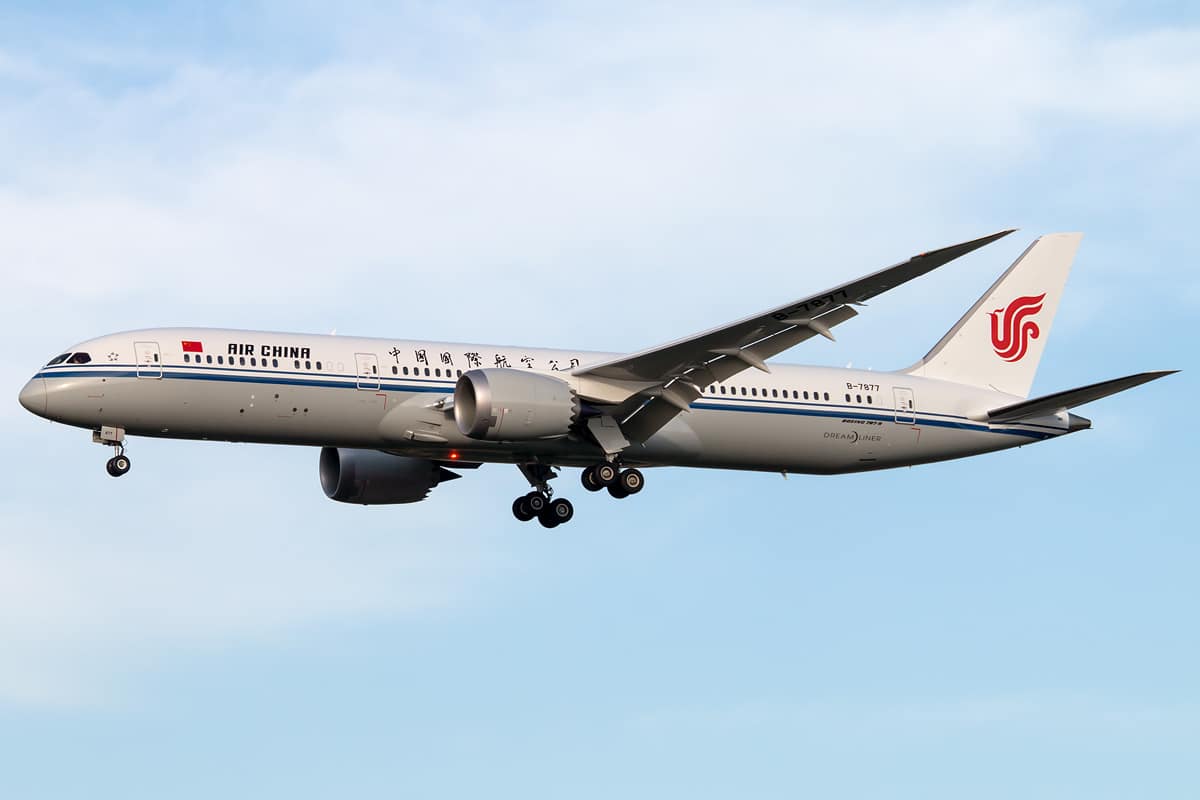
The 787 is a different story. Air China, China Eastern and China Southern all already fly the Dreamliner. Long-haul international growth out of Beijing, Shanghai and Guangzhou is going to demand more widebodies than the home team (COMAC) can build for at least another decade. That’s the lane Boeing actually needs to win — and 200 jets is the foot in the door.
The catch: 200 is just the first envelope
The deal’s structure is doing the work that the headline number isn’t. Once Beijing signs off on a tranche, allocations flow to the carriers and firm orders follow over months, not days. Ortberg has openly said he expects the China bucket to keep filling through the back half of 2026.
For now, Boeing gets a number to put in the press release, a market it can re-enter without immediately running into a retaliatory tariff, and a year’s worth of news cycles about “the China comeback.” Whether the eventual total is 200, 500 or that 750-aircraft figure Trump dangled depends on Boeing doing what Boeing has historically struggled to do lately: deliver airplanes on time.
For now though, the door is open. After nearly a decade of Beijing’s cold shoulder, that’s the closest thing to a Boeing miracle.
Sources: Simple Flying, CNBC, FlightGlobal, Aviation Week, Reuters.

 English
0 Comments