
| Quick Facts | |
|---|---|
| Airline | Delta Air Lines |
| Provider Selected | Amazon Leo (Project Kuiper LEO satellite constellation) |
| Rejected | SpaceX Starlink Aviation |
| Aircraft Equipped | 500 (approximately 40% of fleet) |
| Speeds | Up to 1 Gbps download, 400 Mbps upload per aircraft |
| Installation Begins | 2028 |
| Interim Service | Free T-Mobile Wi-Fi continues across existing fleet |

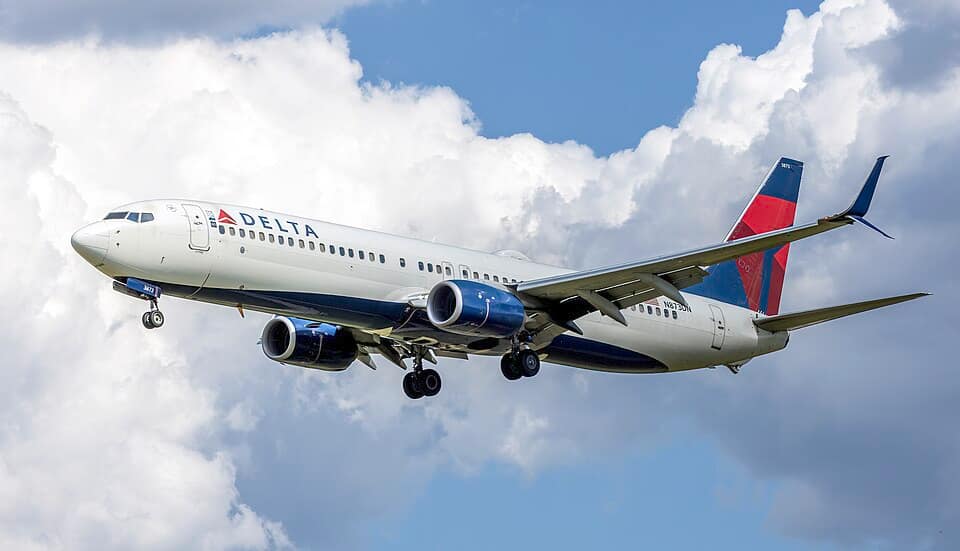
The next time you stream a movie at 35,000 feet on a Delta flight, the signal may come from a satellite built by Jeff Bezos. Delta Air Lines has chosen Amazon Project Kuiper over SpaceX Starlink to provide next-generation satellite Wi-Fi across 500 aircraft. It is one of the most consequential connectivity deals in airline history, and it picks a clear side in the space-based internet war.
The deal puts Amazon LEO satellites on roughly 40 percent of Delta fleet, with installations beginning in 2028. Each aircraft will receive a single phased-array antenna capable of download speeds up to 1 Gbps and uploads of 400 Mbps — fast enough for every passenger on a full widebody to stream video simultaneously without buffering.
Until then, passengers keep their current free Wi-Fi powered by T-Mobile. But the long-term bet is clear: Delta is going all-in on Amazon satellites.
Why Not Starlink?
SpaceX Starlink dominates the LEO satellite internet market with over 10,000 satellites in orbit and more than 10 million subscribers worldwide. Amazon, by contrast, has about 200 satellites up and is still building out its constellation. On paper, Starlink is the safe choice.
But Delta did not make a paper decision. The airline already uses Amazon Web Services across major parts of its IT infrastructure — from flight operations to customer-facing apps. Choosing Amazon for in-flight connectivity deepens that relationship and creates opportunities for integration that a SpaceX partnership could not match. Think personalised streaming drawn from existing Amazon accounts, or real-time operational data flowing between aircraft and Delta AWS-hosted systems with lower latency than any current provider offers.
There may also be a pricing factor. Amazon is hungry for anchor customers to justify the enormous cost of building Kuiper, and a deal with America most premium airline gives the constellation credibility. Delta likely negotiated terms that reflect its strategic value to Amazon.

What Changes for Passengers
Current in-flight Wi-Fi — even the best of it — ranges from barely usable to grudgingly adequate. Geostationary satellite systems suffer from high latency. Air-to-ground networks lose coverage over oceans. The experience is usually a compromise: good enough to check email, frustrating enough to discourage video calls.
LEO satellite internet changes the equation. Satellites orbiting at 600 kilometres instead of 36,000 kilometres slash latency from 600 milliseconds to under 30. Gigabit speeds mean that a full 767 of passengers can all stream, video-call, and download simultaneously. For business travellers, it means the cabin becomes a genuine office. For leisure passengers, it means Netflix at cruising altitude finally works the way it does at home.
The Bigger Race
Delta is not the only airline shopping for satellite internet. United signed with Starlink in 2023, and several international carriers are evaluating both constellations. The airline that cracks truly seamless, high-speed, gate-to-gate connectivity first gains a genuine competitive advantage — the kind that influences ticket purchases, especially in premium cabins.
For Amazon, the Delta deal is proof of concept for a business that has spent billions and delivered little revenue so far. For Delta, it is a calculated bet that Kuiper will be ready by 2028 and that the satellites will perform as promised. If they do, Delta passengers will enjoy some of the fastest airborne internet on the planet. If they do not, Delta has two years of free T-Mobile Wi-Fi as a safety net. Either way, the era of terrible airplane Wi-Fi is ending.
Sources: GeekWire, CNBC, Simple Flying, Aerotime, Broadband Breakfast
Related Questions
Which satellite Wi-Fi did Delta Air Lines choose?
Delta Air Lines selected Amazon's Leo satellite network, known as Project Kuiper, over SpaceX's Starlink to provide next-generation in-flight Wi-Fi. The airline plans to equip about 500 aircraft, roughly 40 percent of its fleet, with installation beginning in 2028, in one of the most significant airline connectivity deals to date.
How fast will Delta’s new in-flight Wi-Fi be?
Delta's Amazon-powered satellite Wi-Fi is expected to deliver up to 1 Gbps download and 400 Mbps upload per aircraft, fast enough to support streaming across a full cabin. Free in-flight Wi-Fi has rapidly become an expected amenity on major airlines.
What is Project Kuiper?
Project Kuiper, now branded Amazon Leo, is Amazon's low-Earth-orbit satellite constellation designed to provide broadband internet, including to aircraft. By choosing Kuiper over SpaceX's Starlink, Delta picked a clear side in the growing competition between space-based internet providers.
When will Delta install the new Wi-Fi?
Delta will begin installing the Amazon Leo satellite Wi-Fi on its aircraft in 2028, eventually equipping around 500 jets. In the meantime, the airline continues offering free, T-Mobile-sponsored Wi-Fi across its existing fleet, so passengers keep connectivity during the transition.
Why are airlines upgrading to satellite internet?
Airlines are adopting low-Earth-orbit satellite internet because it offers far faster, more reliable connectivity than older air-to-ground and geostationary systems, supporting streaming for a whole cabin. Connectivity has become a competitive feature as carriers also refresh their fleets and cabins.
Did Delta choose Amazon over Starlink?
Yes. Delta selected Amazon's Leo (Project Kuiper) constellation and rejected SpaceX's Starlink Aviation for its fleet-wide Wi-Fi upgrade. The decision is notable because Starlink has signed several other carriers, making Delta's choice a high-profile win for Amazon in the in-flight connectivity market.


0 Comments