
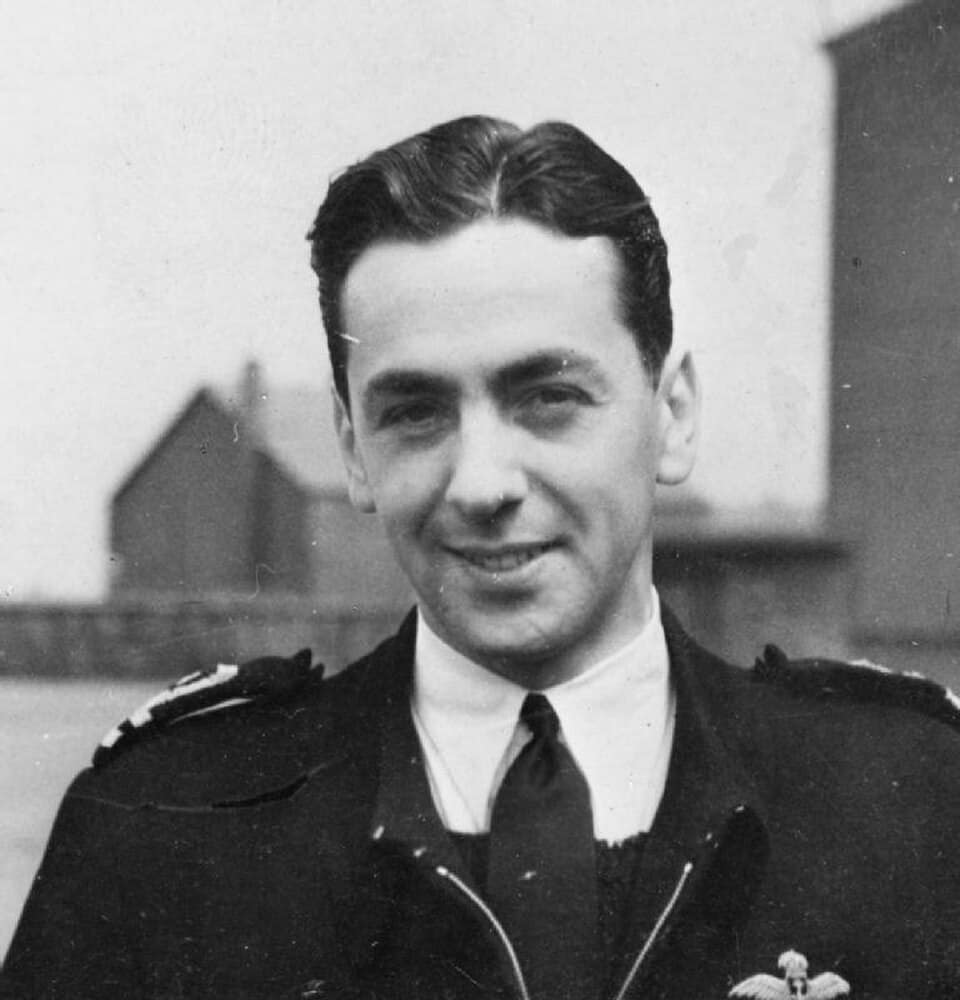
The number is so large it seems invented. Four hundred and eighty-seven. That is how many different types of aircraft Captain Eric “Winkle” Brown flew during his lifetime — a record that stands to this day and will almost certainly never be broken. For context: most experienced airline pilots retire having flown five or six aircraft types. Most military pilots peak at a dozen. Fighter aces, in one of history’s most intense flying periods, typically flew three or four. Brown flew 487.
Full name: Captain Eric Melrose “Winkle” Brown, CBE, DSC, AFC, RN
Born / Died: 21 January 1920, Hackney, London (raised in Edinburgh) — 21 February 2016, Redhill, England (aged 96)
Aircraft types flown: 487 (world record)
Carrier landings: 2,407 (world record)
Carrier deck take-offs: 2,271
Service: Royal Navy, Fleet Air Arm
Notable aircraft tested: Me 262, He 162, Fw 190, Me 163 Komet, Sea Vampire, Arado Ar 234
Decorations: CBE, DSC, AFC, King’s Commendation for Valuable Service in the Air
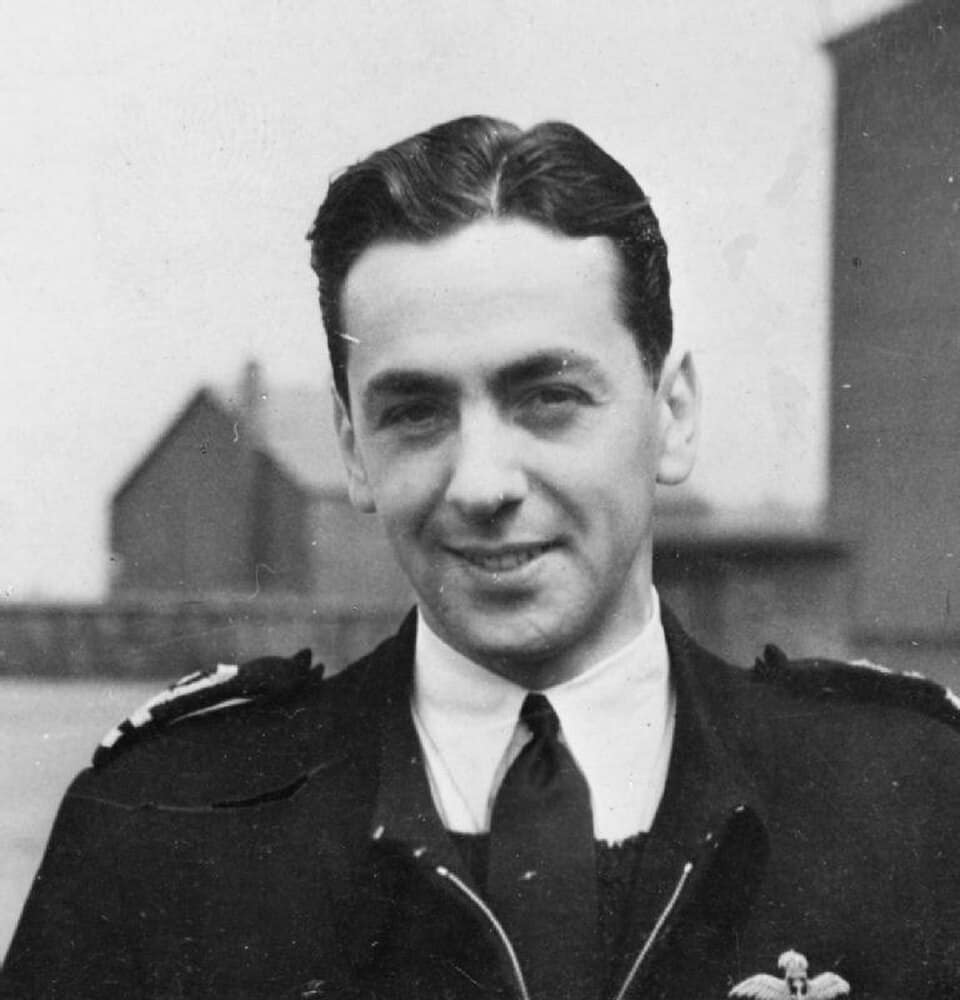
The Most Decorated Pilot in Royal Navy History
Eric Brown grew up in Edinburgh as the son of a Royal Flying Corps pilot who had fought in the First World War — though research published in 2023 revealed he had actually been born in Hackney, London, in 1920 and adopted as a baby. His father took him to the 1936 Berlin Olympics, where the young Brown met Ernst Udet, Germany’s highest-scoring surviving fighter ace from World War I and then a senior figure in the Luftwaffe. Udet took Brown flying in a biplane over Berlin — an experience that shaped his life. Brown was studying German at the University of Edinburgh when war broke out in 1939. He was arrested by the Gestapo but released as a British citizen and made it back to Britain, where he immediately joined the Royal Navy.
Brown’s war record was extraordinary even before he became a test pilot. He served as a fighter pilot in the Fleet Air Arm, flying Grumman Martlets from escort carriers on convoy protection duty. He survived the sinking of HMS Audacity in December 1941 — torpedoed by a U-boat in the North Atlantic. He was one of only two pilots to survive from the ship’s air group. The nickname “Winkle” came from his small stature — at five foot seven he was compact enough to fit comfortably into cockpits that larger pilots found cramped.
Test-Flying Captured German Aircraft
After the war, Brown was assigned to the Royal Aircraft Establishment at Farnborough, where his fluent German and exceptional piloting skills made him the ideal candidate for a unique assignment: evaluating captured German aircraft. Between 1945 and 1950, Brown flew virtually every significant aircraft type produced by the Third Reich — including machines that German pilots themselves considered too dangerous for routine operation.
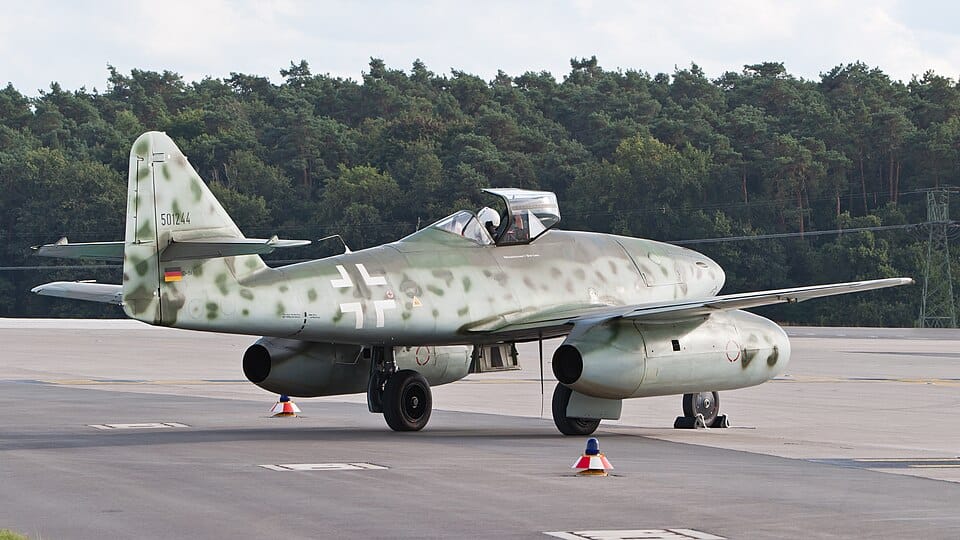
He flew the Messerschmitt Me 262, the world’s first operational jet fighter, and reported its handling characteristics in detail that helped shape postwar British and American jet development. He flew the Heinkel He 162 Volksjager — a desperate last-ditch fighter built of wood and glue by slave labour — and found it lethal to fly. He tested the Messerschmitt Me 163 Komet, the rocket-powered interceptor that killed more of its own pilots than it did the enemy. He flew the Arado Ar 234, the world’s first jet bomber. He flew the Focke-Wulf Ta 152, Junkers Ju 388, and dozens of other types that existed in small numbers or as prototypes.
Records That Will Never Be Broken
Brown’s 487 aircraft types is a record that exists in a category of its own. The sheer diversity of aircraft available to test pilots in the 1940s and 1950s — when dozens of manufacturers in multiple countries were producing experimental types — created a window of opportunity that no longer exists. Modern test pilots might fly ten or fifteen types in a career. Brown flew 487 because he was the right pilot, with the right skills, at exactly the right moment in aviation history.
His 2,407 carrier landings — another world record — reflect a career that spanned the entire transition from propeller-driven biplanes to supersonic jets aboard Royal Navy carriers. On 3 December 1945, he made the first-ever jet landing on an aircraft carrier, putting a De Havilland Sea Vampire down on the deck of HMS Ocean. It was characteristic of Brown that he treated this historic achievement as simply another test flight to be completed, written up, and filed.
Bergen-Belsen and the Human Cost of War
Brown’s wartime experience was not limited to cockpits. In April 1945, he was among the first British officers to enter the Bergen-Belsen concentration camp. His fluent German made him invaluable as an interpreter during the liberation and the subsequent interrogations of camp staff. The experience haunted him for the rest of his life. In interviews decades later, Brown spoke about Bergen-Belsen with a precision and controlled emotion that made it clear the memories had never faded. He interrogated Josef Kramer, the camp commandant, and several other SS officers — experiences that gave him a perspective on the war that few test pilots shared.
Later Career and Legacy
Brown served in the Royal Navy until 1970, rising to the rank of Captain. After retirement, he became one of aviation’s most respected historians and commentators. He wrote several books, gave hundreds of lectures, and appeared in numerous television documentaries. His ability to describe the handling characteristics of aircraft he had flown decades earlier — with technical precision and dry Scottish humour — made him a favourite of aviation audiences worldwide.
He died on 21 February 2016, aged 96 — one month after his birthday. The tributes came from every corner of the aviation world. He was the most decorated pilot in the history of the Royal Navy, the holder of two records that will never be broken, and a man who had flown more different types of aircraft than anyone who had ever lived. His autobiography, Wings on My Sleeve, remains one of the finest aviation memoirs ever written.


 English
0 Comments