
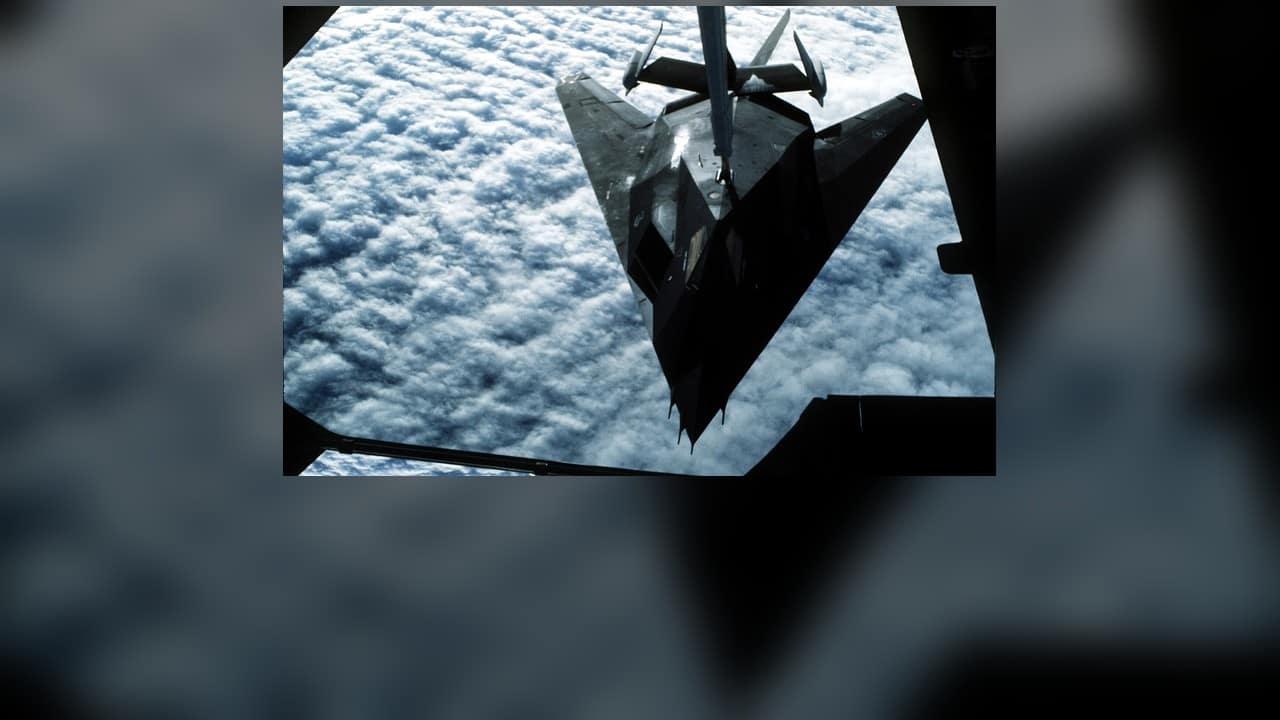
At one minute past one in the morning on December 20, 1989, the warm tropical dark outside the Panamanian Defense Force barracks at Rio Hato was ripped apart by two enormous explosions. Soldiers tumbled from their bunks into the confusion, scanning a black sky for the aircraft that had done it. They saw nothing. They heard nothing until the bombs hit.
That was the entire point. America’s most closely guarded secret had just gone to war for the first time.
Quick Facts
- Aircraft: Lockheed F-117A Nighthawk — the world’s first operational stealth aircraft
- Event: its combat debut, Operation Just Cause (the U.S. invasion of Panama), 0101 hrs, December 20, 1989
- The mission: two F-117s of the 37th TFW, flown from Tonopah, Nevada, struck the PDF barracks at Rio Hato
- The twist: the bombs were meant to stun, not kill — and shifting winds threw off the aim
- Lead pilot: Capt. Greg Feest, who would later drop the first bomb of Desert Storm
The Black Jets Leave the Desert
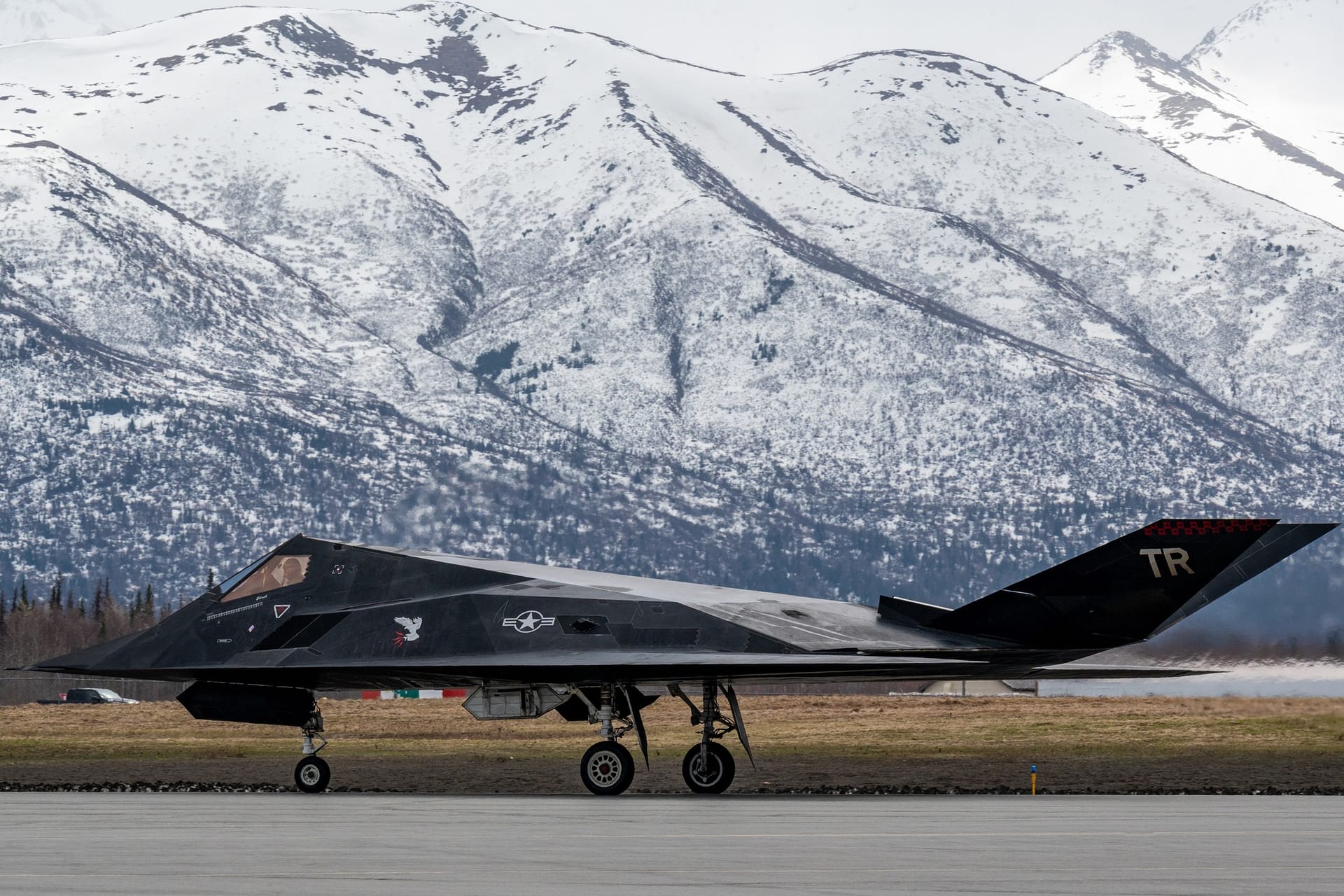
At dusk the evening before, eight strange angular aircraft lifted off from the Tonopah Test Range in the Nevada desert — a base so secret most Americans did not know it existed. The jets were products of Lockheed’s legendary Skunk Works: faceted, matte-black, and nearly invisible to radar. The F-117A Nighthawk.
Their destination lay more than 3,000 miles away. The flight would take nearly eight hours and seven separate aerial refuellings in the dark. Two of the jets were assigned to strike Rio Hato; four more were tasked with a still-classified mission tied to hunting Manuel Noriega; two flew as spares.
Stun, Don’t Kill
The mission was strange by any standard. Each Nighthawk carried a single 2,000-pound laser-guided bomb — a weapon capable of landing inside a five-foot circle. But the pilots were ordered not to hit the barracks. Instead they were to drop their bombs in open ground a safe distance away, as gigantic stun grenades, to disorient the Noriega-loyal troops inside just before U.S. Army Rangers parachuted in. A nearby dispensary full of civilians and a barracks of teenage cadets made precision a matter of life and death.
The Wind Changes
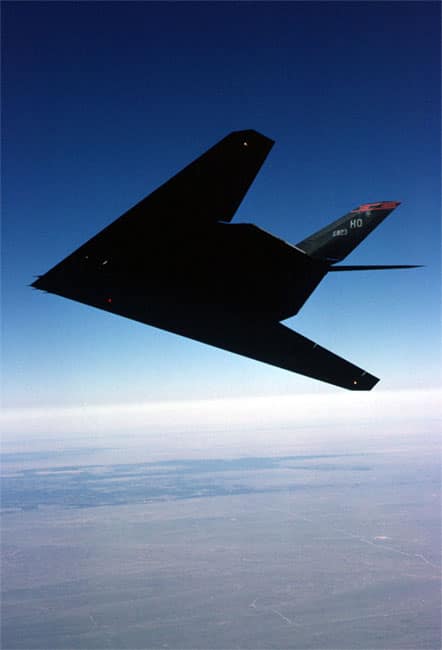
Then the plan unravelled in the final seconds. The wind shifted from an unexpected direction, and last-minute changes to the targeting scrambled the carefully rehearsed choreography. Feest released on time — but onto the aimpoint meant for the second jet. The second pilot, Maj. Dale Hanner, keyed off Feest’s impact and dropped well wide of his own target, by anywhere from dozens to a few hundred yards depending on the account.
And yet it worked. The blasts threw the PDF into exactly the chaos the planners had wanted — soldiers reportedly bolting from the barracks in their underwear, some throwing down their weapons. Gen. Carl Steiner, the operation’s ground commander, judged the strike a success. The choice to put a Captain in the lead, over more senior officers, had paid off: Feest was the wing’s top shooter, with a perfect hit record.
Noriega and the Music
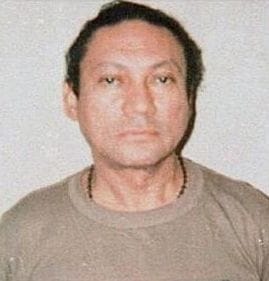
The two Nighthawks were a tiny part of an armada of more than 300 aircraft — the largest U.S. airborne operation since the Second World War. Noriega himself slipped the net, taking refuge in the Vatican’s embassy in Panama City. U.S. forces besieged him with a relentless barrage of loud rock music until, on January 3, 1990, he surrendered.
For the F-117, Panama was the proof of concept. Thirteen months later, over Baghdad, the Nighthawk would become a legend — and the pilot dropping the opening bomb of Desert Storm would, once again, be Greg Feest.
Sources: The Aviationist; The War Zone; Air & Space Forces Magazine; Key.Aero; U.S. Air Force.
Related Questions
When did the F-117 stealth fighter first see combat?
The Lockheed F-117A Nighthawk made its combat debut in Panama, not Iraq. At 01:01 on 20 December 1989, during Operation Just Cause, two F-117s struck a Panamanian Defense Force barracks at Rio Hato — the first combat use of the world's first operational stealth aircraft.
What was the F-117's first combat mission?
Its first mission came during the U.S. invasion of Panama on 20 December 1989. Two F-117s flew from Tonopah, Nevada, to drop bombs near the PDF barracks at Rio Hato, intended to stun and disorient the defenders rather than kill them.
Was the F-117's Panama debut a success?
It was mixed. The aircraft proved stealth could be used in combat, but the bombs — deliberately aimed to stun rather than destroy — missed their intended marks when shifting winds and confusing orders threw off the aim, sparking later controversy over the strike.
What was the F-117 Nighthawk?
The Lockheed F-117A Nighthawk was the world's first operational stealth aircraft, designed to evade radar and strike heavily defended targets. Though often associated with the 1991 Gulf War, its true combat debut came two years earlier over Panama.
Who flew the first F-117 combat mission?
Captain Greg Feest led the first F-117 combat strike over Panama in 1989. He would go on to drop the very first bomb of Operation Desert Storm in 1991, making him central to two stealth firsts.
0 Comments