
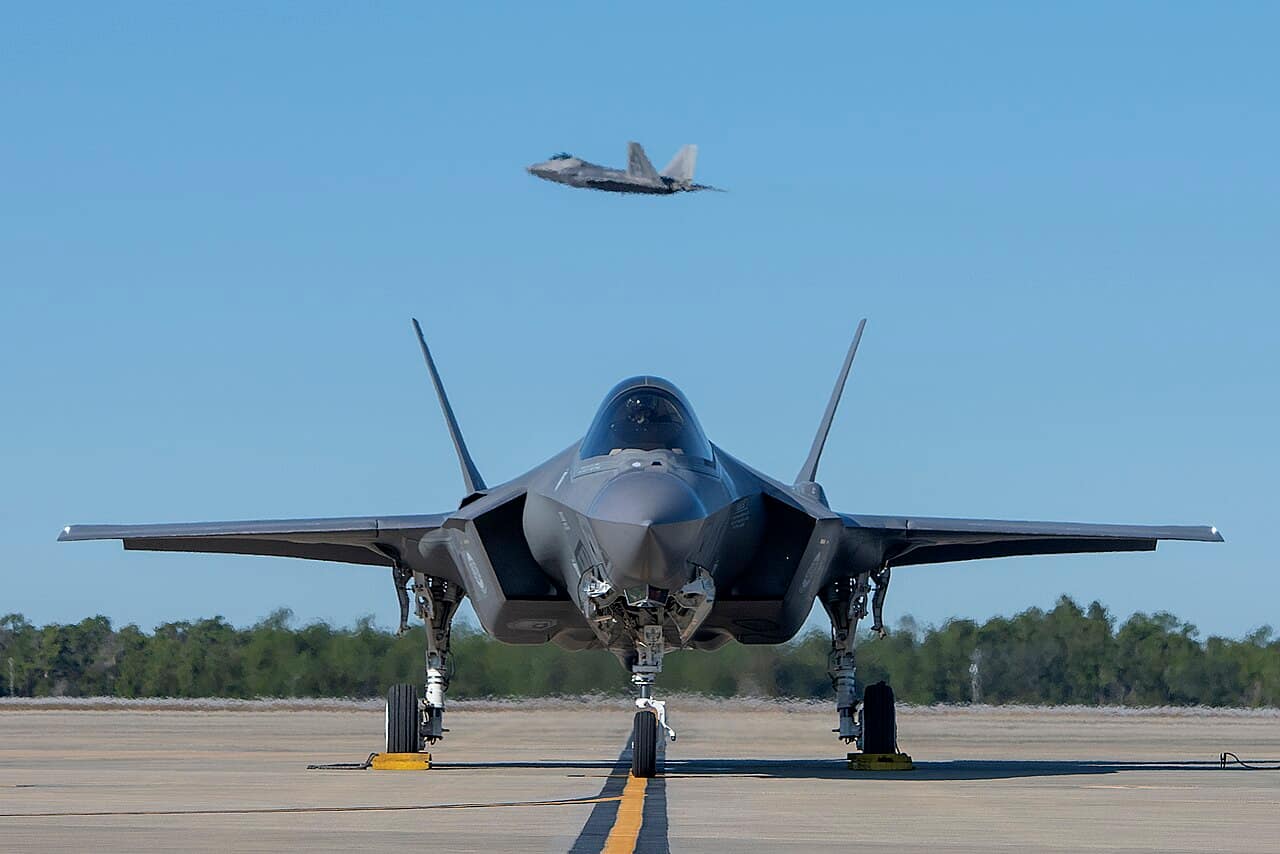
A U.S. Air Force F-35A Lightning II transmitted an emergency 7700 code on its transponder while flying over the Gulf of Oman last week. The aircraft was at 10,500 feet over open water — well below normal F-35 cruising altitude — when it began squawking the universal “general emergency” signal that tells every civilian and military controller in range to give the aircraft priority handling.
It is the second F-35 mid-air emergency this month. Just days earlier, an F-35A and a KC-135R Stratotanker simultaneously declared mid-air alerts off the coast of San Jose, California.
The Air Force has not formally confirmed the cause of either incident. But the pattern is making people nervous.
Quick Facts
Aircraft: F-35A Lightning II, USAF
Location: Gulf of Oman
Altitude: 10,500 ft (well below normal cruise)
Emergency code: 7700 (general emergency)
Outcome: Aircraft recovered safely (location not disclosed)
Recent comparable incident: F-35A + KC-135R, off San Jose, CA — same week
Possible causes (unconfirmed): Engine, OBOGS, hydraulics, weather
Total F-35 hull losses to date: ~15 globally
Squawk 7700
Aviation has three universal emergency transponder codes. 7500 is hijacking. 7600 is lost communications. 7700 — the one this F-35 broadcast — is the catch-all: “I have a problem. Get out of my way.”
A 7700 squawk over open water at 10,500 feet is consistent with a controlled descent — pilot working a checklist, picking a divert field, and broadcasting his predicament. It is not consistent with an out-of-control aircraft. The fact that no debris field has been reported strongly suggests the aircraft recovered safely.
Why So Low?
The 10,500-foot altitude is the giveaway. The F-35 normally cruises in the high 30,000s. A descent to 10,500 over water suggests the pilot was working a problem that required denser air — most commonly an oxygen-system fault (the F-35’s OBOGS system has a long history of pilot incidents) or a pressurisation failure. Below 10,000 feet, supplemental oxygen is not required.
An engine emergency would also explain the altitude — the Pratt & Whitney F135 is a single-engine aircraft’s only powerplant, and any indication of trouble triggers an immediate descent profile.
The Pattern
Two F-35 emergencies in the same week, on opposite sides of the world, is enough to raise eyebrows. Both aircraft recovered. Neither cause has been disclosed. But the F-35 fleet’s mission-capable rate has been a sore subject for years — the most recent Pentagon assessment put it at around 51%, well below target.
The aircraft over the Gulf of Oman made it home. The Air Force will, as it always does, share what happened only when it has finished its own investigation.
Sources: AirLive, ADS-B Exchange tracking, Air & Space Forces Magazine.

 English
0 Comments