

The MQ-9 Reaper is famous for one thing: putting a Hellfire missile through a window from 30,000 feet. But Hellfires cost about $150,000 each, and the Air Force has burned through them at a rate the budget can no longer sustain. Enter the APKWS — a $20,000 laser-guided rocket that turns a 1960s-vintage 2.75-inch Hydra unguided rocket into a precision weapon. And as of this month, the Reaper now carries it.
General Atomics Aeronautical Systems Inc. (GA-ASI) and the U.S. Air Force jointly tested the APKWS — Advanced Precision Kill Weapon System — on an MQ-9A airframe. The combination opens a new tactical envelope for the Reaper: cheap, fast, accurate fire against drones, light vehicles, and infantry positions, without burning a Hellfire on every shot.
Quick Facts
Tested on: MQ-9A Reaper (General Atomics)
Weapon: APKWS II laser-guided 2.75-inch rocket
Unit cost: ~$20,000 per round
Hellfire cost (for reference): ~$150,000 per round
Rocket warhead: High-explosive fragmentation, 10 lb
Guidance: Semi-active laser, ~5 km effective range
Primary new mission: Counter-drone (Shahed-class targets)
A 60-Year-Old Rocket Gets a Brain
The Hydra 70 rocket dates to the 1940s as the FFAR, used unguided from helicopters in Vietnam. It is dumb fire — point and shoot, hope for the best. APKWS bolts a laser-guidance kit onto the front, transforming a rocket that lands “somewhere over there” into one that lands inside a vehicle’s engine bay.
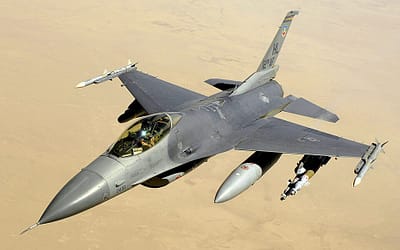
BAE Systems builds the kit. The U.S. Marine Corps first fielded it on Cobra and Huey helicopters in 2012, with the Army following on the Apache; the Air Force has fielded it on A-10s, F-16s, and most recently F-15E Strike Eagles. The Reaper is the natural next step.
The Drone-Hunter Drone
The most important target set is not vehicles or buildings — it is other drones. Russian-built Shahed-136 loitering munitions have proliferated worldwide. Existing air-defence solutions are mismatched: a Patriot missile to kill a $40,000 drone is an economic loss for the defender. The APKWS, at $20,000 per round, finally breaks the cost curve.
A single Reaper carrying 19 APKWS rockets and four Hellfires becomes a flying anti-drone CAP that can loiter for 24 hours and engage 23 separate targets. That is the math the Air Force is now interested in.
Why It Matters
The Reaper was designed to hunt insurgents from altitude. Two decades later it is being repurposed for the wars actually being fought — Ukraine, the Red Sea, the Persian Gulf — where the threats are cheap drones, not high-value individuals. Putting a $20,000 rocket on a $30 million drone is, oddly, exactly the right answer.
The hunter is now the hunter-killer of hunters.
Sources: The Aviationist, GA-ASI press materials, Defense News.

 English
0 Comments