
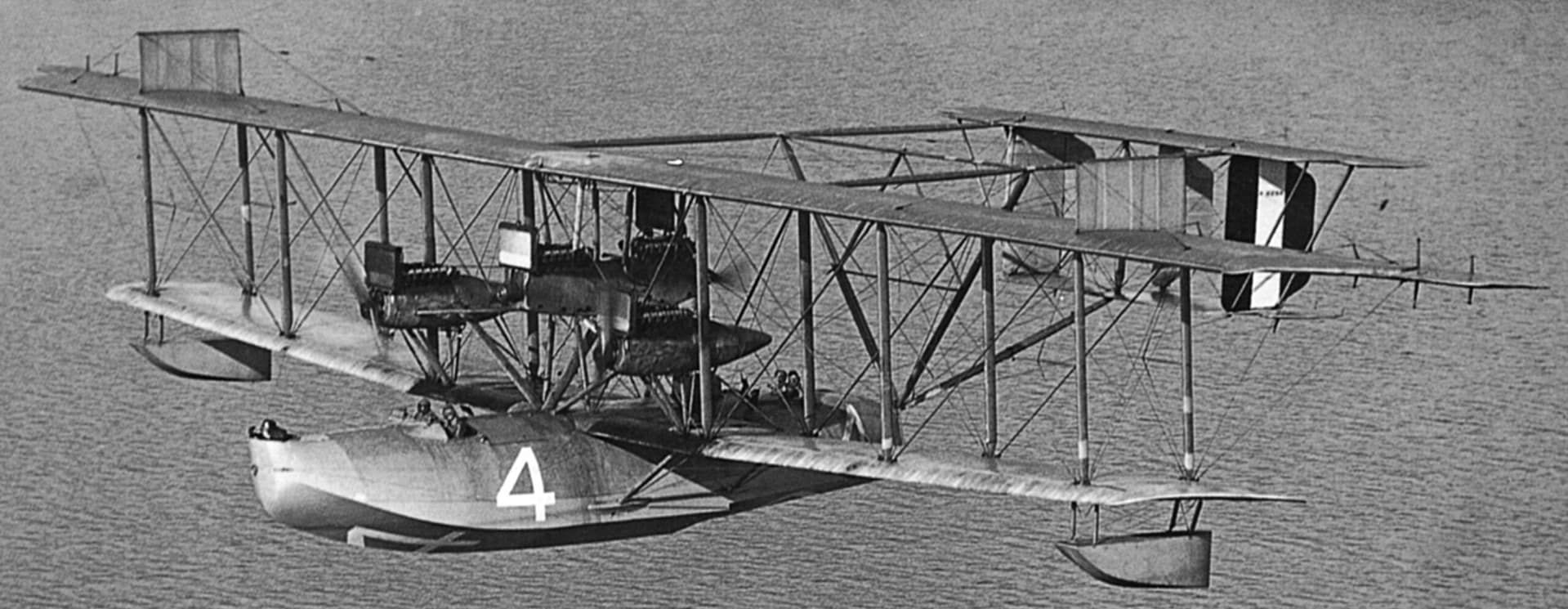
On the evening of 27 May 1919, a lumbering four-engine flying boat descended through the Atlantic haze and touched down on the Tagus Estuary outside Lisbon, Portugal. Its hull was salt-stained. Its crew of six had not slept properly in two days. And with that unceremonious splash, a US Navy aircraft called the NC-4 became the first flying machine in history to cross the Atlantic Ocean.
Nobody much remembers it. Ask a room full of aviation enthusiasts who made the first transatlantic flight, and nine out of ten will say Charles Lindbergh. They're not wrong, exactly — Lindbergh did cross the Atlantic, solo and non-stop, in May 1927. But he did so eight years after the NC-4 had already done it, and depending on how you count, somewhere between 66 and more than 80 people had flown the Atlantic before him. The NC-4 and her crew weren't just first. They were forgotten.
That's a story worth correcting.
Quick Facts
| Aircraft | Curtiss NC-4 flying boat |
| Departed | 8 May 1919, NAS Rockaway, New York |
| Arrived Lisbon | 27 May 1919 (first transatlantic crossing complete) |
| Arrived Plymouth | 31 May 1919 (first crossing to Great Britain) |
| Commander | Lt. Cdr. Albert C. Read, USN |
| Total crew | 6 (including one US Coast Guard pilot) |
| Aircraft started | 3 (NC-1, NC-3, NC-4) |
| Aircraft finished | 1 (NC-4 alone) |
| Longest single leg | ~1,200 nm, Trepassey Bay to the Azores |
| Engine | Four Liberty 12A, 400 hp each |
A Flying Boat Built for a Vanished War
The NC-4's origins lie in a bar bet — or something close to it. In 1917, with U-boats terrorising the Atlantic shipping lanes, the US Navy needed patrol aircraft that could cross the ocean under their own power rather than being crated and shipped. Rear Admiral David Taylor and aircraft designer Glenn Curtiss hatched the idea over dinner: build a flying boat big enough to cross the Atlantic. It would be a weapon, a statement, and a proof of concept all in one.
The resulting aircraft — the Navy-Curtiss, or NC series — were enormous by any 1918 standard. The NC-4 stretched 68 feet from bow to tail, with a wingspan of 126 feet, almost identical to that of a modern Boeing 737. Four Liberty 12A engines, 400 horsepower each, drove three pusher propellers and one tractor. The hull — beautifully crafted by the Herreshoff Manufacturing Company of Bristol, Rhode Island, the same firm that built America's Cup yachts — was built for open ocean. She weighed 28,000 pounds loaded. She could carry a crew of six.
Four aircraft were built. The war ended before they could be deployed. Rather than mothball the project, the Navy pivoted. The NC boats would cross the Atlantic not as weapons, but as pioneers.

Three Planes, One Ocean, Sixty-Eight Destroyers
The Navy did not take chances. For the transatlantic attempt, they stationed more than 50 ships, mostly destroyers, along the route, including a chain at roughly 50-mile intervals from Newfoundland to the Azores — a steel breadcrumb trail across 1,200 miles of open ocean. Each ship was to fire star shells at night and emit smoke by day. It was the most elaborate navigational safety net ever assembled, and it still wasn't enough to save two of the three aircraft.
The expedition launched from Trepassey Bay, Newfoundland, on the evening of 16 May 1919. The NC-1, NC-3, and NC-4 lifted off in formation, pointed east, and disappeared into the Atlantic dark. What followed over the next 15 hours was an ordeal that only one crew would survive intact.
Dense fog rolled in. The destroyer chain became useless — you can't navigate by ships you cannot see. The NC-1 broke through the clouds trying to get a star fix and became disoriented. She made a forced landing on heaving seas some 200 miles short of the Azores. Her crew was rescued by a Greek freighter; the aircraft was taken in tow, but heavy seas tore her apart and she sank. The NC-2 had already been stripped for spare parts back in New York and never flew the route at all.
The NC-3, commanded by the expedition's overall leader, Commander John Towers, fared almost as badly. She too came down on rough seas, and here the story gets astonishing: rather than await rescue, Towers and his crew taxied and drifted their broken flying boat for 53 hours through gale-force winds, covering 205 miles across open ocean to reach Ponta Delgada in the Azores. They arrived battered, the aircraft beyond repair, but alive. It remains one of the great feats of seamanship in naval aviation history.

The One That Made It
NC-4 had problems of her own. She had been forced to land at sea during the leg from Rockaway to Halifax due to engine trouble, and she arrived at Trepassey Bay a full day behind schedule. Her crew, led by the quietly brilliant Lieutenant Commander Albert Cushing Read, had spent those extra hours rebuilding an engine and adjusting fuel lines in a Newfoundland chill.
But on the big ocean leg, NC-4 found her groove. Read and his navigator held their heading through the same fog that doomed the others, using a combination of dead reckoning, radio bearings from the destroyer chain, and sheer determination. When they punched through the overcast and saw the volcanic peaks of Faial Island rising from the Atlantic, the relief must have been almost physical. They landed at Horta in the Azores on 17 May, continued to Ponta Delgada, then lifted off again on 27 May for the final 800-mile leg to Lisbon.
The arrival was triumphal. Lisbon lit up. The Portuguese government declared a national holiday. Crowds lined the waterfront of the Tagus Estuary as the big flying boat settled onto the river in the early evening light. Four days later, NC-4 flew on to Plymouth, England, completing the first aerial crossing from North America to Great Britain. The entire journey from New York had taken 23 days, including layovers, repairs, and the enforced wait in the Azores for weather.
Why Lindbergh Got the Glory
It is worth asking, fairly, why the NC-4 faded from popular memory while Lindbergh became a legend. The answer is partly structural and partly human.
The NC-4's crossing was not non-stop. It hopped via Newfoundland, the Azores, and Portugal — a total of several legs, spread over weeks, with repairs in between. A $25,000 prize offered by New York hotelier Raymond Orteig specifically required a non-stop crossing between New York and Paris. That was the prize Lindbergh claimed in 1927, and prizes have a way of defining what history remembers. The non-stop barrier itself fell barely three weeks after the NC-4 reached Lisbon, when John Alcock and Arthur Whitten Brown flew a Vickers Vimy non-stop from St. John’s, Newfoundland, to Clifden, Ireland, on 14–15 June 1919.
There is also the matter of narrative. Six Navy officers in a purpose-built military aircraft, supported by dozens of Navy station ships, makes for an impressive institutional achievement. One young airmail pilot in a small single-engine monoplane, alone over 3,600 miles of black ocean for 33.5 hours, is a story. History tends to remember stories. The NC-4 mission was news. The Spirit of St. Louis was myth.
That said, the aviation community has never entirely forgotten. The NC-4 herself is preserved at the National Naval Aviation Museum in Pensacola, Florida, where she remains on display in almost complete original condition. The Smithsonian's National Air and Space Museum holds design drawings, postcards, and photographs from the flight. And every few years, on the anniversary of the Lisbon landing, someone writes a careful article pointing out that the first person to fly the Atlantic was not Charles Lindbergh, but a Coast Guard pilot named Stone and a Navy commander named Read.
Related Questions
What was the first aircraft to fly across the Atlantic?
The first aircraft to cross the Atlantic was the US Navy's NC-4, a four-engine Curtiss flying boat. It departed New York on 8 May 1919 and reached Lisbon, Portugal on 27 May 1919, completing the first transatlantic crossing by air — eight years before Charles Lindbergh's famous solo flight. It was commanded by Lt. Cdr. Albert C. Read.
Was Lindbergh really the first to fly the Atlantic?
No. Charles Lindbergh made the first solo, non-stop transatlantic flight in 1927, but the US Navy's NC-4 flying boat had already crossed the Atlantic in 1919 — eight years earlier. By the time Lindbergh flew, somewhere between 66 and more than 80 people had already crossed the Atlantic by air. The NC-4 was simply first, and largely forgotten.
Who commanded the NC-4 and how big was the crew?
The NC-4 was commanded by Lt. Cdr. Albert C. Read of the US Navy and carried a crew of six, including one US Coast Guard pilot. Three flying boats — NC-1, NC-3, and NC-4 — set out, but only the NC-4 completed the ocean crossing. The Navy stationed 68 destroyers across the Atlantic as guides and rescue ships.
How big was the NC-4 flying boat?
The NC-4 was enormous for its time: 68 feet long with a 126-foot wingspan — almost identical to a modern Boeing 737 — and weighing 28,000 pounds loaded. Powered by four 400-hp Liberty 12A engines driving three pusher propellers and one tractor, it was the largest aircraft in the world when built. Its hull was crafted by a famed America's Cup yacht builder.
Why was the NC-4 built?
The Navy-Curtiss 'NC' flying boats were conceived in 1917 by Rear Admiral David Taylor and aircraft designer Glenn Curtiss as long-range patrol aircraft that could cross the Atlantic under their own power to hunt U-boats. World War I ended before they could serve as weapons, so the Navy repurposed them as pioneers to make the first transatlantic flight instead.
What route did the NC-4 take across the Atlantic?
The NC-4 flew in stages from Naval Air Station Rockaway, New York, beginning 8 May 1919, up to Newfoundland and then across to the Azores — its longest single leg was about 1,200 nautical miles from Trepassey Bay. From the Azores it continued to Lisbon, arriving 27 May, and on to Plymouth, England on 31 May, the first crossing to Great Britain.
Who else made famous early transatlantic flights?
The Atlantic drew a parade of pioneers. Charles Lindbergh flew it solo and non-stop in 1927; Amelia Earhart became the first woman to fly it solo in 1932; and in 1938 Douglas 'Wrong Way' Corrigan famously 'accidentally' crossed it after filing a flight plan for California. Each built on the NC-4's overlooked achievement.

The Legacy No One Claimed
The NC-4 story is, in the end, a lesson in how history awards credit. The Wright Brothers get the first flight; Bleriot gets the Channel; Lindbergh gets the Atlantic. In each case, what is remembered is the version that required the most individual audacity, the sparest equipment, and the most elegant single narrative arc.
The NC-4 had a crew. She had institutional support. She had destroyers watching. She stopped along the way. None of that makes the achievement smaller — crossing 3,000 miles of open ocean in a 1919 aircraft, through fog and Atlantic weather, was genuinely perilous. Two of her sister ships didn't make it. But it makes the story harder to mythologise, and mythology is what popular memory runs on.
What the NC-4 gave the world was proof that it could be done. Alcock and Brown proved weeks later that it could be done non-stop. Lindbergh proved in 1927 that it could be done alone. Those are different achievements, and all deserve their recognition. It is long past time the NC-4 got hers.
Sources: Naval History and Heritage Command · National Air and Space Museum · Naval History Magazine (USNI) · Coast Guard Aviation History · Library of Congress (Bain Collection)
0 Comments