
Two hours into the worst bike ride of his life, Bryan Allen is in trouble. His legs are cramping, he is dangerously dehydrated, and the French coast is still maddeningly far away. Worse, his “aircraft” is sinking — the turbulence over the water has robbed it of lift, and he is now pedalling a featherweight contraption barely a metre above the cold grey chop of the English Channel. Stop pedalling, even for a moment, and he goes in.
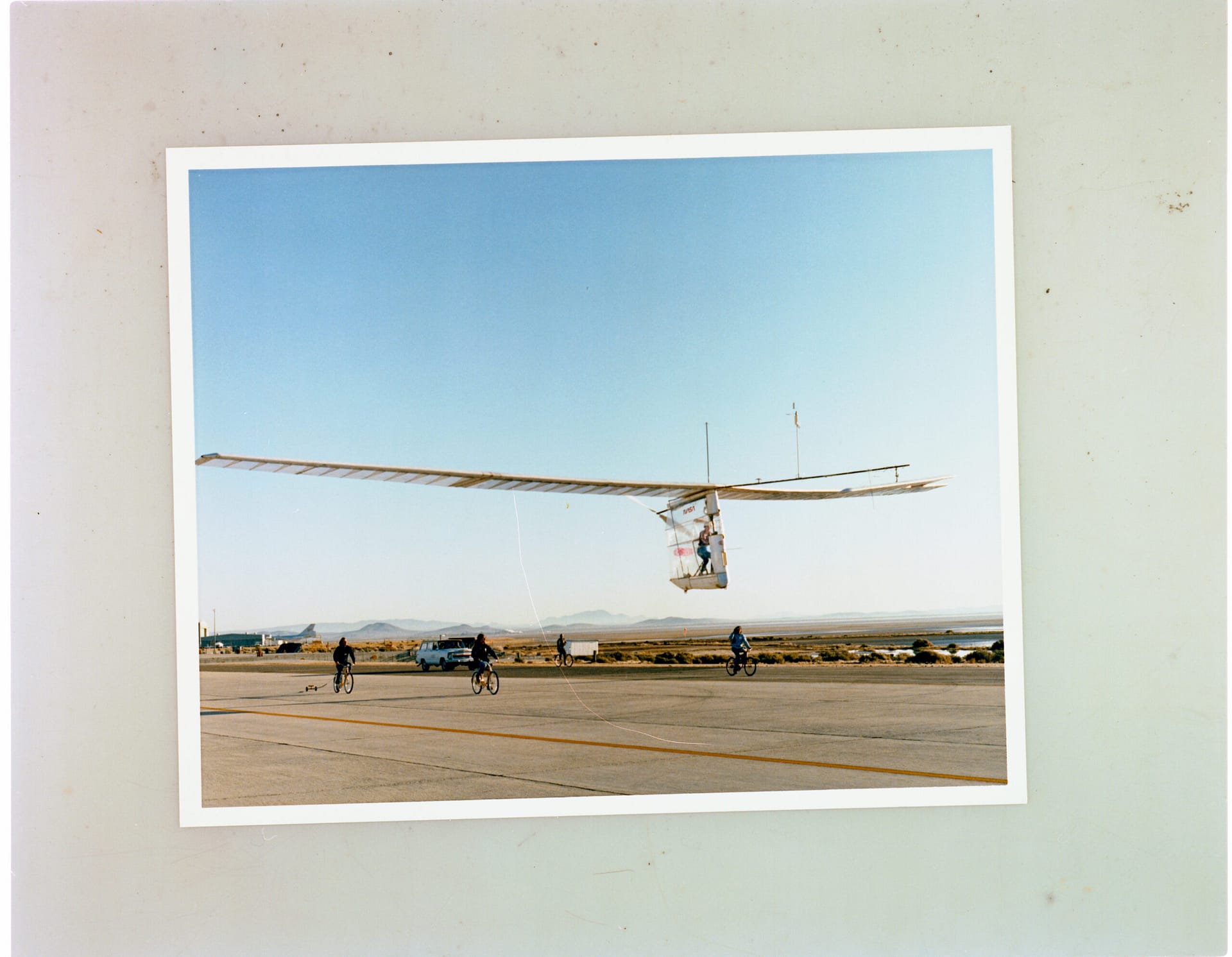
So he doesn’t stop. On 12 June 1979, powered by nothing but his own exhausted legs, Bryan Allen flew the Gossamer Albatross across the English Channel — the first human being to cross that famous water on muscle power alone.
- What: the first human-powered flight across the English Channel, in the Gossamer Albatross
- Who: Bryan Allen — cyclist, hang-glider pilot, and the aircraft’s engine
- When & where: 12 June 1979, from Folkestone, England to Cap Gris-Nez, France
- The flight: about 22.5 miles (36 km) in 2 hours 49 minutes, averaging roughly 5 feet above the water
- The machine: a featherweight built by Paul MacCready’s AeroVironment — carbon fibre, plastic film, and a pair of pedalling legs
- The prize: the £100,000 Kremer prize for human-powered flight
An aircraft made of almost nothing
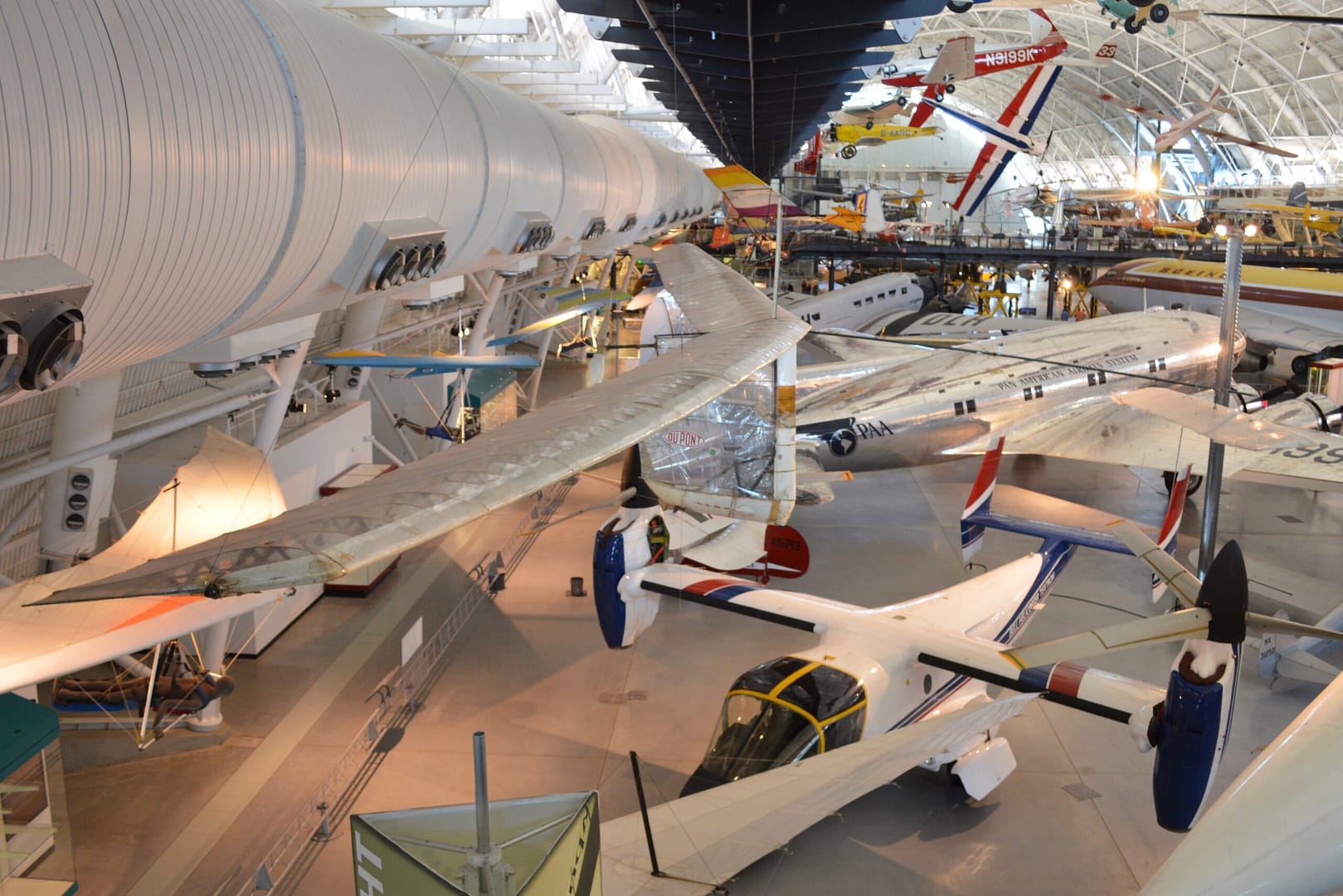
The Gossamer Albatross was the brainchild of Paul MacCready, an American engineer who had become obsessed with the problem of human-powered flight. His insight was almost philosophical: if a person can only produce about as much sustained power as a household lightbulb draws, then the aircraft has to be impossibly, ruthlessly light.
And it was. Built by MacCready’s company AeroVironment from carbon-fibre tube, thin plastic film and tape, the whole machine weighed about 70 pounds — less than the pilot. A huge, slow-turning propeller behind the cockpit was driven, by bicycle chain, from a set of pedals. The engine was a man.
The dream that wouldn’t die
People had wanted to do this for a very long time. Human-powered flight is the oldest aviation fantasy there is — Leonardo sketched flapping contraptions five centuries before MacCready — and for just as long it had looked impossible. The British industrialist Henry Kremer eventually put serious money behind it, offering prizes for anyone who could prove the doubters wrong.
Allen and MacCready took the first Kremer prize in 1977 with the Gossamer Condor, flying a figure-of-eight course. But the second prize was the romantic one: cross the Channel, the same stretch of water Louis Blériot had conquered by engine seventy years earlier, this time on human muscle.
Two hours and forty-nine minutes of agony
The crossing was supposed to take about an hour. It took nearly three. Headwinds slowed the Albatross to a crawl, the heat sapped Allen of fluids he couldn’t replace, and near the French shore the air turned rough and the aircraft began to settle toward the waves. He came within seconds of giving up. Instead, somehow, he found a little more in his legs, climbed back to a survivable few feet, and pedalled the last stretch to Cap Gris-Nez.
When the wheels — well, the single wheel — touched French soil, Allen had done what da Vinci only dreamed of and won the £100,000 Kremer prize. The Gossamer Albatross never needed to fly again. It had already answered the question humans had been asking for five hundred years: yes, with nothing but your own two legs, you can fly across the sea.
Sources: Smithsonian National Air and Space Museum; AeroVironment; Wikipedia; Caltech Magazine.
Related Questions
What was the Gossamer Albatross?
The Gossamer Albatross was a human-powered aircraft built by aeronautical engineer Paul MacCready's company, AeroVironment. Made of carbon fibre, plastic film and tape, it weighed only about 70 lb (32 kg). Its pilot pedalled to turn a large propeller, and in 1979 it became the first human-powered aircraft to cross the English Channel.
Who flew the Gossamer Albatross across the Channel?
Bryan Allen, an American cyclist and self-taught hang-glider pilot, was both pilot and engine. He pedalled the aircraft the entire way across, providing all the power with his legs. He had earlier powered the Gossamer Condor, which in 1977 won the first Kremer prize for human-powered flight.
How long did the Channel crossing take?
The flight on 12 June 1979 covered about 22.5 miles (36 km) from Folkestone, England to Cap Gris-Nez, France, and took 2 hours and 49 minutes — far longer than expected, because headwinds and turbulence near the French coast nearly forced Allen down into the sea before he pressed on to finish.
How high did it fly?
Barely off the water — an average of about five feet. Flying that low let the wing benefit slightly from 'ground effect,' but it left almost no margin for error. A moment's lost power would have put the aircraft in the Channel.
Why was the flight such a big deal?
Human-powered flight had been a dream since Leonardo da Vinci, and it had been considered all but impossible. The Gossamer Albatross proved that a person, using only their own muscles, could fly a meaningful distance over open water — and it won the £100,000 Kremer prize, one of the great challenge purses in aviation history.
0 Comments