
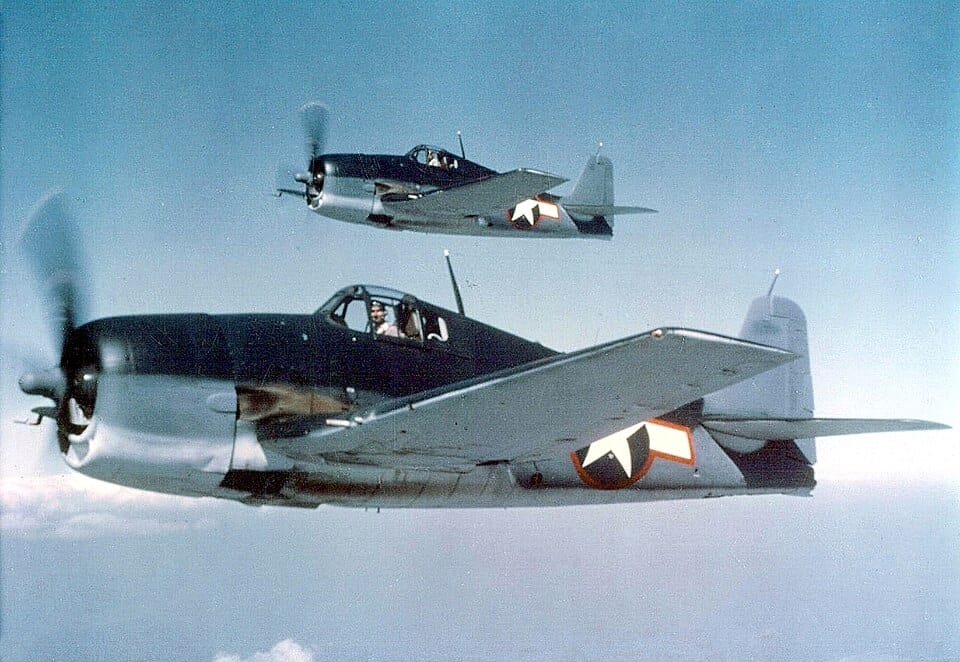
On the afternoon of 19 June 1944, Commander David McCampbell sat in the cockpit of his Hellcat somewhere above the Philippine Sea, watching the sky fill with Japanese aircraft. What followed became known as the “Great Marianas Turkey Shoot” — and before it was over, the Imperial Japanese Navy’s air power would be broken for good. American pilots, nearly all of them flying the Grumman F6F Hellcat, shot down roughly 400 Japanese aircraft that day for the loss of only 29 of their own. For the Japanese pilots climbing into their cockpits that morning, the war in the air was already over. They just didn’t know it yet.
The Hellcat wasn’t the prettiest fighter of the Second World War. It wasn’t the fastest, nor the most maneuverable. But it was, by any reasonable measure, the most effective carrier-based fighter ever built — a machine that compiled a staggering 5,223 aerial kills in just three years of combat, achieved a 19:1 kill ratio, and then vanished from front-line service almost overnight when the war ended. No fighter aircraft in history has dominated its theatre of operations so completely, or for so brief a time.
Quick Facts
- First flight: 26 June 1942
- Combat service: 1943–1945
- Total produced: 12,275 aircraft
- Aerial victories: 5,223 (75% of all U.S. Navy air-to-air kills in the Pacific)
- Kill ratio: 19:1 against Japanese aircraft
- Engine: Pratt & Whitney R-2800 Double Wasp, 2,000 hp
- Top speed: 380 mph (612 km/h)
- Armament: Six .50 caliber M2 Browning machine guns
- Top ace: Commander David McCampbell — 34 victories
- Aces produced: 305 pilots achieved ace status in the Hellcat
Born to Kill the Zero
The F6F Hellcat exists because the F4F Wildcat wasn’t good enough. In the first months of the Pacific War, American pilots flying the barrel-shaped Wildcat could hold their own against the Japanese A6M Zero — but only barely, and only by using rigid tactical discipline. The Zero could out-climb, out-turn, and out-range the Wildcat. What the Americans needed was a fighter that could beat the Zero at its own game.
Grumman’s chief engineer, Leroy Grumman, began work on the Hellcat before the war even started, but the design took on new urgency after Pearl Harbor. When a captured Zero was recovered nearly intact from Akutan Island in the Aleutians in July 1942, Grumman engineers studied it carefully, though the Hellcat’s core design was already locked in. The real answer wasn’t to copy the Zero — it was to overpower it. The Hellcat got the massive 2,000-horsepower Pratt & Whitney R-2800 engine, self-sealing fuel tanks, heavy armor plating, and six .50 caliber machine guns. Where the Zero was light and fragile, the Hellcat was tough and brutal.
The Turkey Shoot That Broke Japan
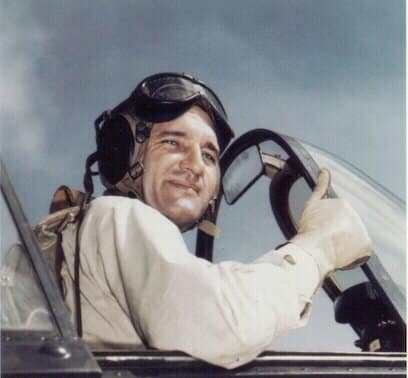
The Hellcat’s finest hour came on 19–20 June 1944, at the Battle of the Philippine Sea. The Japanese Combined Fleet launched what it believed would be a decisive carrier strike against the American fleet — sending wave after wave of aircraft into the teeth of a Hellcat defense. The result was catastrophic for Japan. American fighter pilots shot down an estimated 315 to 400 Japanese aircraft in a single afternoon, while losing only 29 of their own. American pilots began calling it the “Great Marianas Turkey Shoot,” and the name stuck.
The numbers tell a story of complete aerial dominance. The Hellcat’s combination of speed, firepower, and ruggedness — plus the U.S. Navy’s superior training pipeline — created a gap that Japanese aviation never closed. By mid-1944, many of Japan’s experienced pilots were dead, replaced by hastily trained replacements who were no match for battle-hardened American aviators flying superior machines.
The Ace Factory
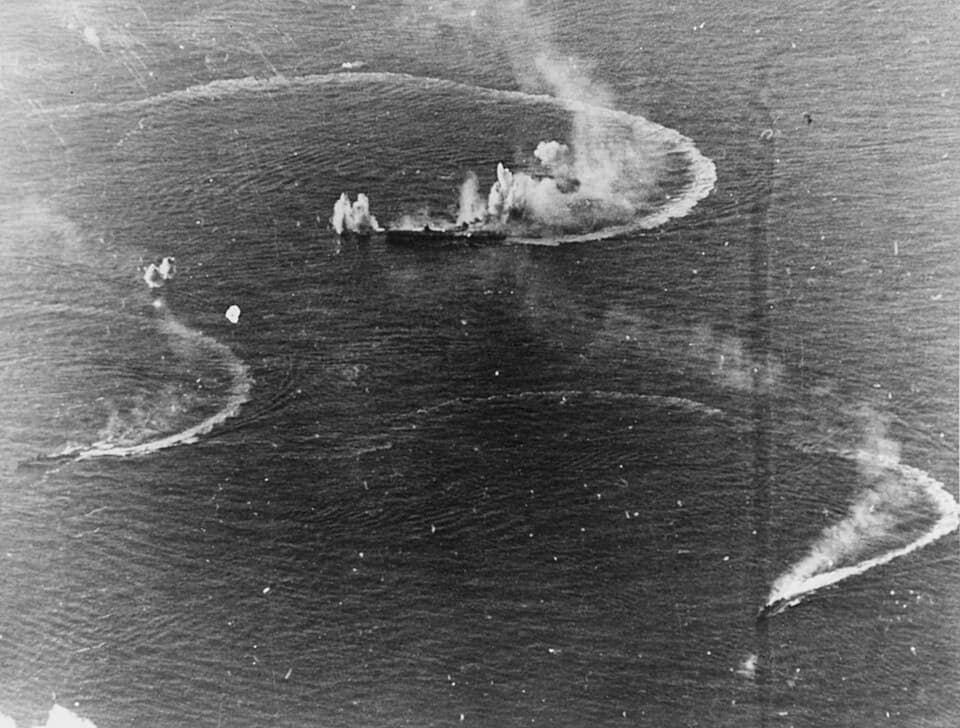
The Hellcat produced more aces than any other American fighter of the war. A total of 305 pilots achieved ace status — five or more confirmed kills — while flying the F6F. McCampbell led the pack with 34 victories, including an extraordinary single-mission performance on 24 October 1944 during the Battle of Leyte Gulf, when he shot down nine Japanese aircraft in a single sortie. He landed with only two rounds of ammunition remaining.
But the Hellcat’s success wasn’t just about individual heroism. It was about industrial might and systematic training. Grumman produced 12,275 Hellcats between 1942 and 1945 — a rate so furious that the company earned the nickname “The Iron Works.” Meanwhile, the U.S. Navy’s pilot training program was turning out aviators at a pace Japan couldn’t hope to match. By 1945, the typical American carrier pilot had 300 hours of flight training. His Japanese counterpart, if he was still alive, might have 50.
Night Fighter and Kamikaze Killer
As the war progressed, the Hellcat evolved. The F6F-5N night fighter variant carried radar in a wing pod, allowing pilots to hunt Japanese aircraft in total darkness — a capability that proved critical during the kamikaze campaign of 1944–1945. Night Hellcat pilots like Lieutenant Commander Edward “Butch” O’Hare (for whom Chicago’s airport is named) pioneered techniques for radar-directed interception that would become standard doctrine for a generation.
When Japan launched its desperate kamikaze offensive, it was the Hellcat that bore the brunt of the defensive effort. Combat Air Patrols of Hellcats orbited the fleet around the clock, intercepting incoming kamikaze flights before they could reach the carriers and destroyers below. The work was exhausting and deadly, but it worked — the vast majority of kamikaze aircraft were shot down before reaching their targets.
The Forgotten Fighter
Perhaps the strangest chapter in the Hellcat’s story is how quickly it disappeared. By the time Japan surrendered in August 1945, the F6F was already being replaced by the faster, heavier F8F Bearcat and the revolutionary F4U Corsair. Within two years, practically every Hellcat had been pulled from front-line service. Many were dumped in the ocean or scrapped. Today, fewer than a dozen airworthy Hellcats remain — a tiny remnant of the 12,275 built.
The Hellcat’s rapid retirement obscured its achievement. No other fighter in history has dominated a theatre of war so completely in such a compressed timeframe. From its combat debut at Marcus Island in August 1943 to VJ Day in August 1945, the Hellcat was the Pacific War’s indispensable weapon — the fighter that broke Japanese air power, enabled the island-hopping campaign, and made the final push to Japan’s doorstep possible.
For the families of the 305 aces and thousands of other pilots who flew it, the Hellcat wasn’t a footnote in history books. It was the machine that brought them home alive — a tough, forgiving, reliable aircraft that did exactly what it was asked to do, every single time. In the unforgiving calculus of aerial combat, that was everything.
Sources: Naval History and Heritage Command, Grumman F6F Hellcat records; Eric M. Bergerud, “Fire in the Sky: The Air War in the South Pacific” (2000); Barrett Tillman, “Hellcat: The F6F in World War II” (1979); U.S. Navy Bureau of Aeronautics, World War II combat reports.


 English
0 Comments