

Quick Facts
- Facility: Arsenal-1, Columbus, Ohio
- Investment: $1 billion
- First production: YFQ-44A Fury (March 2026 — 4 months early)
- Additional products by year-end: Roadrunner interceptor, Barracuda cruise missile family
- Employment target: 4,000+ over next decade (250 by end 2026)
- Other facilities: Mississippi, Australia, Rhode Island, Colorado, North Carolina, Southern California, Atlanta
The Anti-Lockheed
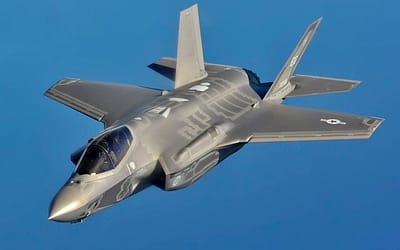
Anduril was founded in 2017 by Palmer Luckey — the entrepreneur who created the Oculus VR headset before selling it to Meta for $2 billion. His thesis was simple: the traditional defence industry is too slow, too expensive, and too conservative to meet the threats of the 2030s. What America needs isn’t better F-35s — it’s thousands of cheap, smart, expendable systems that overwhelm adversaries through mass rather than individual platform superiority. Arsenal-1 is the physical manifestation of that thesis. The factory is designed to produce autonomous systems at automotive-industry rates — not the hand-built, artisanal pace of traditional aerospace. Every production line is designed for rapid reconfiguration, allowing the factory to switch between products as demand shifts.What’s Being Built
The YFQ-44A Fury is Anduril’s entry in the Air Force’s Collaborative Combat Aircraft competition — a jet-powered autonomous wingman designed to fly alongside manned fighters. It’s already been flying since October 2025 and is now entering low-rate production at Arsenal-1. The Roadrunner is a different beast entirely — a small, reusable interceptor designed to shoot down incoming cruise missiles and drones. It launches vertically, intercepts its target, and can land back on its launch pad if it doesn’t need to make a kinetic kill. Think of it as a reusable missile that comes home if you don’t use it. The Barracuda family comprises various cruise missile variants — weapons that can be produced cheaply enough to be used in the thousands, rather than the dozens that current missile inventories allow. The Pentagon’s concept of “affordable mass” depends on missiles costing tens of thousands of dollars, not millions.Speed as Strategy
Arsenal-1 reaching production four months ahead of its July 2026 target date is not just good project management — it’s a strategic statement. The Pentagon’s $74 billion autonomous warfare budget depends on industry’s ability to actually deliver systems at scale. Traditional defence primes have repeatedly promised rapid production and failed to deliver. Anduril is betting its entire reputation on doing what the big companies can’t: build fast, iterate faster, and scale to volumes that matter. The facility will employ roughly 250 people by the end of 2026, growing to over 4,000 within a decade. But the real measure isn’t headcount — it’s output. If Arsenal-1 delivers on its production targets, a single facility in rural Ohio will produce more autonomous combat systems than the rest of the American defence industry combined. The drone factory in the cornfield isn’t just building weapons. It’s building the future of warfare — one Fury at a time.Sources: Defense News, Defense One, Breaking Defense, Air & Space Forces Magazine, DroneXL
 English
0 Comments