
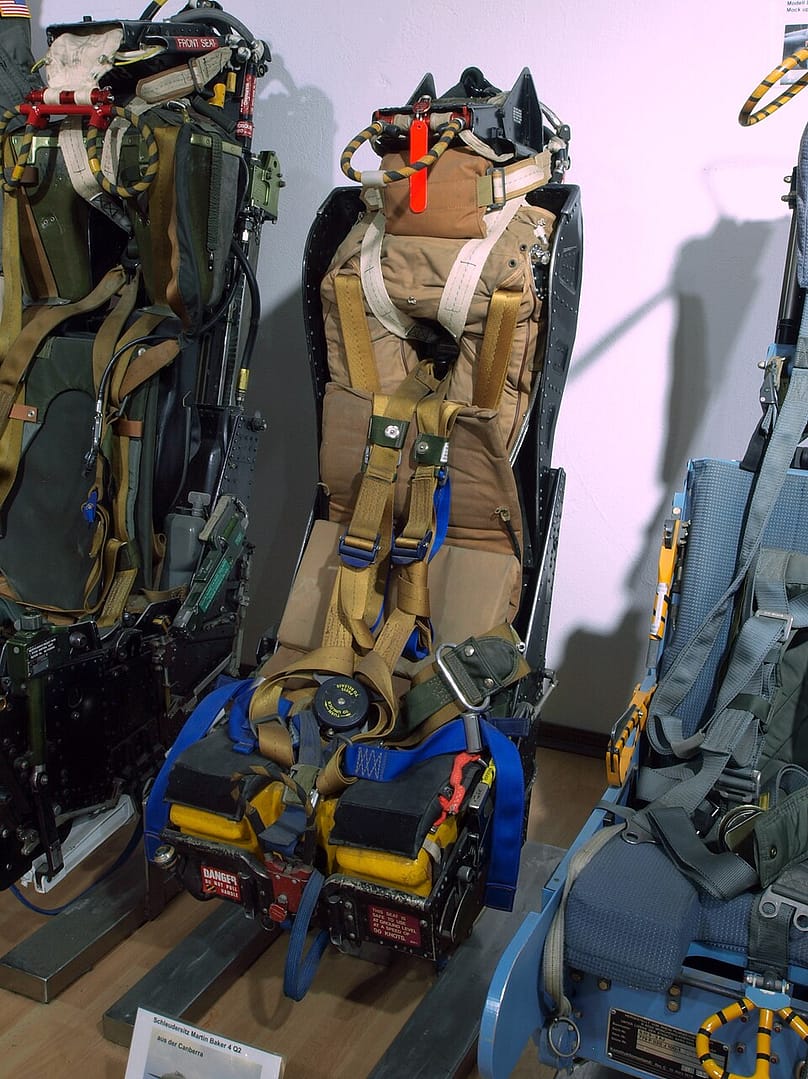
They aimed to launch a man out of an aircraft at 600 miles per hour and have him survive the journey. It was 1945, and James Martin, a British engineer, had set out to solve a problem that had killed countless pilots: when your fighter is hit and burning and you’re 20,000 feet above the earth, how do you escape without becoming a meteor?
The answer involved explosives, rocket catapults, parachutes, and a willingness to volunteer for something that looked like suicide. It was one of aviation’s greatest inventions—and one of the most traumatic to perfect.
James Martin and the Birth of the Idea
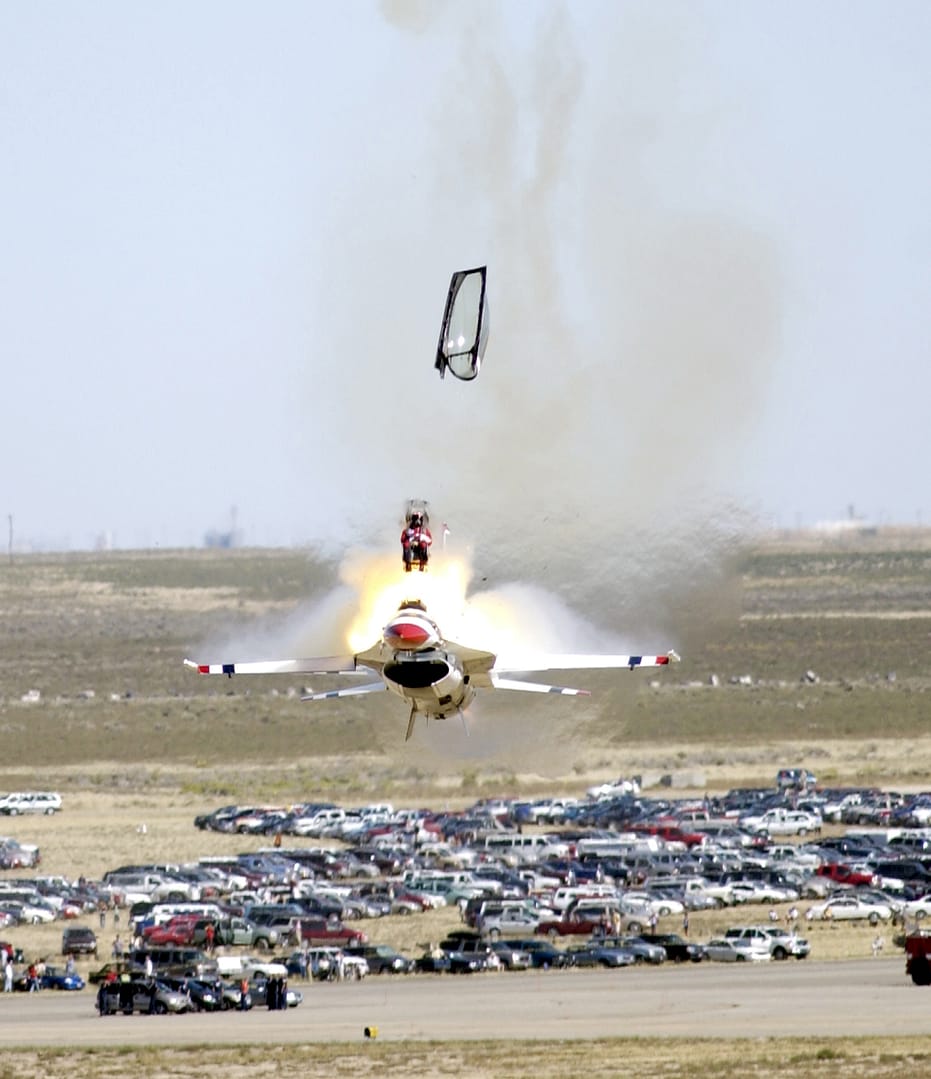
James Martin founded his engineering firm in 1929. In 1934, he partnered with Valentine Baker, and together they began designing experimental aircraft. But in 1942, during a test flight of their third design—the MB.3—Baker was killed. The accident devastated Martin. He became obsessed with a singular goal: save pilots’ lives.
Martin-Baker had been investigating ejection seats since 1934—earlier than the Germans or Swedes—but Baker’s death crystallized Martin’s vision. In 1944, the British Ministry of Aircraft Production approached him with a challenge: develop a system to extract pilots from crashing fighters. Martin knew exactly what to build: an ejection seat powered by explosives.
The First Tests: Dummies and Volunteers
January 20, 1945. A 200-pound dummy was strapped into the prototype Martin-Baker seat at their experimental test rig. When the explosive charge fired, the dummy shot upward 4 feet 8 inches. It worked. The dummy survived. Now came the terrifying part: the human volunteers.
Bernard Lynch, one of Martin-Baker’s experimental fitters, became the first person ever to deliberately eject himself from a seat. January 24, 1945—four days after the dummy test. Lynch sat in that metal chair while technicians strapped him down, knowing that what happened next had never been done before and might kill him.
The charge fired. Lynch rocketed upward and survived. No serious injuries. Just a man who’d been shot out of a chair by explosives and lived to tell about it. That same year, on July 24, 1946, Lynch ejected from a Gloster Meteor fighter jet traveling at 320 mph at 8,000 feet. Clean ejection. Parachute deployed. Perfect landing. The human ejection seat had arrived.
The Mechanics of Controlled Explosion
An ejection seat is a marvel of controlled violence. The pilot pulls the ejection handle—usually between the legs or on the seat. This triggers a series of explosions, each timed to microsecond precision. A rocket-powered catapult beneath the seat accelerates the pilot at forces up to 18 Gs in less than a second—enough to separate the seat from the cockpit and hurl the pilot clear of the fuselage and tail surfaces.
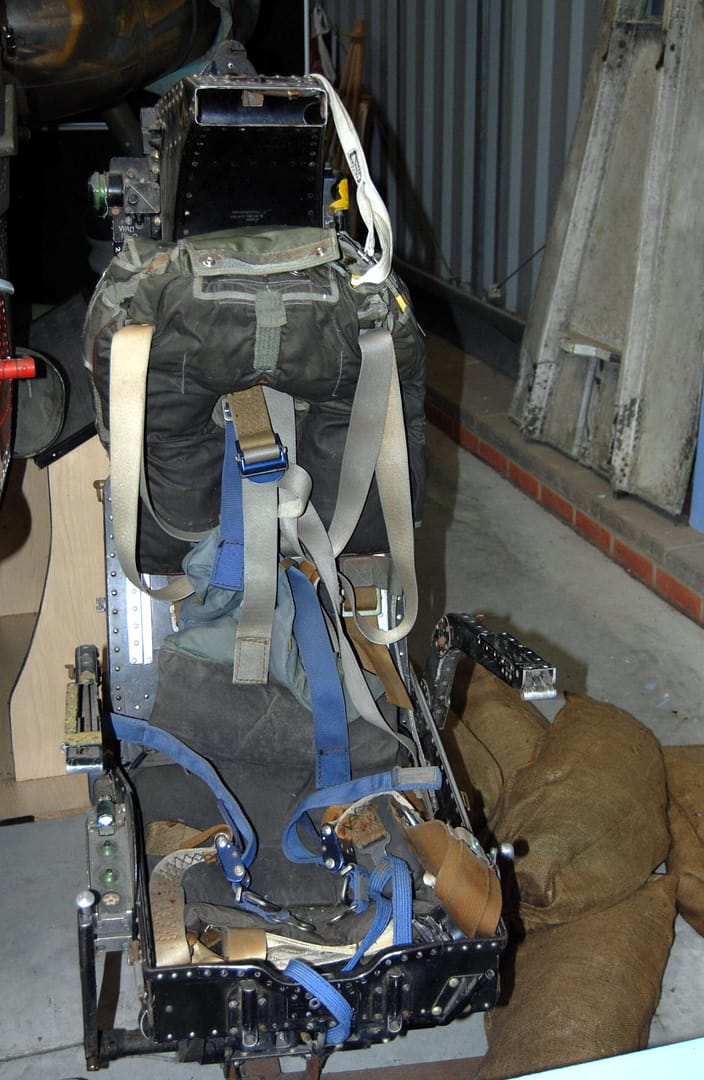
At that moment, the pilot is traveling 600 mph relative to the aircraft while still attached to a seat and exposed to temperatures that would normally be lethal. A drogue chute—a small stabilizing parachute—deploys automatically to slow the violent tumbling and separate the pilot from the seat. Then, at the right altitude and airspeed, the main parachute deploys. The pilot descends, the seat falls away, and a pilot who should have died instead drifts down to earth under silk and nylon.
Zero-Zero: The Breakthrough
For decades, ejection seats required minimum altitude and airspeed: typically 5,000 feet and 100 knots. A jet damaged on takeoff or landing was unrecoverable. Then came the \"zero-zero\" breakthrough—an ejection seat that could save a pilot even at zero altitude and zero airspeed. Rocket-assisted ejection, advanced parachute systems, and millisecond timing made the impossible possible.
A pilot could now eject from a fighter on the runway, at zero knots, and live. It changed everything. Survivability of aircraft damage that would have been fatal became merely catastrophic—and survivable.
The Tie Club: Membership Through Fire
In 1957, the first RAF serviceman ejected from a fighter jet over what was then Rhodesia and survived. Martin-Baker created something unusual: the Ejection Tie Club. Any pilot whose life was saved by a Martin-Baker seat earned membership. The membership comes with a certificate, a membership card, a special tie, and a pin—physical proof that you were fired out of an airplane at 600 mph and lived.
By 2025, Martin-Baker had saved 9,812 lives—nearly 10,000 pilots who would have perished in their cockpits instead walked away. Over 6,000 of them now belong to the Ejection Tie Club, wearing their special pins and ties as badges of improbable survival. When pilots meet and compare ties, they’re comparing near-death experiences. It’s the most exclusive club in aviation.
James Martin’s obsession—born from the death of his partner—transformed aviation from a gamble to a calculated risk. Today, when a fighter pilot lights the ejection handle, they’re riding on 80 years of innovation rooted in one man’s determination that no pilot should die in a burning cockpit if engineering could prevent it.
Sources: Martin-Baker Company War History Online, Safran
Related Questions
Who invented the ejection seat?
British engineer James Martin developed the first practical ejection seat. He founded his firm in 1929 and from 1934 — with partner Valentine Baker — investigated escape systems. Baker's death in a 1942 test flight crystallised Martin's mission, and his company, Martin-Baker, went on to build ejection seats that have saved thousands of aircrew.
When was the first ejection seat test?
Martin-Baker's first seat test came on 20 January 1945, when a 200-pound dummy was fired about 4 feet 8 inches up a test rig. Just four days later, on 24 January 1945, fitter Bernard Lynch became the first person ever to deliberately eject himself from the seat on the ground, and survived unhurt.
When was the first in-flight ejection?
On 24 July 1946, Bernard Lynch ejected from a Gloster Meteor jet travelling at 320 mph at 8,000 feet. The seat fired cleanly, his parachute deployed, and he landed safely — proving the live ejection seat worked in flight and launching the technology that protects fighter crews to this day.
How does an ejection seat work?
An ejection seat is controlled violence. The pilot pulls a handle, firing a timed sequence of charges: a rocket-powered catapult beneath the seat accelerates the occupant upward at up to about 18 G in under a second, clearing the cockpit and tail. A parachute then deploys automatically to bring the pilot down safely.
Why was the ejection seat invented?
Before ejection seats, escaping a stricken fighter often meant climbing out manually against ferocious airflow — frequently impossible at high speed or low altitude. Martin set out to fling a pilot clear at 600 mph and have them survive, building on earlier life-saving milestones such as the first emergency parachute jump.
Who makes ejection seats today?
Martin-Baker, the British company founded by James Martin, remains the world's leading ejection-seat maker and equips many fighter and trainer aircraft. Ejection systems are a crucial part of surviving emergencies such as a fighter jet engine flameout when an aircraft can no longer be saved.
0 Comments