Iran fired ballistic missiles at Israel on Sunday evening — the first direct attack since the ceasefire halted the U.S.-Israeli war with Tehran in April. Hours later, Israel struck back with air raids on central and western Iran, including targets near Tehran. The Houthis in Yemen launched simultaneously. The ceasefire that was supposed to end the most dangerous Middle Eastern escalation in decades is in pieces, and the axis of resistance that everyone declared dead is showing a pulse.
Eleven Iranian ballistic missiles targeted Israel. Israeli air defences intercepted all of them, according to the IDF. The Revolutionary Guard, which branded the attack Operation Nasr (Victory), claimed direct hits on Nevatim and Tel Nof air bases — Israel’s two most important military airfields. Iranian state media showed jubilant crowds in Tehran. The reality on the ground in Israel was less dramatic: no casualties, no confirmed damage. But the political message — that Iran can and will strike Israel whenever it chooses — landed harder than any warhead.
Quick Facts
What: Iran fired ~20 ballistic missiles at Israel; Houthis launched 2 more from Yemen
When: Evening of 7 June 2026 (Sunday) — 100 days since the conflict began
IRGC codename: Operation Nasr (“Victory”)
Claimed targets: Nevatim AFB (Negev) and Tel Nof AFB (central Israel)
Israeli defence: All missiles intercepted or hit open areas (IDF statement)
Israel retaliation: Air strikes on central and western Iran overnight, including petrochemical targets in Khuzestan
Trigger: Israeli air strikes on southern Beirut (Hezbollah HQ) earlier on Sunday
Diplomatic status: April 8 ceasefire in jeopardy; Egypt, Saudi Arabia, Turkey, Pakistan, Qatar urging restraint
The Trigger: Beirut
The Iranian missiles did not come out of nowhere. On Sunday, Israel bombed the southern suburbs of Beirut — Hezbollah’s heartland — in what the IDF described as strikes on weapons storage and command infrastructure. The attack came despite the ceasefire that was supposed to cover Lebanon as well as the Iran-Israel front. Tehran’s message was immediate: an attack on Hezbollah is an attack on Iran.
This is the principle the Revolutionary Guard commanders have been trying to re-establish since Ali Khamenei’s death. Under the former Supreme Leader, Iran reacted to Israeli provocations only after long deliberation, always one step behind. The IRGC generals who now control military decision-making want a different equation: hit Hezbollah, and Iranian missiles fly the same night.
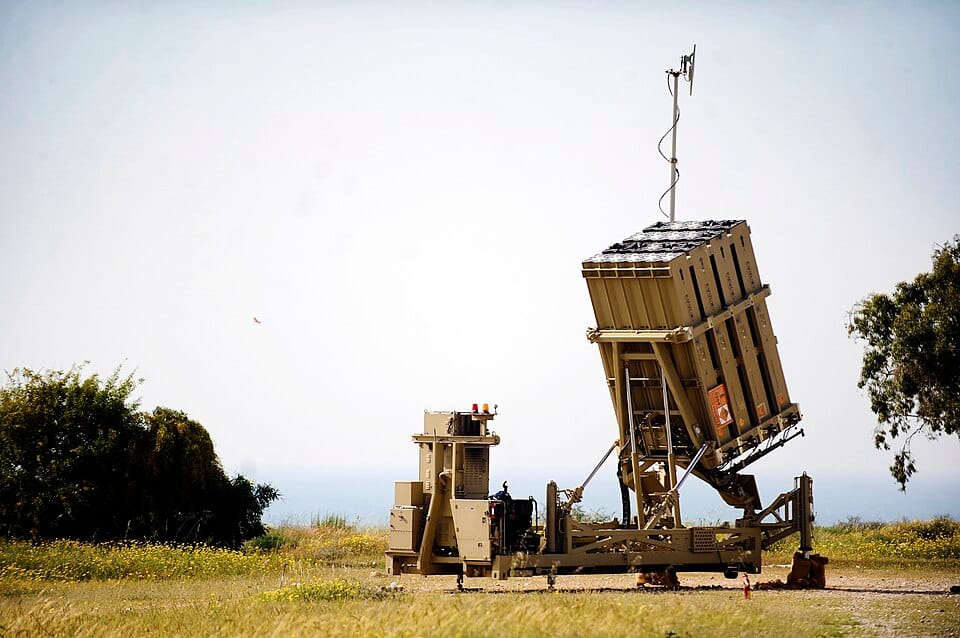
Israel’s layered air defence — Iron Dome, David’s Sling, and Arrow — intercepted the incoming Iranian ballistic missiles. Wikimedia Commons
Testing Trump
The attack was as much a signal to Washington as it was to Jerusalem. Iran’s leadership calculates that Donald Trump does not want another Middle Eastern war. He wants a deal — something he can call a diplomatic triumph before the 2028 campaign. The IRGC is testing whether Trump will restrain Netanyahu, or whether the Israeli prime minister will be allowed to escalate further.
“I’m the one who decides, not Netanyahu. I’ll call him right now. We are very close to a diplomatic agreement with Iran.”
Donald Trump — U.S. President, phone call with journalists, 8 June 2026
Trump’s initial reaction — asserting that he, not Netanyahu, makes the decisions — was exactly what Tehran wanted to hear. But the Iranians distrust Trump deeply. They worry that Israel will continue striking Iranian interests under cover of ceasefire rhetoric, with Washington privately approving what it publicly condemns. The missile launch was designed to force the issue: either the ceasefire holds for everyone, or it holds for no one.
The Axis Lives
The most important signal of Sunday night was not the missiles themselves — it was the coordination. Within hours of Iran’s launch, the Houthis in Yemen fired two ballistic missiles toward Tel Aviv. The message was unmistakable: the axis of resistance that Operation Epic Fury was supposed to destroy is still operational. Iran, Hezbollah, and the Houthis can still coordinate strikes across three countries simultaneously.
“Operation Nasr targeted key facilities at Nevatim and Tel Nof air bases in response to Israel missile aggression against Iranian radar sites. Repeated violations of the ceasefire will not go unanswered.”
This is exactly what the Israeli-American campaign was designed to prevent. Months of air strikes on Iranian military infrastructure, Hezbollah positions in Lebanon, and Houthi facilities in Yemen were supposed to degrade the axis to the point where it could no longer project power. Instead, the IRGC has emerged more assertive than ever, and the Houthis — who have been manufacturing their own weapons inside Yemen — are less dependent on Iranian supply lines than before the war began.
What Happens Now
Diplomatic channels are open but strained. Egypt, Saudi Arabia, Turkey, Pakistan, and Qatar are all pressing Washington to restrain Israel and urging Tehran to stop further attacks. A petrochemical factory in Mahshahr, Khuzestan province, was reportedly hit by Israeli strikes — a signal that Israel can target Iran’s economic infrastructure, not just military sites.
Iran has threatened further missiles if Israel “escalates.” But the language is notably more measured than the all-out assault of 28 February, when Iran launched everything it had. The IRGC still wants a deal with Trump. It just wants to negotiate from a position of demonstrated capability, not perceived weakness.
The April ceasefire was always a pause, not a peace. Sunday night proved it. Iran has shown it can break the ceasefire at will, coordinate across its proxy network, and force the United States into the uncomfortable position of choosing between its Israeli ally and its desire for a deal. The axis of resistance is battered, diminished, and very much alive.
Sources: Tages-Anzeiger (Raphael Geiger, Istanbul), NPR, NBC News, Al Jazeera, Times of Israel, CNN, Newsweek, Washington Times, Critical Threats / AEI
Airports around the world are quietly repainting their runways. Not because the paint is fading — because the numbers are wrong. Magnetic north is drifting, and the compass heading that defined a runway when it was built twenty or thirty years ago no longer matches...
Update: This article provides the latest on the investigation into the Lufthansa 787 nose gear collapse at Frankfurt Airport. For our initial coverage, see Brand-New Lufthansa 787 Drops on Its Nose. Germany's Federal Bureau of Aircraft Accident Investigation (BFU) has...
The Air Force wants $3.2 billion more than its current budget to fix aircraft that are breaking faster than they can be repaired. Vice Chief Gen. John Lamontagne told lawmakers that the service's demand for new airplanes is outstripping contractors' ability to produce...


 English
0 Comments