Iran claimed it shot down an American F-35 stealth fighter. Then it displayed the wreckage for the cameras. There was just one problem: the debris clearly belonged to an F-15E Strike Eagle — a completely different aircraft that is not stealth, not single-engine, and not particularly hard to identify.
On April 3, during Operation Roaring Lion, Iranian air defences shot down a U.S. Air Force F-15E Strike Eagle from the 494th Fighter Squadron over western Iran. One crew member ejected and was rescued the same day. The weapons systems officer was recovered two days later. It was the first American fixed-wing combat loss of the Iran conflict.
The shootdown was real. The propaganda that followed was not.
Quick Facts
Actual aircraft shot down: F-15E Strike Eagle (494th Fighter Squadron, USAFE)
Iran’s claim: F-35 stealth fighter
Date: April 3, 2026
Crew: Pilot rescued April 3; WSO rescued April 5
Evidence of misidentification: Wreckage showed “US Air Forces in Europe” logo and distinctive F-15 twin-tail markings
The Wreckage Tells the Truth
Iranian state media, led by Press TV and IRGC-affiliated outlets, published photographs of aircraft debris scattered across a rural area in western Iran. The Islamic Revolutionary Guard Corps issued a statement claiming its air defences had downed an American F-35 stealth fighter — a claim that would have been significant, as no F-35 has ever been shot down in combat.
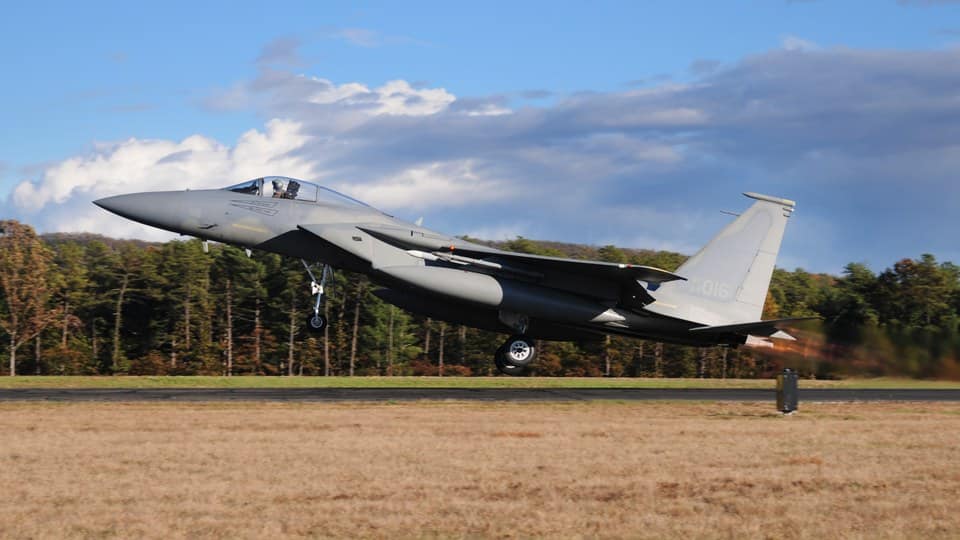
But the photographs told a different story. Aviation analysts identified the wreckage within hours. A tail fin fragment bore the partial logo of “US Air Forces in Europe” — the command that operates F-15Es from RAF Lakenheath in the United Kingdom. The red-and-white striping on the vertical stabiliser matched the distinctive livery of the 494th Fighter Squadron, known as the Panthers. The twin-tail configuration was unmistakably F-15.
The F-35 is a single-engine, single-tail aircraft with a radically different airframe shape. Confusing it with a twin-engine, twin-tail F-15E is like confusing a sedan with a pickup truck. The wreckage left no room for ambiguity.
Why Iran Made the Claim
The F-35 claim served a clear propaganda purpose. Shooting down an F-35 — the most advanced and expensive fighter in the American inventory — would have been a strategic coup for Tehran. It would have called into question the aircraft’s stealth capabilities, potentially undermined foreign sales, and provided a massive morale boost for Iranian forces and their regional allies.
An F-15E shootdown, while tactically significant, carries less propaganda value. The Strike Eagle is a fourth-generation aircraft first flown in 1986. It is a proven, capable platform — but it is not invisible. Downing one is a legitimate combat achievement, not a paradigm shift.
By misidentifying the wreckage, Iran attempted to claim the larger narrative victory. The speed with which open-source analysts debunked the claim suggests Tehran either did not anticipate the scrutiny or did not care. In the information war that runs parallel to every modern conflict, the claim was aimed at domestic and regional audiences who may never see the correction.
The F-15E’s Combat Record
The loss of the Strike Eagle is the first F-15E shot down by enemy fire since the type entered service in 1988. During the 1991 Gulf War, one F-15E was lost to an Iraqi surface-to-air missile. In the decades since, Strike Eagles have flown thousands of combat sorties over Iraq, Afghanistan, Syria, and Libya without a single combat loss to enemy action.
The F-15E remains one of the most capable strike aircraft in the American inventory. It carries up to 10,000 kg of ordnance, operates at Mach 2.5, and can deliver precision-guided weapons in all weather conditions. The 494th Fighter Squadron at RAF Lakenheath is one of USAFE’s premier units, trained for deep-strike missions in contested environments.
Iran’s air defences — a mix of Russian-supplied S-300PMU2 systems, domestically produced Bavar-373s, and older Hawk variants — clearly proved capable of engaging and destroying a fast-moving, low-flying strike aircraft. That is a genuine tactical achievement. Claiming it was something it wasn’t diminished it.
Propaganda vs. Reality
The F-15/F-35 misidentification joins a long history of inflated combat claims in wartime. Militaries have overstated kills, misidentified aircraft, and credited victories to the wrong systems since air combat began. What is different in 2026 is the speed of correction. Open-source intelligence communities, aviation analysts, and social media forensics teams identified the real aircraft within hours of Iran’s announcement.
In modern conflict, the wreckage speaks for itself — and it speaks loudly enough for the whole world to hear.
Sources: CNN, The War Zone, The Aviationist, Militarnyi, Military Times, NBC News



 English
0 Comments