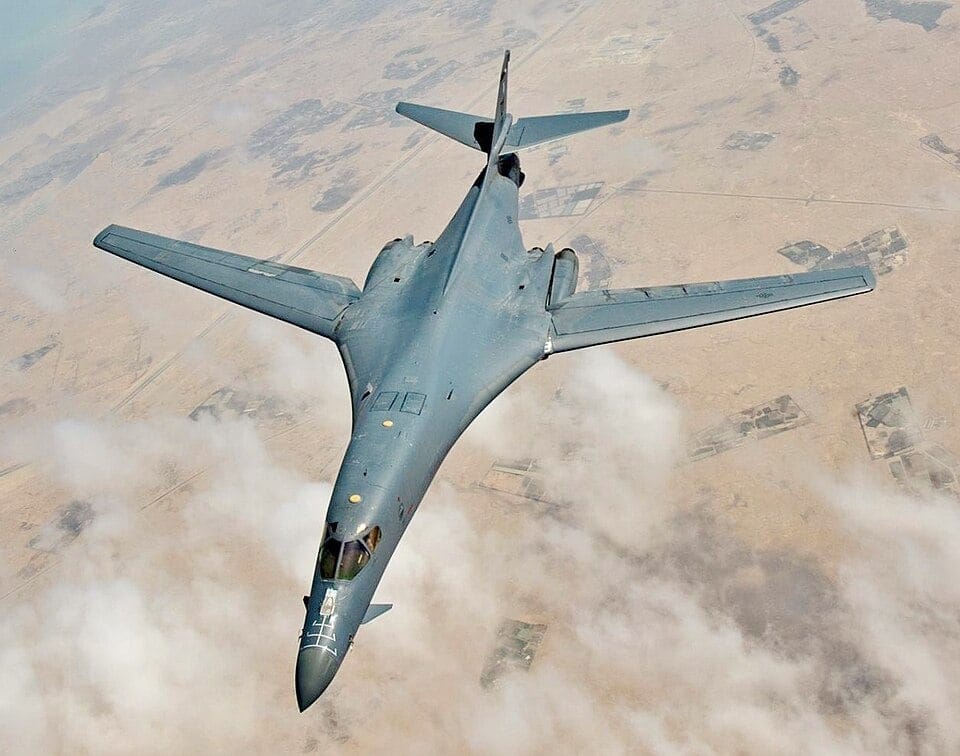
On the night of March 27, a group of American military aircraft was already airborne, heading east across the Atlantic toward the Mediterranean, when word came through from Rome: they could not land at Sigonella. Italy’s Defence Minister Guido Crosetto had personally ordered the denial. The aircraft — believed to be bombers en route to support Operation Epic Fury strikes on Iran — were forced to find alternative arrangements. Washington had not asked for permission in advance. Rome was not willing to grant it after the fact.
The episode, which became public days later and forced Crosetto to address Italy’s Parliament on April 7, represents the most visible crack yet in NATO’s facade of unity over the U.S. campaign against Iran. Italy is not some marginal ally. Sigonella is not some marginal base. And the message from Rome was unmistakable: being in an alliance does not mean writing blank cheques for someone else’s war.
Quick Facts
Incident: Italy denied landing rights to U.S. military aircraft at Naval Air Station Sigonella, Sicily — the night of March 27, 2026
Reason: No prior clearance had been requested; Italian authorities discovered the flights were combat-related, not routine or logistical
Decision By: Italian Defence Minister Guido Crosetto
Parliamentary Address: Crosetto briefed Italy’s Chamber of Deputies on April 7, 2026
Context: Spain simultaneously closed airspace to similar U.S. aircraft; European allies increasingly reluctant to be drawn into Operation Epic Fury
Legal Basis: 1954 bilateral defence agreement permits only logistical and non-combat activities at Italian bases; combat operations require case-by-case evaluation
Sigonella: America’s Mediterranean Anchor
Naval Air Station Sigonella sits on the eastern coast of Sicily, in the shadow of Mount Etna. It is the largest U.S. Navy base in the Mediterranean and one of the most strategically important military installations in southern Europe. P-8 Poseidon maritime patrol aircraft fly from its runways. MQ-4C Triton drones orbit overhead. It serves as a logistics hub for operations across North Africa, the Middle East, and the eastern Mediterranean.
A U.S. Air Force C-5 Galaxy at NAS Sigonella, Sicily, with Mount Etna rising in the background. The base is the largest U.S. Navy installation in the Mediterranean. U.S. Navy photo
For decades, the base has operated under a 1954 bilateral agreement between the United States and Italy. The arrangement permits routine logistical flights, training operations, and activities consistent with NATO’s collective defence mission. What it does not permit — without explicit Italian authorisation — is the use of Italian soil as a staging ground for offensive combat operations.
This distinction had remained largely theoretical until March 27.
The Night Everything Changed
According to Italian news agency ANSA and subsequent parliamentary disclosures, Italian authorities were informed of the incoming U.S. aircraft only after they had already departed from American bases. When Italian military officials assessed the flights, they determined they were neither routine nor logistical in nature — they were combat-related, likely heading to support strikes on Iran as part of Operation Epic Fury.
Crosetto acted immediately. The aircraft were denied landing rights. They would have to refuel elsewhere, find another staging point, or turn around.
“We are not at war, and we do not want to enter a war.”
Giorgia Meloni — Prime Minister of Italy
The political fallout was swift. Italian opposition parties demanded answers. The American press reported the denial as a sign of European fracturing. And on April 7, Crosetto stood before Italy’s Chamber of Deputies to explain the government’s position.
Crosetto’s Defence
The Defence Minister framed the denial as procedural, not political. Italy, he argued, had simply enforced the existing rules. Bilateral agreements require prior consultation for non-routine military activities. Washington had not consulted. Therefore, the flights were denied. This was, Crosetto insisted, how things had always worked.
“Italy acts in full compliance with existing international agreements. These procedures have always been the case in the past.”
Guido Crosetto — Italian Defence Minister
He also released flight statistics for Sigonella and Aviano, the other major U.S. base in Italy, to demonstrate that routine American military operations were continuing without interruption. The message was carefully calibrated: Italy is not breaking with America. Italy is enforcing rules that America chose not to follow.
Whether this distinction holds under pressure remains to be seen. The United States has not publicly commented on the incident, and the diplomatic channels are presumably working overtime behind closed doors.
A Wider European Reluctance
Italy was not alone. Spain simultaneously closed its airspace to similar U.S. aircraft, and several European capitals have been conspicuously cautious about associating themselves with Operation Epic Fury. The reasons vary — domestic politics, legal concerns, genuine opposition to the campaign — but the pattern is consistent: America’s European allies are not eager to be co-belligerents in a war against Iran that they did not start and did not endorse.
NATO headquarters in Brussels. The Sigonella denial highlights growing tensions within the alliance over the scope of mutual obligations in the Iran campaign. Wikimedia Commons
This is not a repeat of 2003, when France and Germany opposed the Iraq invasion but the alliance ultimately held together. The difference is that Trump has spent years questioning NATO’s value, threatening to withdraw from the alliance, and demanding that European members pay more. European governments are now returning the favour — selectively, carefully, but unmistakably.
The Sigonella incident is a symptom, not the disease. The disease is an alliance in which both sides increasingly view their obligations as transactional rather than existential.
What This Means for Air Operations
For the U.S. Air Force and Navy, the practical impact of the Italian denial is manageable but inconvenient. Sigonella is not the only option for Mediterranean staging. Aircraft can refuel from tankers, divert to bases in the Gulf states, or use other facilities with fewer political strings attached.
But convenience is not the point. The point is that a NATO ally — one that hosts thousands of American military personnel — told the United States that its combat aircraft were not welcome. That signal reverberates far beyond a single denied landing. It tells the Pentagon that European basing cannot be assumed. It tells adversaries that the Western alliance has fractures. And it tells future war planners that political access is a variable, not a constant.
The next time American bombers need a place to land on the way to a fight, the first phone call will come before takeoff, not after.
Sources: Euronews, The Aviationist, ANSA, The Washington Post, Decode39
The dream is universal. You look up at a passing airplane and think: I could do that. And the first question — always the first question — is: how much does it cost? The answer is more complicated than any flight school brochure admits. The FAA minimum for a Private...
Turbulence is the number one fear of nervous flyers. It causes white-knuckled armrest gripping, panicked glances at flight attendants, and enough anxiety medication to stock a pharmacy. Social media makes it worse — every shaky cabin video goes viral, every "severe...
The handle is between your legs. You have trained for this. You have watched the videos, studied the diagrams, memorised the sequence. But nothing prepares you for the moment you actually pull it — especially when the ocean is rushing up to meet you. Ejecting over...
jetflights/italy-blocks-us-bombers-mid-flight-over-sigonella.
America is a force for good. Sigonella, UK, and Spain denials in 2026 give more justification to buy or take Greenland.



 English
jetflights/italy-blocks-us-bombers-mid-flight-over-sigonella.
America is a force for good. Sigonella, UK, and Spain denials in 2026 give more justification to buy or take Greenland.