
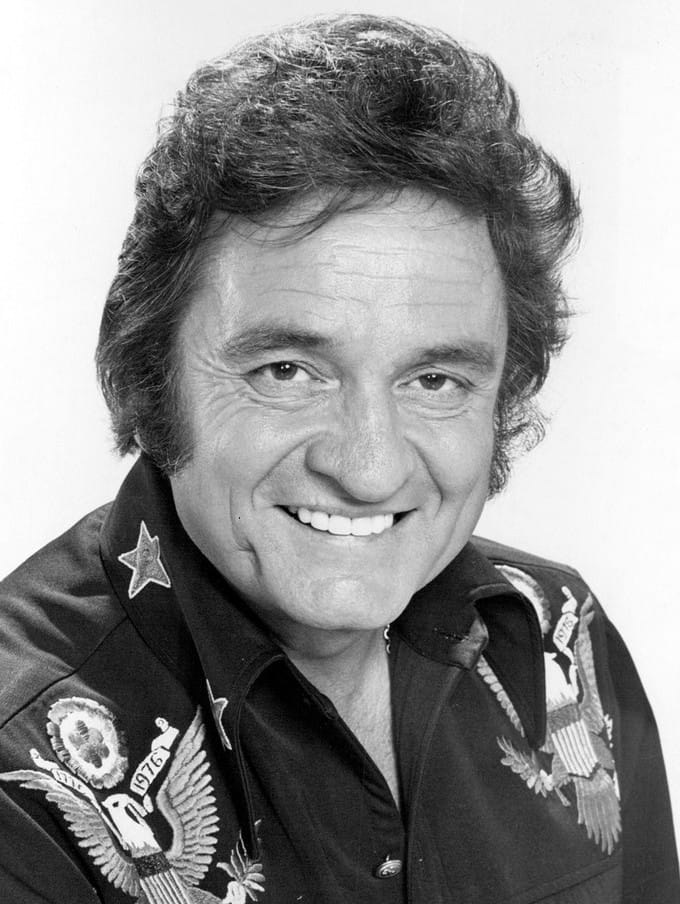
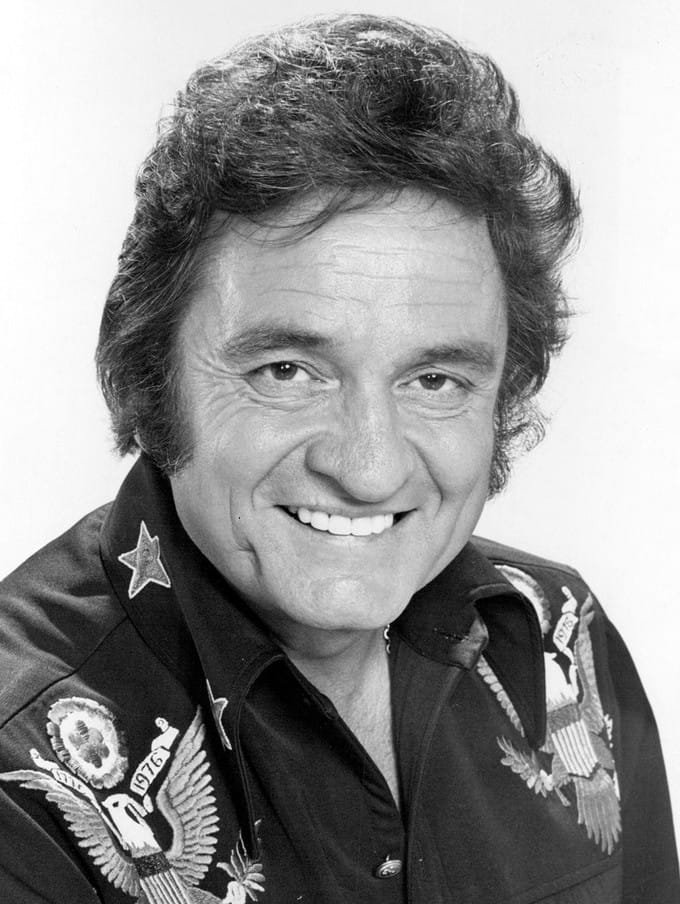
Most aviation-history posts on this blog are about pilots, airframes, missions. This one is about a 21-year-old U.S. Air Force Staff Sergeant from Arkansas, wearing headphones in a corrugated-metal radio hut at Landsberg am Lech in Bavaria, in the early hours of 5 March 1953. He was one of the best Morse code intercept operators at the 12th Radio Squadron Mobile of the Air Force Security Service. He was about to copy down a series of urgent Soviet military signals that — if the most generous version of the story is true — meant the United States learned of Joseph Stalin’s death before almost anyone else in the world.
His name was John R. Cash. Within five years he would be one of the most recognisable voices in American music. The radio hut at Landsberg is where the story of how he got there actually starts.
Quick Facts
Airman: Staff Sergeant John R. Cash (later Johnny Cash, “the Man in Black”)
Enlisted: 7 July 1950, age 18
Branch: U.S. Air Force Security Service (USAFSS), the Cold War SIGINT command
Specialty: Morse code intercept operator, monitoring Soviet military radio nets
Unit: 12th Radio Squadron Mobile
Posting: Landsberg am Lech, U.S. occupied West Germany
Famous intercept: Signals reporting Joseph Stalin’s deteriorating health and death, 5 March 1953
Discharged: July 1954
Post-Air Force: Memphis, Sun Records audition 1955, first hit “Cry! Cry! Cry!” 1955, lifetime career
A skinny Arkansas kid in a Bavarian listening post
Cash grew up in Dyess, Arkansas, in a federal cotton-farming colony established during the Depression. He enlisted in the Air Force in July 1950, at eighteen. The Korean War had just started. The American military was rapidly expanding. Cash scored high enough on his aptitude tests to be picked for the U.S. Air Force Security Service — the branch responsible for monitoring Soviet bloc communications.
The USAFSS was, at the time, the largest single SIGINT organisation in the world. It operated listening posts ringing the Soviet Union from Alaska through Japan, Turkey, Greece, Italy, and West Germany. The job of the airmen who staffed those posts was to monitor specific Soviet military radio nets — fighter regiments, missile units, naval bases, command headquarters — and transcribe everything that came across. They were not codebreakers in the strict sense; that work was done downstream at NSA Fort Meade and at the relevant theatre headquarters. The intercept operators were the front-line collectors. They wrote down what they heard, time-stamped it, and passed it up the chain.
Cash showed a particular talent for Morse code. The veteran operators at Landsberg later remembered him as one of the fastest, cleanest copyists in the squadron — able to hold high-speed military Morse for entire shifts without his copy degrading. That speed, combined with his ability to discriminate the unique “fist” of individual Soviet operators (the rhythmic signature each Morse sender developed) made him valuable enough that he was placed on the most active circuits and the most sensitive shifts.
The Stalin night
Joseph Stalin suffered a major stroke late on the evening of 1 March 1953. Soviet doctors arrived hours later. He never regained consciousness. Soviet leadership immediately understood the gravity of the situation and ordered medical specialists to his bedside at the Kuntsevo dacha outside Moscow. The military Morse circuits that Cash and his colleagues monitored began carrying coded but unmistakable orders — units being recalled from leave, senior commanders being summoned to Moscow, alert states being adjusted. Something significant was happening at the top of the Soviet hierarchy.
By the early hours of 5 March 1953, the Soviet leadership had concluded that Stalin would not recover. The military preparations being ordered across Eastern Europe and the Soviet interior — visible only through the volume and pattern of Morse traffic on multiple circuits — gave intercept operators a strong indication that the country’s supreme leader was at or near death.
Cash later wrote in his autobiography (Cash: The Autobiography, 1997) that he “copied the first news of Stalin’s death” while sitting at his Landsberg intercept position. The exact wording — and the precise interpretation of what “copied the first news” means — is where the story gets complicated.
How much of the story is true
The honest answer is: most of it, with one important caveat. Cash absolutely was a USAFSS Morse intercept operator at Landsberg in March 1953. He absolutely was on duty during the relevant shifts. He absolutely did copy down some of the Soviet military traffic that indicated Stalin was dying or dead. The “first American to know” framing — which is how the story has been told in many popular retellings since the 1960s — is the part that does not quite survive scrutiny.
Cold War SIGINT did not work by single operators. Soviet military traffic on the relevant night was being monitored simultaneously by USAFSS listening posts at Landsberg, at Bremerhaven, at Sinop in Turkey, and at multiple posts in Japan. NSA Fort Meade was receiving intelligence summaries from all of them within hours. President Eisenhower was briefed on Stalin’s condition no later than the evening of 4 March. The story of one airman uniquely “informing America” is the romantic version.
The boringly accurate version is more interesting in its own way. Cash was one of dozens of American intercept operators across multiple continents who pieced together — line by line, signal by signal — the picture of what was happening inside the Soviet Union during the most consequential 96 hours of the early Cold War. He happened to be sitting at one of the most productive intercept positions on one of the most active circuits. His work was part of the mosaic that gave Washington its real-time picture of the Soviet succession crisis.

What he did after work
The part of the story that gets less attention but is just as significant: Landsberg is also where Johnny Cash became a musician. In his off-duty hours, he formed his first band — the Landsberg Barbarians — and started writing songs. Several of the songs that would later become Sun Records hits (“Folsom Prison Blues” in particular) were drafted in barracks rooms and base clubs at Landsberg, written between intercept shifts.
“Folsom Prison Blues” was, by Cash’s own later account, inspired by the 1951 crime film Inside the Walls of Folsom Prison, which he saw while stationed at Landsberg. The line “I shot a man in Reno, just to watch him die” came to him as a kind of writerly exercise in imagining the worst possible reason somebody might do something terrible. He filed the lyric away in his notebook, took it home to Memphis when he was discharged in 1954, and recorded it at Sun Studio in 1955.
Cash always remembered the Landsberg posting fondly. He told interviewers years later that the Air Force gave him discipline, gave him a salary that let him buy his first guitar, gave him the bandmates he played his first gigs with, and gave him the time to write. The Morse code work — including the Stalin intercept — was the day job. The music was the evening project. By the time he was honourably discharged in July 1954, both careers were essentially ready to launch.
Why this matters for aviation history
This is not strictly an aircraft story. There are no fighter jets in the Landsberg radio hut. But the U.S. Air Force Security Service was — and its modern successor, the Sixteenth Air Force (Air Forces Cyber), still is — one of the most consequential intelligence organisations of the Cold War. The intercept work that men like Cash did at Landsberg directly informed every major U.S. national-security decision of the 1950s and 1960s, from the Berlin Crisis to the Cuban Missile Crisis to the SR-71 reconnaissance programme. The line from a Morse operator in Bavaria to a Mach 3 spy plane over the Baltic runs straighter than most people realise.
Cash himself never made much of his Air Force service in his later songs. He preferred to write about coal miners, Cherokee soldiers, prison inmates, and travelling musicians. The Landsberg years stayed mostly in his autobiography and in a handful of interviews. But the photographs from the period exist. The discharge papers exist. The 12th Radio Squadron Mobile unit records exist. The story is real. And on the early morning of 5 March 1953, while Joseph Stalin was finishing the last hours of his life at his dacha outside Moscow, Staff Sergeant John R. Cash was already writing it down.
Watch: short documentary excerpt on Johnny Cash’s role as a Morse intercept operator and the Stalin death message he copied at Landsberg.
Sources: Cash: The Autobiography (Patrick Carr, 1997); U.S. Air Force Security Service unit records; Military Times; U.S. Department of War feature stories.
 English
0 Comments