

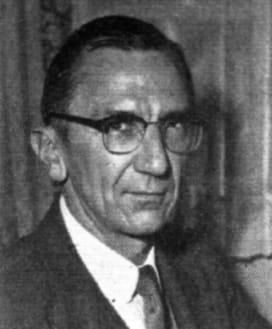
It is one of those records that does not seem possible when you read it on paper. On 22 and 23 May 1958, a U.S. Marine Corps test pilot named Edward N. LeFaivre took off five times from Naval Air Station Point Mugu, California, climbed each time as fast as his Douglas F4D-1 Skyray could be persuaded to go, and broke five world time-to-altitude records in a span of 24 hours. The most famous: 49,221 feet — fifteen kilometres straight up — in exactly 2 minutes 36 seconds.
Sixty-eight years later, in an era of Mach-3 interceptors and afterburning Eurofighters, those numbers still hold their own. They also belong to an aircraft almost nobody remembers — the Skyray, the only delta-winged carrier fighter the U.S. Navy ever operated, briefly the fastest-climbing aircraft on Earth, and widely reported as the first U.S. Navy fighter to exceed the speed of sound in level flight — a claim some historians dispute.
Quick Facts
Pilot: Major Edward N. “Ed” LeFaivre, U.S. Marine Corps
Aircraft: Douglas F4D-1 Skyray, BuNo 130745
Engine: Pratt & Whitney J57-P-8 turbojet with afterburner (~16,000 lbf)
Dates: 22-23 May 1958
Location: Naval Air Station Point Mugu, California
Records set: 5 world time-to-altitude records (3,000 m, 6,000 m, 9,000 m, 12,000 m, 15,000 m)
Headline figure: 49,221 ft (15,000 m) in 2 min 36 sec from brake release
How long the records stood: Until December 1958, when an Air Force F-104A began taking them back
Aircraft fate: Skyray fleet retired by 1964; several airframes survive in museums
A bat-winged carrier fighter
The F4D Skyray was the result of an attempt by Douglas Aircraft to translate the wartime German research on delta-wing aerodynamics into a workable carrier-based fighter. Edward Heinemann’s design team at Douglas El Segundo took the basic delta planform, modified it to give the wing a more practical aspect ratio for carrier landings, and produced what looked from above like a stylised bat — hence the name Skyray. The aircraft first flew in January 1951. It entered fleet service in 1956.
What the Skyray gave its operators was acceleration like nothing else in the U.S. Navy inventory. The wing was large for the airframe. Lift available was enormous. Thrust-to-weight, with the afterburning J57 lit, was high enough that the aircraft could climb almost vertically from the runway. The Navy used it as a point-defence interceptor for the carrier battle group — a fast-climbing aircraft that could be vectored from the deck to 50,000 feet faster than almost anything else then in service.

The records, one by one
The Fédération Aéronautique Internationale recognises time-to-altitude records at six standard heights: 3,000 metres, 6,000 metres, 9,000 metres, 12,000 metres, 15,000 metres, and (more recently) 20,000 and 25,000 metres. To set an FAI record, the pilot must climb from a standing start with brakes off — not from cruise. The clock starts when the brakes are released and stops when the aircraft passes through the target altitude.
Over the course of 22 and 23 May 1958, LeFaivre flew five separate climb profiles and beat the existing record at each of the first five altitudes:
- 3,000 m (9,843 ft): 44.4 seconds
- 6,000 m (19,685 ft): 1 minute 6.1 seconds
- 9,000 m (29,528 ft): 1 minute 29.8 seconds
- 12,000 m (39,370 ft): 1 minute 51.2 seconds
- 15,000 m (49,221 ft): 2 minutes 36 seconds
The Skyray was so well-suited to the climb profile that each of the records exceeded the previous-holder by a significant margin. LeFaivre took all five in a single weekend — and the 15,000-metre mark was the first FAI record ever ratified at that altitude.
Why the records did not last
By the end of 1958, the F-104 Starfighter had begun its own assault on the climb records. The F-104 was a less practical aircraft than the Skyray — lower endurance, less weapons payload, much harder to land on a carrier (it never went to sea operationally) — but it was even faster in pure climb. By December 1958, the F-104 had taken back several of LeFaivre’s marks, and the remainder fell in the years that followed.
The Skyray itself stayed in U.S. Navy and Marine Corps service until 1964. It was never exported. About 420 were built. By the mid-1960s, the F-4 Phantom II had rendered it obsolete as a fleet defence interceptor. Today, a handful of airframes survive in museums — including the National Naval Aviation Museum in Pensacola, the Pima Air and Space Museum, the Intrepid Museum in New York, and the Flying Leatherneck collection in San Diego.

A footnote that deserves better
Edward LeFaivre’s May 1958 record day is one of those small, intense bursts of pure aviation achievement that the broader public has forgotten. Five world records in twenty-four hours, in a fighter that the U.S. Navy was already preparing to replace, by a pilot who was not Chuck Yeager or Joe Kittinger and whose name no longer appears in popular aviation history books. The aircraft is a footnote. The pilot is a footnote. The records were broken within six months. And yet for a single weekend in 1958, an obscure Marine Corps test pilot in a bat-winged carrier fighter held the world’s attention.
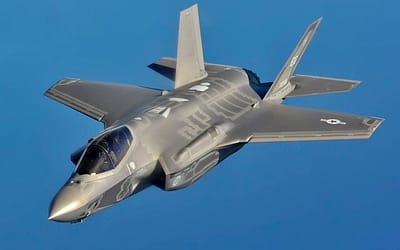
Sixty-eight years later, in modern terms, hitting 49,221 feet in 2 minutes 36 seconds remains a respectable climb profile. The Eurofighter Typhoon, the F-22 Raptor, and the F-35 do not necessarily improve on it dramatically. The F-15 Streak Eagle — a stripped-down Eagle built specifically to break records in 1975 — took 77 seconds to reach the same altitude. LeFaivre needed 156 seconds in a smaller, less powerful, older aircraft.
Records exist to be broken. But aviation history exists to be remembered. The Skyray, and Major Edward LeFaivre, deserve a little more of both.
Sources: Fédération Aéronautique Internationale record archives; U.S. Naval Aviation News; National Naval Aviation Museum; Douglas Aircraft company histories.

 English
0 Comments